Start typing to search 150 cities, 3 states and all guides.
Sewer Line Repair In Acme, PA
Sewer Line Repair Acme, PA starts with a clue many owners spot outdoors: one strip of lawn staying wet while drains slow indoors. One free call connects you with an independent local pro for ZIP 15610.
MVERTCBCGL★★★★★“pinpointed the offset joint using sonar locating equipment” — Travis Calhoun, Buffalo
Free To CallAnswered 24/7Independent Local ProsNo ObligationServing 150 Cities In 3 States20+ Years Of Experience
Quick Answer
A wet strip of lawn plus several slow drains in an Acme, PA home usually points to one shared problem in the pipe leaving the house, not a run of bad luck with separate fixtures. Pennsylvania homes are old statewide, a median build year of 1965 with 67.2% built before 1980 (ACS 2024). Note both clues, stop adding water, and arrange a proper look inside the line.
Related Sewer Line Repair Services We Offer In Acme, PA
Acme enquiries often pair an indoor symptom with an outdoor one: slow drains inside, a wet patch outside. The six services below cover clearing that line, seeing inside it, and repairing or renewing it across the long runs common under ZIP 15610.
Hydro Jetting In Acme, PA
Hydro Jetting In Acme, PA directs pressurized water through the pipe to shift grease deposits, soap residue and fine root growth from the walls. On a long Acme run, a wash can restore flow and leave the line clear for a camera to judge its condition.
Sewer Line Cleaning In Acme, PA clears soft waste and paper plugs from the pipe leaving your house, with no digging in the yard. It suits a Westmoreland County line that still moves, however slowly. A line stopping again within weeks is signalling a pipe fault.
Trenchless Sewer Repair In Acme, PA renews the underground line through small pits instead of a continuous trench across the property. That suits set-back Acme lots where the pipe passes under lawn, planting or a track. A camera check first confirms the route can guide the method.
Sewer Line Replacement In Acme, PA removes a pipe failed along much of its length and lays a fresh line at an even fall. Pennsylvania's statewide median home dates to 1965, so an original line can be past the point where patching one section makes sense.
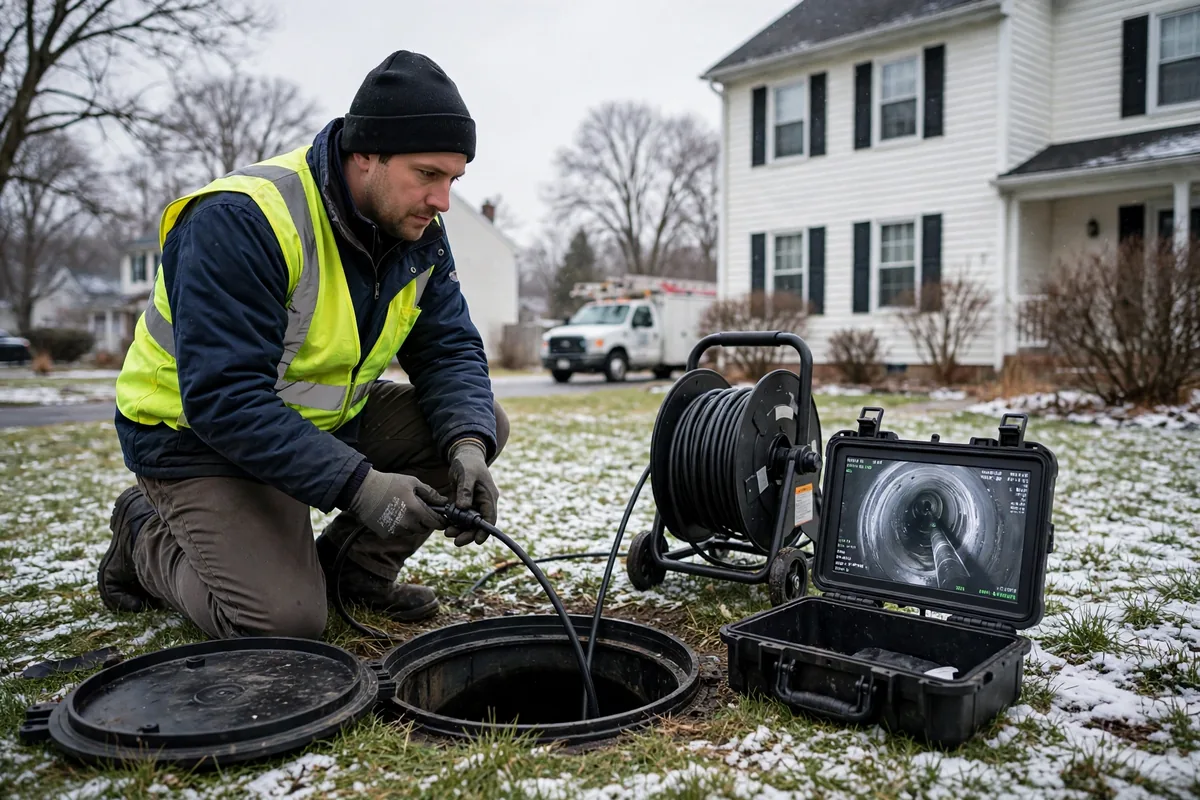
Sewer Camera Inspection In Acme, PA records the inside of the underground line so cracks, pooled sections and root growth are seen rather than guessed at. In ZIP 15610, where a set-back home can mean a long run, the distance reading ties each fault to a measured spot.
Sewer Pipe Lining In Acme, PA creates a smooth new inner surface inside a cracked pipe that still holds its round shape, sealing the joints roots use. Work runs from access points at each end, so a big Acme yard and its driveway stay mostly untouched.
Acme has no verified list of named neighbourhoods, so this page covers the whole Acme community in Westmoreland County as one service area under ZIP 15610. Properties range from homes close to the centre to set-back lots on outer roads, and one free call connects any Acme household with an independent local pro. That single-area approach keeps the facts on this page tied to Acme itself rather than to an invented district list.
ZIP 15610 Coverage
Every Acme address on this page falls under ZIP 15610, from homes near the centre of the community to properties on its outer roads.
Westmoreland County Setting
Acme sits in Westmoreland County, Pennsylvania, and sewer questions here are handled with that county and its municipalities in view.
Pennsylvania Homes Before 1980
Statewide, 67.2% of Pennsylvania homes were built before 1980 (ACS 2024), the era of clay and iron underground pipes.
State Median Build Year 1965
The median Pennsylvania home was built in 1965 (ACS 2024), so underground pipes across the state have often served for decades.
Owners Decide In Pennsylvania
Across Pennsylvania, 69.3% of occupied homes are owner-occupied (ACS 2024), so the repair decision usually sits with the household calling.
Long Runs To The Road
Set-back Acme homes can have a long underground run to the road, so a fault may sit far from the house suffering the symptoms.
🚨 Sewer Line Problem Right Now In Acme, PA?
On an Acme property a backup can be well advanced before it is noticed, especially where the lowest drain sits in a little-used basement room. Pennsylvania winter ground movement can also finish a joint that was already opening. Do not wait for the smell to tell you it is spreading.
Treat a sudden winter stoppage as a possible split pipe
Keep everyone away from rooms where sewage has appeared
Check which fixture rose first, then call for help
Calls Answered 24/7 · Free To Call · No Obligation
What Happens When You Call
1
You Call — It's Free
You describe both halves of the picture when you ring: what the drains are doing indoors and what you have noticed in the yard. The call costs nothing, the line is answered 24/7, and asking commits you to nothing.
2
We Connect You With An Independent Local Pro
We pass the details to an independent local pro who covers Acme and Westmoreland County and runs a separate business from this site. Timing, yard access and the first step are things you settle directly with that pro.
3
The Pro Calls You Back Or Visits To Check The Problem
On the visit, the pro looks inside the line with a camera and talks you through the pictures there and then. You compare the options on that evidence and decide yourself what, if anything, goes ahead next.
ZIP 15610 is the ZIP listed for Acme in Westmoreland County, and it is the whole coverage of this page. From a home near the middle of the community to a set-back property on an outer road, one free call reaches help.
Real reviews from homeowners who called for sewer line help.
AWAlicia WarrenErie, Pennsylvania
★★★★★
Lake-effect frost caused our sewer pipe to crack, flooding our basement with wastewater. The emergency team extracted the sewage, sanitized the space, and installed an epoxy pipe sleeve from the inside out. Honest and reliable service.
KOKenneth O'ConnorReading, Pennsylvania
★★★★★
Had an emergency where our main waste line separated underneath our concrete basement slab. They used directional drilling and spot-repair epoxy lining, saving us thousands compared to tearing up our finished flooring.
HPHannah PhillipsScranton, Pennsylvania
★★★★
Old mining ground shifts caused our main sewer run to pull apart at a seam. They gave us an honest upfront estimate, completed the deep trench excavation safely with trench boxes, and passed the borough inspection on the first try.
BJBradley Cooper Jr.Bethlehem, Pennsylvania
★★★★★
Outstanding emergency sewer repair. The crew located a severe hairline break under our front porch, used trenchless sleeve technology to seal it, and saved our stone masonry from destruction.
CBCourtney BishopLancaster, Pennsylvania
★★★★★
Trenchless sewer lining saved our historic brick walkway! Another contractor wanted to dig up the entire path, but this team lined the cracked clay pipe from a single small access pit. Incredible capability.
LPLeonard PrattHarrisburg, Pennsylvania
★★★★
Top-notch diagnostic precision. They located an offset joint under our rear patio using radio-frequency sonde transmitters, repaired the pipe cleanly, and put every paving stone back in place perfectly.
RDRebecca DaltonYork, Pennsylvania
★★★★★
Super impressed with their fast emergency response when our main sewer line collapsed on Thanksgiving Eve. They installed a temporary bypass pump that night and completed the permanent repair on Friday morning.
CUCraig UnderwoodWilkes-Barre, Pennsylvania
★★★★
Honest assessment from a dedicated crew. They inspected a sewer line on a property we were purchasing, found a major root intrusion, and completed the repair quickly so our closing wasn't delayed.
VDValerie DawsonState College, Pennsylvania
★★★★★
Managing student rental properties means sewer emergencies need immediate fixes. They replaced a collapsed 4-inch main lateral line over the weekend without displacing our tenants. Top-tier contractor.
PVPhillip VanceNorristown, Pennsylvania
★★★★★
Very satisfied with their sewer replacement service. They laid heavy plywood down to protect our lawn, used a mini-excavator to dig out the crushed pipe, and installed a cleanout riser for easy access.
TBTeresa ByrdChester, Pennsylvania
★★★★★
Our residential sewer line suffered a major breach from old tree roots. Their crew used high-definition cameras to record the before and after condition, giving us complete peace of mind that the line was smooth and clear.
KRKeith RamseyUpper Darby, Pennsylvania
★★★★★
Outstanding emergency troubleshooting. He located a sewer separation under our driveway that two other plumbers had missed. Their trenchless repair saved us thousands in paving repairs.
Sewer Line Repair Near Acme
From Acme, the nearest other places we serve are Alverton at 9.7 miles and Armbrust at 10.1 miles, followed by Arona at 15.8 miles. Each Pennsylvania community has its own page with its own ZIP and county facts, so use the page written for your own town when you call.
Start with paper, not digging. A past utility bill, your deed, or a call to the local municipal office can confirm whether your Acme address connects to a street line or relies on a septic system with a tank on the property. The two faults mimic each other indoors. If you are on a tank, slow drains point to the tank or its drainage area instead of the street.
In Pennsylvania the householder normally maintains the pipe from the house out to the public sewer main, while the utility is responsible for the main itself. Shared arrangements and stretches under a road can shift that split in Westmoreland County, so get the answer for your Acme address in writing before work begins. That note also helps if a future buyer questions who owns what.
A patch that stays wet in dry weather, grows greener than the lawn around it, or carries a drain smell suggests wastewater escaping from the line below your Acme yard. Surface rain alone should drain away and should not smell. If indoor drains are also slowing, treat the two as connected and arrange a camera check rather than mowing over the evidence and waiting another month.
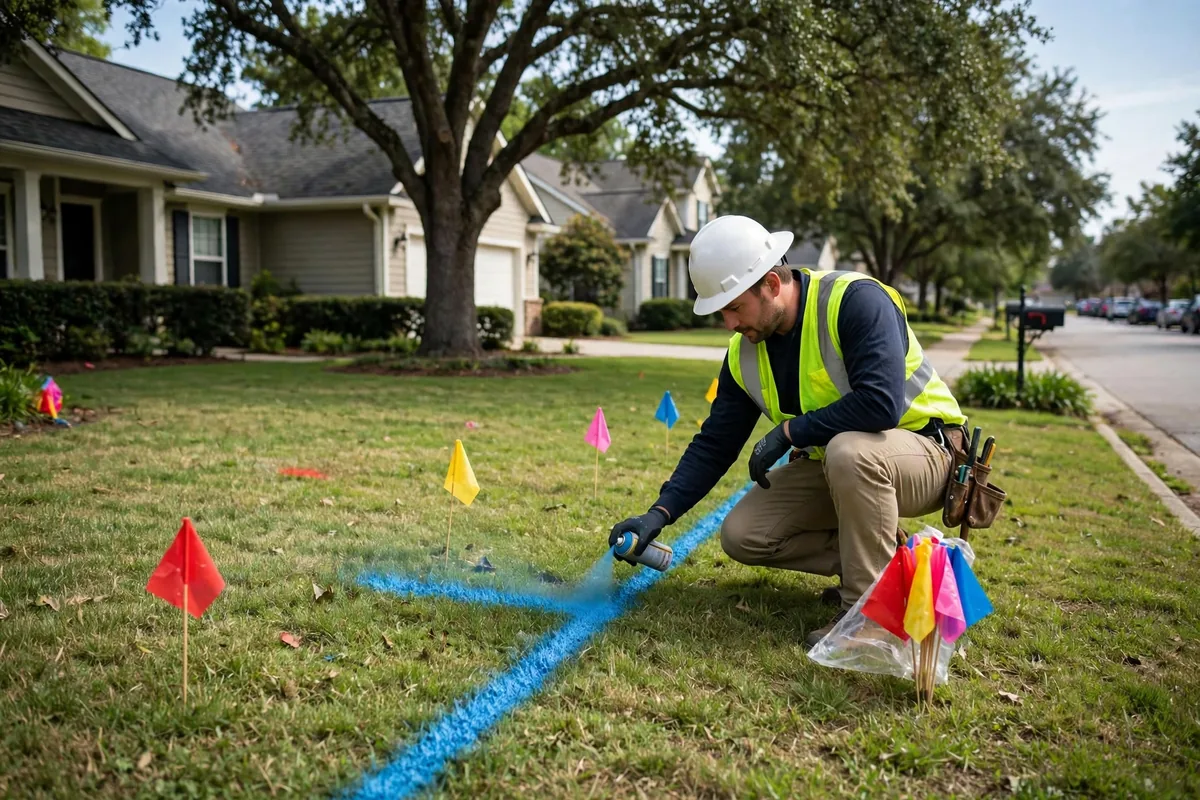
Contact Pennsylvania One Call before excavation starts on an Acme property so public utilities in the dig area can be marked. Those marks cover public services only, never your private pipe, a tank, or other private runs. The pro still traces your own underground line with camera and locating gear, which matters on a set-back Acme lot where the route to the road can be long.
Pennsylvania has no single statewide plumbing credential: permission is handled by municipalities, and home-improvement contractors register with the Attorney General under HICPA. For an Acme job, ask which municipal permission covers the work, ask to see the registration details, and verify them through the Attorney General's consumer protection office. Keep copies with the invoice and any inspection notes for your Westmoreland County property file.
Distance is exactly why the camera matters in Acme. The recording carries a distance count, so a fault found under a long yard is tied to a measured point, and a locator used at the surface confirms that point before digging. Without that step, a crew could open ground in the wrong place on a set-back Westmoreland County lot and still miss the break entirely.
In many cases, yes. A liner rebuilds a cracked pipe from inside, and a new pipe can be pulled along the old route through small pits, sparing most of a large Acme yard, its planting and any track or driveway crossing the line. The pipe must be clean, checked on camera and still in shape for those methods. A flattened or badly dropped length may still require open digging.
Yes. Soil that freezes and thaws through a Pennsylvania winter shifts around a buried pipe, and the movement can open joints or crack a rigid length under an Acme yard. Shallow sections and sections holding water are most exposed. A line that slows each winter and recovers each spring deserves a camera look at its depth and joints, not another round of clearing alone.
A typical homeowners policy tends to cover sudden indoor water damage rather than a worn-out underground pipe. A service line add-on may cover the pipe where you bought one, and a backup add-on may help with cleanup after an Acme backup. The Pennsylvania Insurance Department publishes consumer guidance on homeowners cover. Keep the sewer inspection report and footage either way, because documented evidence supports a claim.
Stop adding water immediately: no flushing, laundry or showers. Keep children and pets away from affected rooms in your Acme home and avoid skin contact with the water. Move dry belongings only where you can reach them without stepping through sewage. Then call the number on this page. Lines are answered 24/7 in Pennsylvania, and a pro can typically arrive in 30 to 60 minutes.
Homes around Acme can sit well back from the road, so the underground pipe crosses a long stretch of soil before it reaches the street. Every extra yard of run adds joints and adds chances for settling ground to drop one section or pull a joint apart. Wet soil that freezes, thaws and dries through the year works hardest on those joints. When a clog keeps returning at the same measured distance, suspect the ground and the joint together, not just whatever waste happened to pass that week. Ask for the measured distance of any repeat fault in writing.
Roots Under Acme Yards And Boundaries
Tree root intrusion is a slow, ordinary process, not bad luck. Roots follow moisture, and a joint that weeps even slightly advertises itself underground to trees and large shrubs on an Acme lot or its boundary. Growth enters fine, thickens, and begins catching paper and waste until flow narrows. Clearing restores the passage temporarily, yet the joint that admitted the roots stays open. Sealing that joint, lining the run, or renewing the affected length is what changes the long-term picture for the household. That distinction is worth making before any clearing is booked.
Pennsylvania Rain And Soil Water
Pennsylvania receives 45.03 inches of precipitation in an average year, at a mean annual temperature of 49.47°F (NOAA 1991-2020). After sustained rain, soil around an Acme pipe holds more water, and some of that water can enter through cracked joints and add to the flow the line must carry. A pipe already narrowed by scale or roots has little spare room for that extra load. If your drains behave in dry weeks and fail in wet ones, say so when you call. Note the weather pattern for a week or two before you call.
Septic Or Street Connection In Westmoreland County
Not every Acme household connects to a street line; some rely on a septic system on their own land, and the early symptoms of trouble can look identical indoors. Confirming which system serves your address shapes everything that follows, from who is responsible for the pipe to which repair even applies. Where a street connection does exist, Pennsylvania practice places the house-side pipe with the owner, and statewide 69.3% of occupied homes are owner-occupied (ACS 2024), so that decision usually rests with the household itself. Keep that confirmation with your property papers for future work.
Sewer Line Repair Acme, PA: At A Glance
Acme is covered here under ZIP 15610 in Westmoreland County. No separate local housing count is published for Acme on this page, so context comes from Pennsylvania: a median home built in 1965, 67.2% of homes before 1980, and 69.3% owner-occupied (ACS 2024).
The Acme Sewer Line Guide
What Does A Soggy Patch Above The Line In Acme Mean?
A wet or greener patch above the underground route, paired with several slow drains, gurgling, smells or repeat clogs, usually means wastewater is escaping or backing up along that line.
Treat the yard clue and the indoor clues as one story. A soggy area, or grass growing lusher over one strip, can mean leaking wastewater is feeding the soil there. Indoors, the pattern that matters is shared: the toilet, bath and floor drain slowing together, sewage appearing at the lowest fixture, and gurgling as air pushes back through traps. A smell in a room or out by the line adds weight to the same suspicion for an Acme household.
A single patch after heavy rain may be ordinary surface water, which is why timing matters. Note whether the wet area persists in dry weather, whether it smells, and whether indoor drains worsen at the same time. Clogs that keep returning after clearing belong in the same note, because a returning clog points past simple waste toward a break, a dropped section or roots. Read the Pennsylvania page for how these signs are handled statewide.
What Breaks Down Inside An Older Acme Pipe?
The usual culprits are roots entering at joints, iron worn and narrowed from inside, a section that has cracked or dropped, grease coating the walls, and materials reaching the end of their working life.
Roots do patient work underground around Acme properties. A fine root finds moisture escaping at a joint, grows inside, and thickens into a mass that snags everything passing. Ground movement can separate two lengths at a joint, leaving a step that catches solids, or split a rigid section outright, leaving a cracked or collapsed pipe. Each cause leaves a different picture inside the line, so guessing from the symptom alone often leads to the wrong repair.
How Does Iron Pipe Wear From Inside?
Cast iron pipe corrodes inwardly over decades: scale roughens the walls and catches waste, and a channel can wear along the base until the wall leaks. By contrast, a vitrified clay pipe stays hard itself, but it was laid in short lengths, so its many joints are the weak points where soil movement opens gaps. Fibre pipe from some mid-century decades adds a third pattern, softening and flattening under the weight above it.
Why Does A Dropped Section Keep Clogging?
A section that has sunk sits below the intended fall, so water and solids pool in the dip. Clearing sends the pool onward once, then the dip refills and traps the next load. Grease makes it worse, coating the pooled area each time warm cooking water cools in the line. Only restoring the fall, or renewing that length, ends the cycle, which a camera visit can confirm before money is spent on repeated clearing.
How Can A Pro Find A Fault Under A Large Acme Lot?
Distance is the honest answer on a set-back lot: the fault is found on camera first, then located from the surface, so digging happens at the measured spot rather than by trial.
A CCTV sewer camera inspection enters through the sewer cleanout and records the inside of the pipe: cracks, root masses, pooled sections and changes of material, each tied to a distance reading. A sonde locator then picks up the camera head's signal from above ground, letting the pro mark the spot and depth in an Acme yard where the line may run a long way from the house to the road.
Where a leak's exact path is unclear, smoke testing can show where vapour escapes from a faulty joint or connection, which helps narrow the search before digging. A line full of standing water may need clearing before the camera can see anything useful. Ask to watch the recording yourself, and ask what each fault means for the repair choices that follow, while you are both looking at the same pictures.
When Is Digging The Right Answer In Acme?
Digging is right where one section has failed, lining suits a cracked pipe that is still round, a pulled-through renewal suits a collapsed route, and full replacement suits a line damaged in several places.
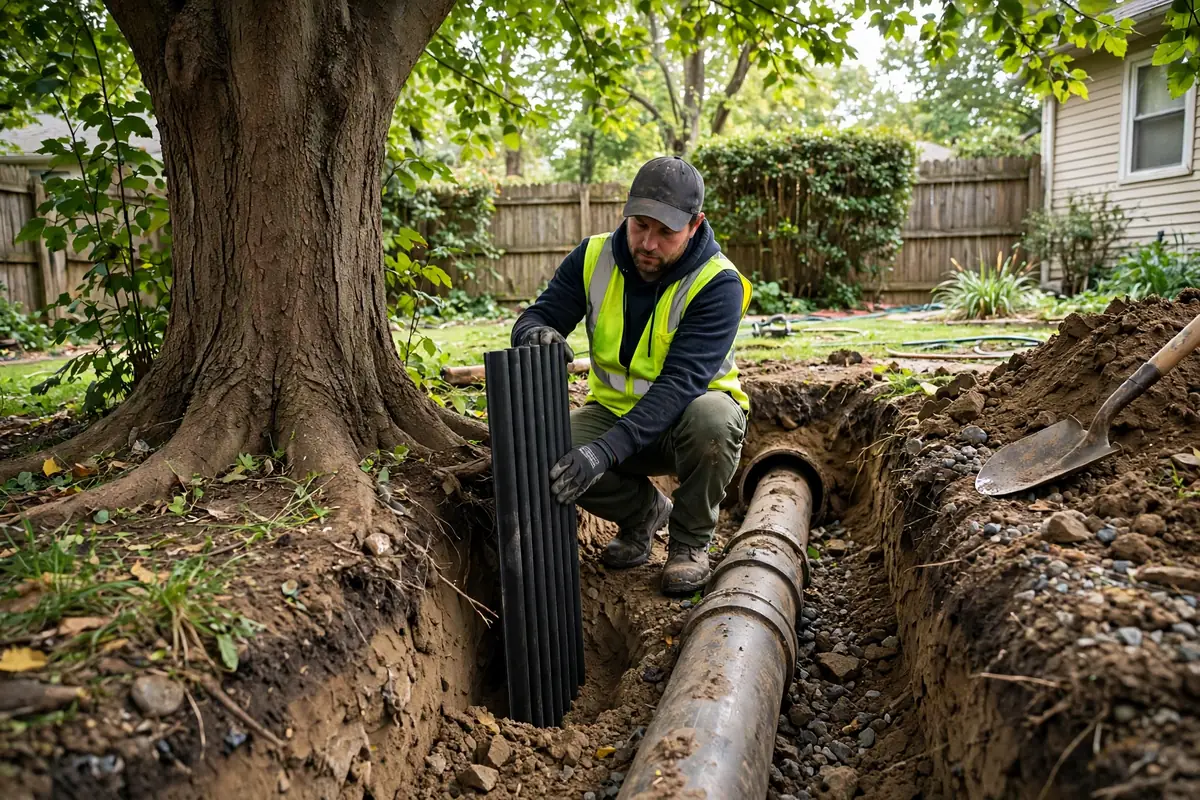
Excavating only the failed length and joining in a new piece is proportionate for a single break. A CIPP liner sets inside a round but cracked pipe, sealing its joints from within. Pipe bursting draws HDPE pipe through the old route while breaking the old material outward, which suits a collapsed run that still follows its path. Where damage repeats along the run, open digging and a fresh PVC pipe laid at the proper slope is the durable answer, even though it disturbs more ground.
Cost follows method, depth and length, the material and size involved, and the ground, lawn or track that must be reinstated afterwards.
Neighbouring places face their own ground conditions; see Alverton, PA and Armbrust, PA. Mention a backwater valve if street surges have ever threatened homes nearby.
Hamza is a licensed master plumber and underground infrastructure specialist with extensive field experience resolving sewer lateral collapses, root intrusions, and structural line offsets across Pennsylvania, Ohio, and New York. He specializes in high-definition CCTV pipe diagnostics, cured-in-place pipe (CIPP) lining, pipe bursting, and non-invasive trenchless rehabilitation to restore residential and commercial sewer systems without property destruction.
Updated October 31, 2026
How Acme, PA Compares
Acme has no separate ranking or local housing figure on this page, so comparison stays statewide: Pennsylvania's median home was built in 1965, older than the national pattern reported by the Census, 67.2% of Pennsylvania homes predate 1980, and 69.3% of occupied homes are owner-occupied (ACS 2024).
Do I Have This Problem?
Work through this check if your Acme drains have started failing together or a patch of yard will not dry out. Tick the signs you can actually see today. The outcome only suggests a possible underground fault worth checking. It cannot confirm one. Only a pro with a camera in the line can do that.
These Signs Can Point To A Sewer Line Problem — Call A Local Pro To Check.