Shared Sewer Lateral With a Neighbor: Who Owns It and Who Pays?
Free Call · Answered 24/7 · Local Pros Near You
The Short Answer
If two homes drain into one shared pipe to the street, each homeowner usually owns the private branch on their own lot, while the shared stretch is usually a joint responsibility. The real split comes from deeds, recorded access rights and local rules, and those vary by town. A camera check that pins down where the fault sits is the fairest way to divide a repair bill.
Call (800) 555-0100Shared Sewer Lateral Responsibility, Explained In Plain Words
What Does It Mean When Two Homes Share One Line To The Street?
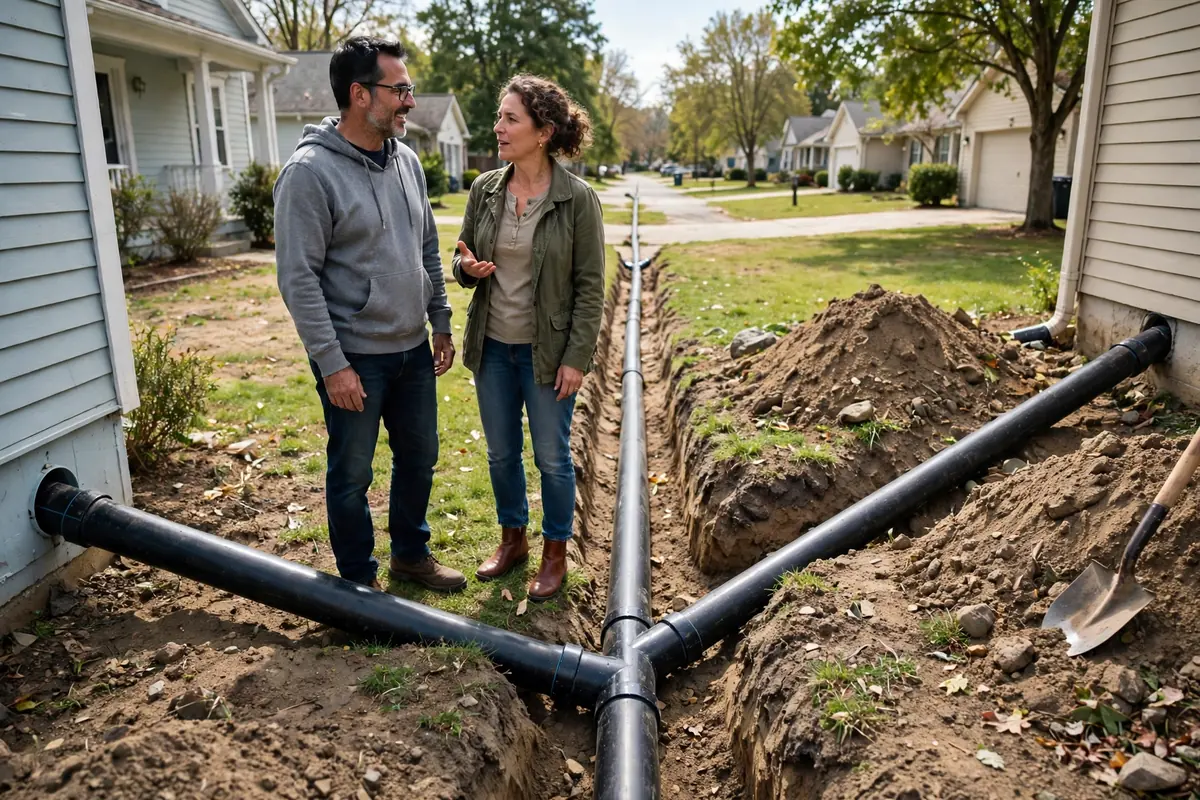
It means both houses drain into a single shared pipe that joins the street main at one point, instead of each home having its own separate connection. The arrangement is common in older streets where homes went up before separate connections became standard.
Many owners only learn the line is shared when trouble shows up in both homes at once. Toilets gurgle on both sides of the fence, sewage appears at a floor drain in Auburn, NY, during the same week, and the first camera run finds a Y-shaped junction where the two private branches meet. From that junction, one trunk carries everything from both houses out to the public sewer main.
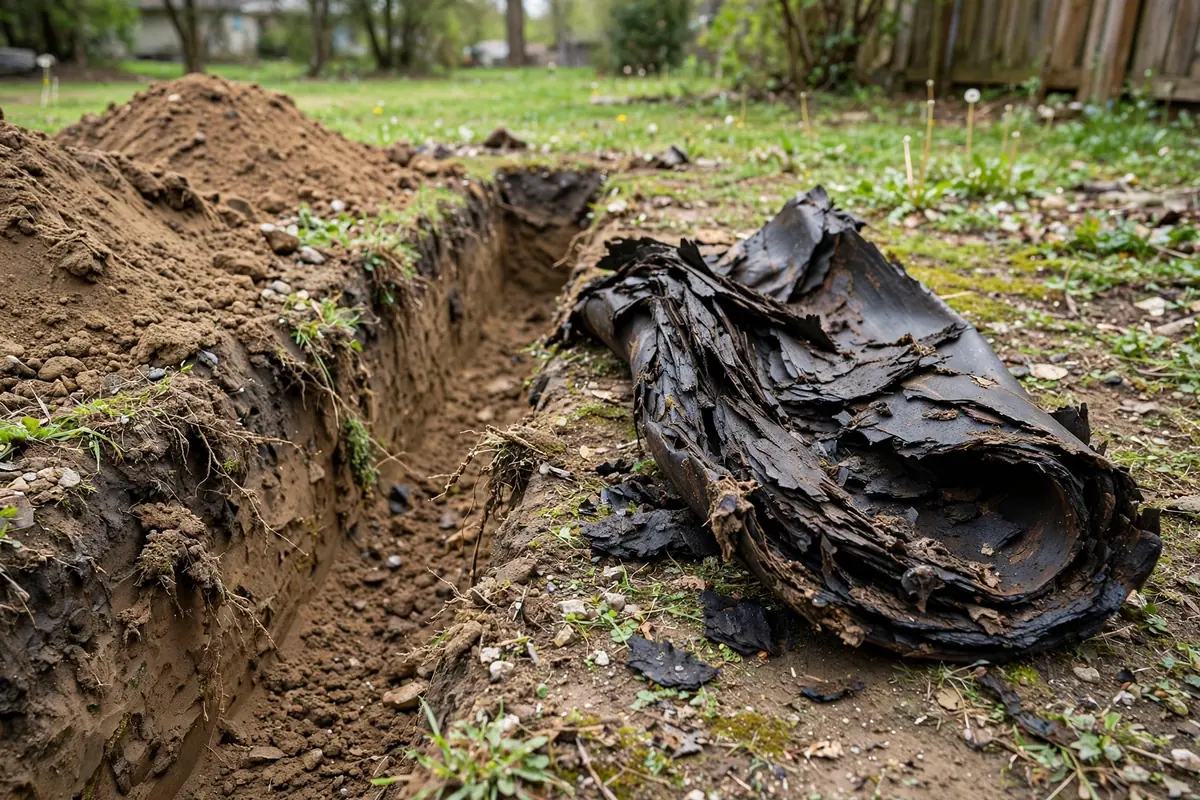
Shared runs turn up most often where lots were split from a larger parcel, where a second home was added behind the first, or where streets were built quickly with one connection serving a pair of houses. Older shared trunks are frequently vitrified clay pipe, laid in short sections with many joints, which is one reason they feature so often in disputes about roots and shifting ground.
Sharing a pipe is not a defect by itself. A shared trunk in sound condition can serve two homes for decades. The problems start when nobody knows the line is shared, so maintenance is skipped, a blockage is blamed on the wrong house, or a repair bill lands on one doorstep when the fault sits in ground both homes depend on.
How Can You Tell If Your Line Is Shared?
Start with paper, then prove it with a camera. Deeds, surveys and town sewer maps may show a joint connection, and a dye test or camera run settles the question when records are thin or missing.
Ask your local sewer office for any map or connection record for your address, and check your deed and survey for a shared line or a recorded access right crossing a lot line. Older paperwork is often silent, though. Homes in places like Amsterdam, NY, with a possible shared line frequently have no mention of the arrangement in modern sale documents, even when the pipe has served two houses for generations.
A dye testing run gives a plain answer. Coloured water flushed through a neighbour's toilet should never appear in your sewer cleanout or be seen by a camera in your branch unless the two lines join. A sonde locator, a small transmitter sent through the pipe, lets the pro trace the exact path of the line above ground and mark where the branches meet and whose land the shared stretch crosses.
Behaviour is a clue as well. If your drains slow down when next door runs laundry, or both homes back up on the same rainy evening, the lines likely meet somewhere. None of these signs proves sharing on its own, which is why the camera and dye evidence matters before any argument about money begins.
Who Owns The Private Branch, And Who Owns The Shared Stretch?
In most arrangements, each owner is responsible for the branch on their own property, and both owners share responsibility for the common trunk. There is no single national rule, so deeds, recorded rights and town practice decide each case.
Think of the system in two parts. The branch from your house wall to the junction sits on your land and serves only you, so upkeep there normally falls to you alone. From the junction onward, the trunk serves both homes. Lawyers and town offices usually describe that shared part of the pipe from your house in terms of joint use and joint upkeep, whatever the exact wording in the deeds.
The documents that matter most are the deed, the plat or survey, and any right-of-way / easement recorded when the line was laid or the lots were divided. One property may hold recorded rights that let the shared trunk cross it and lets either owner enter to repair it. Where papers say nothing, long practice and local rules fill the gap, which is why shared-line responsibility in New York can differ from the next state or even the next town.
Because the answer rests on documents rather than custom, do not rely on what a previous owner told you or what a neighbour assumes. If the split is unclear and real money is at stake, a property lawyer in your state can read the deed and recorded rights and give you the position in writing before you agree to pay for anything.
Who Pays When The Shared Stretch Blocks Or Breaks?
Where the fault sits usually decides who pays. A blockage inside one private branch is that owner's bill. A failure in the common trunk is normally split between both homes, unless the evidence shows one household caused it.
Cause matters when it can be shown. Grease buildup traced to one kitchen, wipes flushed from one bathroom, or damage from one owner's building work can fairly put more of the bill on that side. Ordinary wear is different: joints that have shifted with age, or a trunk that has simply worn out, are shared problems, and owners arranging help with a shared line in Akron, OH usually split that kind of repair evenly.
This is where records earn their keep. A dated sewer inspection report and footage showing the distance from the cleanout to the fault lets both owners see whether the problem sits in a private branch or in the common trunk. Guessing leads to stalemate, and stalemate leaves sewage in someone's basement while the argument runs.
Money questions also reach beyond the repair itself. Digging, surface restoration and future access may all need agreement. It also pays to check cover early: our guide to sewer line insurance coverage explains which add-ons can respond to a failed buried pipe, though a policy on one home does not settle how neighbours divide a shared bill between themselves.
What Does A Camera Check Show On A Shared Line?
A camera run maps the whole arrangement: where the branches join, whose ground the trunk crosses, and exactly where any fault sits. That map, with distance readings, is what turns a disagreement into a decision.
A CCTV sewer camera inspection travels from a cleanout through the junction and out toward the street. On screen the pro can identify an offset joint where two sections have shifted, a belly / sag in the line where water and solids settle, or a cracked or collapsed pipe that cleaning alone will never fix. Each finding is logged with its distance, so its position against the lot line is clear.
Roots tell their own story. Fine roots entering at a joint in the shared trunk point to shared upkeep, while a mass of roots inside one branch, fed by that owner's tree, points the other way. The camera also confirms the trunk actually reaches the public sewer main and notes the condition of the connection near the manhole at the street.
Ask for the footage and the written report, and share copies with both households. Owners in Altoona, PA, facing a shared-line fault are in the same position as owners anywhere: the household that holds the only copy of the evidence holds the argument. Shared evidence keeps the conversation about the pipe, not about trust.
What Repair Choices Exist For A Shared Pipe, And What Shapes The Bill?
Short faults can often be fixed with a spot repair, sound but ageing trunks may be renewed from inside, and failed sections may need digging up and replacing. Depth, length, access and surface restoration shape the shared bill more than the pipe itself.
Spot excavation repair digs only at the fault, which suits one shifted joint or one short cracked section. Cured-in-place pipe lining (CIPP) renews the trunk from inside where the old pipe still holds its shape, and pipe bursting pulls new pipe through the old run where the line has failed but the route is sound. Each option needs both owners to agree, because the work affects both homes and may cross both lots.
The bill turns on practical factors, never one flat figure: how deep the trunk lies, how long the damaged stretch is, whether it passes under a driveway or mature planting, and whether the proper slope / grade of a sewer line can be held along the repair. Replacement sections are often PVC pipe, while an older cast iron pipe branch inside one property may add its own separate work that stays that owner's cost.
Prevention can be split too. A backwater valve fitted on each private branch can stop sewage from a shared trunk backup entering either home, and each owner pays for the valve on their own side. Agreeing these smaller shares in advance is far easier than dividing them during a backup, as owners reading about sewer lines across Pennsylvania will recognise.
How Do Neighbours Put A Shared Line Agreement In Writing?
Write down what the camera found, how future costs will be split, and how access for repairs will work, then keep the agreement with each home's deeds. A short written record prevents most shared-line disputes before they start.
A workable agreement covers five things: a sketch of where the branches and trunk run, the cost split for the shared stretch, how decisions are made in an emergency, access rights for digging on either lot, and a rule that neither home adds a new connection or extra flow without telling the other. That last point matters, because a neighbour's sump pump discharge into a sewer line can overload an older shared trunk in wet weather.
Before any digging is agreed, remember the safety basics. Call 811 so buried utilities are marked, keep people clear of any open trench, and leave the repair itself to a pro. If one home is being sold, the agreement and the camera report should pass to the buyer, in the same way a sewer inspection before buying a house gives a new owner the line's history in writing.
If talking breaks down, stay factual. Share the footage, get a second written opinion on where the fault sits, and consider mediation before legal steps, since local rules and recorded rights differ and a court route is slow and costly. Most shared-line repairs are settled once both sides look at the same evidence and the same written split.
Frequently Asked Questions
Straight answers to the questions neighbours ask most about shared lines. If sewage is backing up now, call free — lines are answered 24/7.
Still Have Questions? Call Free
One free call connects you with a local pro.
(800) 555-0100Free Call · Answered 24/7 · No Obligation
Reviewed By Hamza
Master Plumber & Trenchless Sewer Rehabilitation Specialist
Hamza is a licensed master plumber and underground infrastructure specialist with extensive field experience resolving sewer lateral collapses, root intrusions, and structural line offsets across Pennsylvania, Ohio, and New York. He specializes in high-definition CCTV pipe diagnostics, cured-in-place pipe (CIPP) lining, pipe bursting, and non-invasive trenchless rehabilitation to restore residential and commercial sewer systems without property destruction.
Updated October 31, 2026
Need Sewer Line Repair Near Me?
One free call connects you with an independent local pro — answered 24/7, no obligation.
Call (800) 555-0100Free Call · Answered 24/7 · Local Pros Near You