Is Your Sump Pump or Downspout Feeding Your Sanitary Sewer? Inflow Explained
Free Call · Answered 24/7 · Local Pros Near You
The Short Answer
Often, yes — and in most towns it should not be. The basement pump is meant to send groundwater from the pit under your basement out to the yard or a storm drain. Plumbed into the house drain instead, it pours clear water into a sanitary system sized only for sewage, and a connected roof leader does the same at storm speed. The result is surcharged streets, flooded basements and a connection most towns require you to remove once it is found.
Call (800) 555-0100Sump Pump Discharge Into Sewer Line, Explained In Plain Words
Why Do The Drains Misbehave Only When It Rains?
It can, and the timing is the clue. When sewage trouble arrives with the rain and clears as the rain stops, the extra water in the system is usually rain water that should never have entered it.
Picture a hard storm over Allentown, PA. The basement pump in the pit below the floor starts cycling every few minutes, the lowest drains gurgle, and by the time the rain eases the floor drain has a dark ring around it. Nothing in the house changed during that hour. What changed was the volume of water trying to leave it.
A sanitary line is sized for the water a home actually uses: showers, laundry, flushing, dishes. Roof runoff and groundwater pumping can multiply that flow many times over in a single storm. The pipe under the street, the pipe under your yard and the drains in your basement all share that surge, and the lowest opening in the house is where the pressure shows first.
Dry-weather problems point somewhere else — a blockage, roots or a damaged pipe. Wet-weather problems that rise and fall with the storm point at clear water entering a system built only for dirty water, and that pattern is worth checking before anyone blames the pipe itself.
Which Connections Feed Rain Water Into The Sanitary Line?
Roof water, pumped groundwater and footing drainage are the usual three. Each was often connected years ago for convenience, and each sends clean storm water down a pipe meant only for wastewater.
The classic one is a downspout tied straight into the underground line instead of spilling onto the lawn or into a storm drain. One roof in one storm sheds a surprising amount of water, and a direct tie-in delivers all of it, fast, exactly when every other home on the street is doing the same.
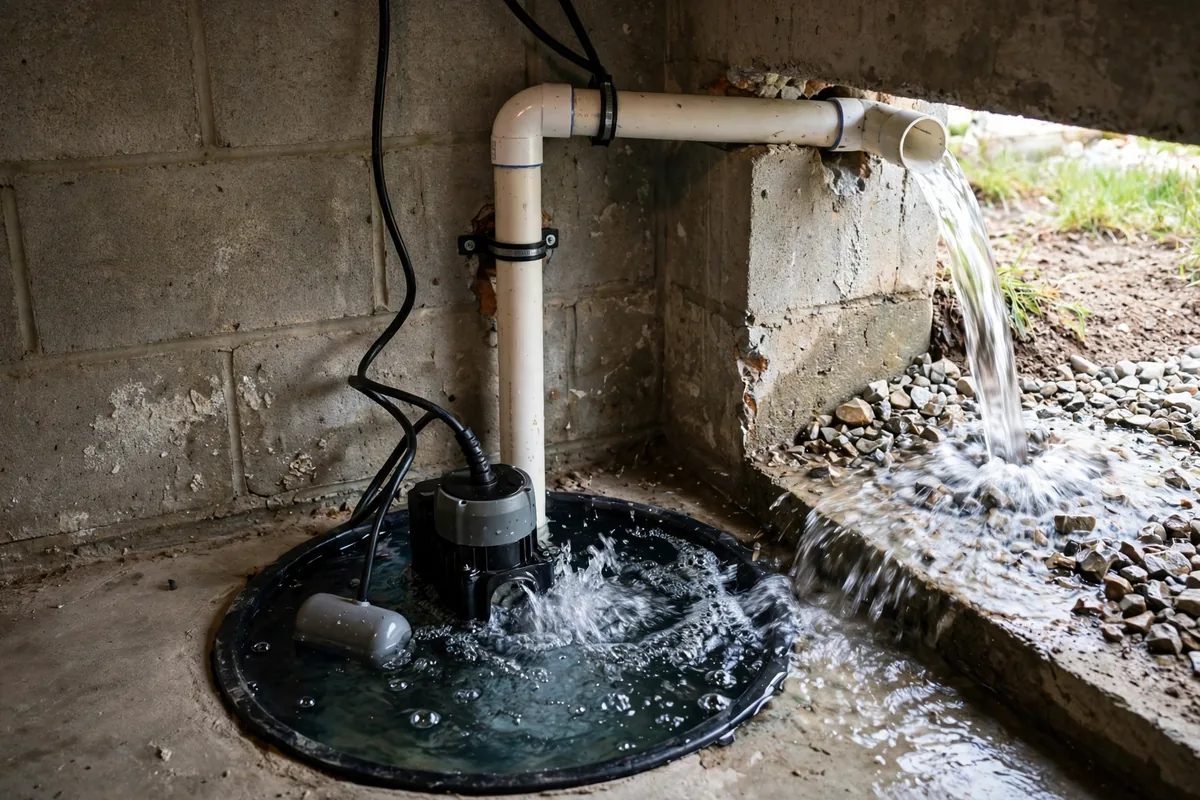
The second is basement-pump discharge into sewer line plumbing: the pit pump that keeps groundwater away from the footings lifts that water and drops it into the house drain. The third is the foundation drain, the perforated pipe around the footings, plumbed into the same house line in older construction. All three were once common practice in places, which is why so many older homes have them without the current owner knowing.
None of these connections shows above ground, and none causes trouble on a dry day. They only reveal themselves under storm load, which is why a home can pass a dry-day inspection and still flood its own basement twice a year.
How Is Rain-Driven Entry Different From Groundwater Seeping In?
They enter differently and behave differently. Rain-driven entry arrives in a rush through deliberate connections, while groundwater seeping in through cracks and joints is slower, steadier and tied to the water table.
The word inflow covers the rush: surface water and pumped water poured into the system through pipes that were connected on purpose. It starts when the rain starts, peaks with the storm and stops soon after, and a single street of connected roofs can overwhelm a main that handles normal sewage with room to spare.
Infiltration is the slow cousin. Groundwater finds its way through cracked joints, broken sections and the walls of an ageing sewer lateral, and it rises and falls over days as the ground saturates and dries. It strains the system less dramatically, but it runs far longer, and it is a pipe-condition problem rather than a connection problem.
The fixes differ just as much. Wrong connections get disconnected and rerouted. Seeping joints get repaired, lined or replaced. A camera survey under wet conditions, compared with one in dry weather, is often what tells a pro which of the two is loading your line.
Why Do Towns Ban These Connections?
Because that extra water has to be pumped, treated and carried by pipes sized for sewage alone. Towns pay for every gallon, and when capacity runs out, the water backs up into homes or overflows untreated.
A treatment plant charges its capacity by flow. Storm water sent down the sanitary route takes up plant capacity, wears pumps faster and can push a system past its permitted limits in a single night. Federal wastewater rules, enforced in Pennsylvania through the state system that covers sewer line repair across Pennsylvania, treat those overflows as pollution events, not bad luck.
The street feels it too. When the public sewer main fills beyond capacity, a combined sewer surcharge can lift water through a manhole or push it back toward the lowest homes on the line. Your neighbour's connected roof can, in effect, be part of why your basement floods.
That is why the municipal sewer utility in town after town now inspects for these connections, sometimes during a home sale, sometimes street by street. The rule is rarely new. What is new in many places is the enforcement, arriving decades after the connection was quietly made.
What Are The Telltale Signs At Your House?
The signs line up with the weather. Backups that happen during storms, drains that gurgle while the pit pump runs, and damp that follows rain rather than water use are the pattern to watch.
Start with timing. Keep a simple note of every backup or slow-drain episode and the weather that day. Homeowners tracing sewer line repair in Auburn, NY often find three storm-linked episodes in a row in their notes, and none at all in a dry month. That pattern is evidence, and a pro will ask for it.
Sound is a second clue. Gurgling rising through the house trap or up the main stack while the pit pump cycles suggests the pump's output and the house drains are sharing one crowded path. A third clue is geography: trouble that starts at the lowest drain in the home and spreads upward as the storm builds fits a system filling from the street end.
A fourth clue sits outdoors. If no discharge pipe, splash block or wet patch appears outside when the pump runs, the water is going somewhere hidden. A pump that runs often yet never wets the yard is very likely sending its water into the house drain instead.
How Does A Pro Prove Which Connection Is Wrong?
Three tests, used together, settle it. Harmless smoke pushed into the system reveals hidden connections, coloured water traces exactly where a roof or pit line ends up, and a camera shows the inside of the pipe.
Smoke testing comes first for a street or a single home. A crew introduces non-toxic smoke at a sewer cleanout and watches where it escapes. Smoke drifting from a roof vent stack is normal; smoke curling out of a gutter joint or a driveway drain shows a connection that should not exist.
Dye testing answers the next question. Coloured water poured into a roof leader or added to the pit is then watched for at the house line: if the colour appears in the sanitary run, the connection is proven, not suspected. A CCTV sewer camera inspection finishes the picture, showing where each branch joins, and whether tree root intrusion or a cracked joint is adding groundwater to the load.
The visit leaves a record of which connections are lawful, which are not, and what the pipe itself needs. That record matters because the rerouting work, and any town inspection that follows, both depend on the finding being documented rather than guessed. Details of the companion digging rules sit in our guide to does 811 mark sewer lines, since most fixes involve a trench.
How Is A Wrong Connection Put Right?
The pro disconnects the clean-water line from the sanitary run and gives it its own legal route to daylight, a storm connection or a proper soakaway point, with the discharge carried away from the house.
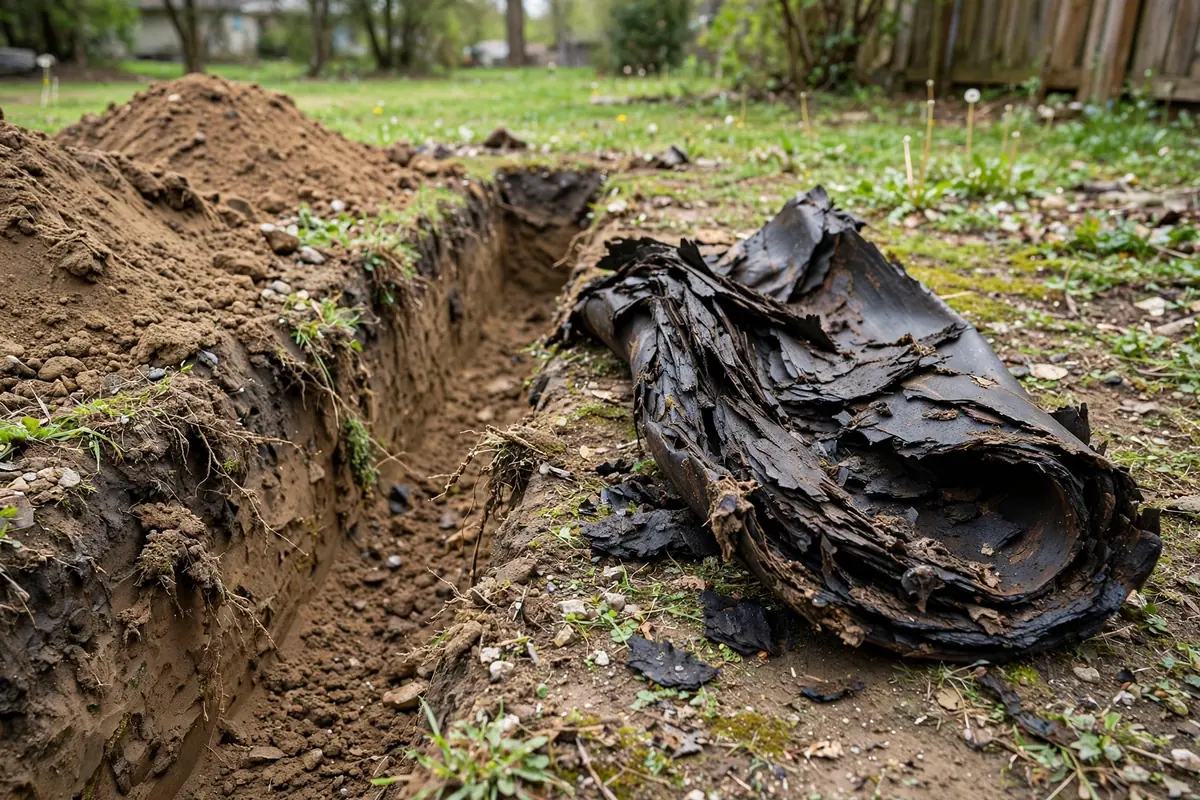
For a roof leader, the reroute usually means a new shallow run that ends well away from the footings, so the water soaks into ground that can take it. For a pit pump, the discharge is replumbed to its own outlet pipe instead of the house drain. Crews doing this work around sewer line repair in Akron, OH check the fall on the new run carefully, because an outlet that drains back toward the house solves nothing.
Slope is the quiet detail that decides whether the fix lasts: the new run has to keep the proper slope / grade of a sewer line where it ties into any buried drain, or it will silt up and freeze. Where digging is needed, the same crew handles the marking, the trench and the restoration, and the town may want to inspect the disconnection before the ground is closed.
Two side points come up often. A backwater valve protects a basement against street surges, and it is worth discussing, but it does not legalise a wrong connection — it treats a symptom, not the cause. And homes on a septic system follow different rules altogether, since their tank and field are sized even more tightly against storm water.
What Shapes The Cost Of Putting It Right?
The bill turns on distance, depth and what sits on top of the route. Expect factors, never a flat figure: how far the new run travels, how deep it is buried, and what surface must be restored above it.
Distance leads. A discharge outlet a few paces from the house is a short trench and a short pipe run; an outlet carried to the far corner of a deep lot is neither. Depth follows, because a line buried below frost or threaded under a drive costs more to install than a shallow lawn run, and paved surfaces that must be cut and remade add their own share.
The state of the existing pipe matters too. If the camera found the sanitary run cracked or root-filled at the same visit, combining the reroute with that repair shares one excavation between two jobs. Work near sewer line repair in Altoona, PA often pairs the two for exactly that reason, and the permit and inspection requirements set by the town add a further factor that varies from place to place.
Who pays is usually the homeowner, since the connection sits on private property, even when it was made long before they bought the house. Ownership questions on shared runs are covered in our guide to shared lateral responsibility. One free call connects you with an independent local pro who can test the connections first; a pro can typically arrive in 30–60 minutes, and lines are answered 24/7.
Frequently Asked Questions
Plain answers about rain water, pit pumps and sanitary lines. If your setup is not described here, call free and talk it through — lines are answered 24/7.
Still Have Questions? Call Free
One free call connects you with a local pro.
(800) 555-0100Free Call · Answered 24/7 · No Obligation
Reviewed By Hamza
Master Plumber & Trenchless Sewer Rehabilitation Specialist
Hamza is a licensed master plumber and underground infrastructure specialist with extensive field experience resolving sewer lateral collapses, root intrusions, and structural line offsets across Pennsylvania, Ohio, and New York. He specializes in high-definition CCTV pipe diagnostics, cured-in-place pipe (CIPP) lining, pipe bursting, and non-invasive trenchless rehabilitation to restore residential and commercial sewer systems without property destruction.
Updated October 31, 2026
Need Sewer Line Repair Near Me?
One free call connects you with an independent local pro — answered 24/7, no obligation.
Call (800) 555-0100Free Call · Answered 24/7 · Local Pros Near You