Does 811 Mark Your Private Sewer Line? What Call-Before-You-Dig Does and Does Not Do
Free Call · Answered 24/7 · Local Pros Near You
The Short Answer
No. Call 811 before a digging job and the visit marks the public utility lines that run along the street and up to your property — gas, water, power and the town sewer in the road. The pipe that carries wastewater from your house out to that street main is private, it belongs to you, and the 811 system does not mark it. Finding that buried run is a separate job, usually done with records, a camera and a locator.
Call (800) 555-0100Does 811 Mark Sewer Lines, Explained In Plain Words
What Does The 811 Visit Actually Mark?
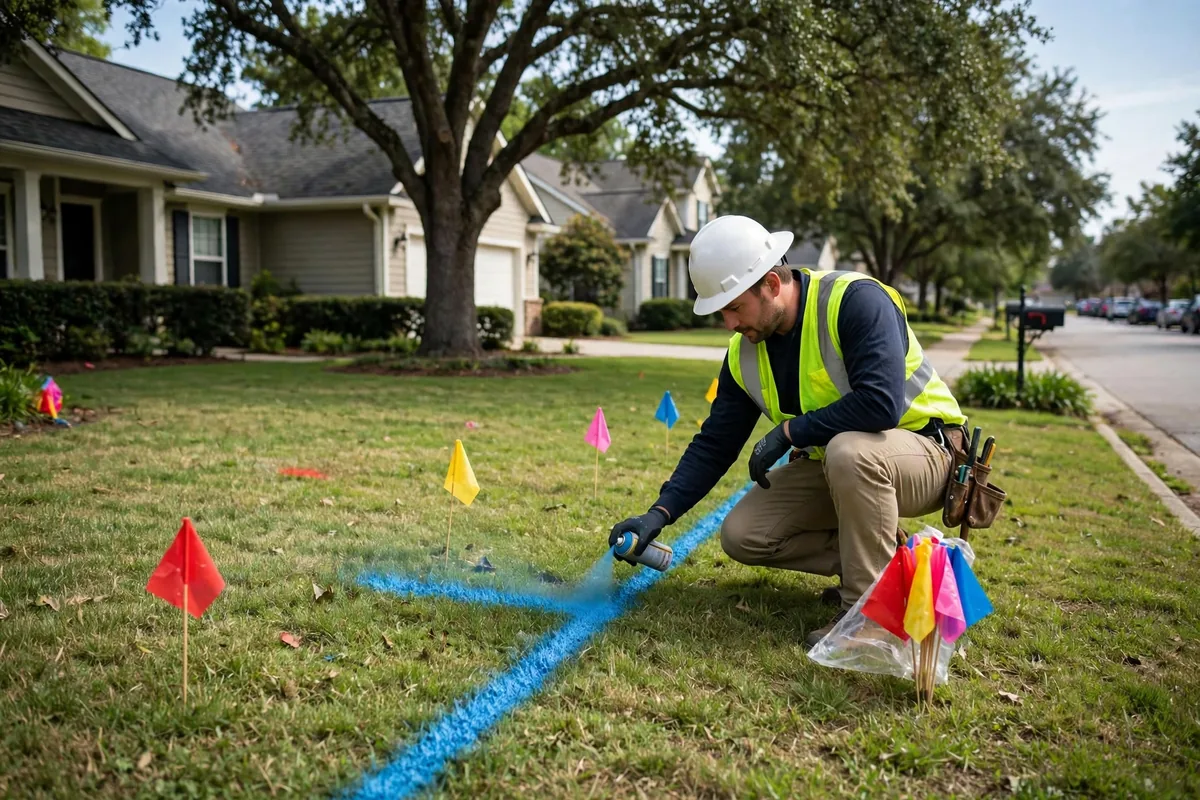
It marks the lines that utility companies and the town own and maintain. Crews paint lines and plant flags where those public services run, so a digger can steer clear of them.
Call 811, give the address and a short description of the work, and each utility that has lines near the dig site sends someone out, or confirms there is nothing of theirs in the way. The marks follow a standard colour code, and for sewers the paint traces the public sewer main in New York roads and in streets in Ohio and Pennsylvania too — the large town pipe in the roadway, not the smaller pipe serving one house. The paint often runs from manhole to manhole along the right-of-way, the strip of street and verge where public lines sit.
That street main is where the public markings stop. The city or municipal sewer utility looks after that street main, and its crews stop at the same line the paint does. The run from your foundation wall out to the main sits on your land, serves only your home, and was put in when the house was built or connected. No utility crew paints it, because no utility owns it, and in many towns no utility even holds a drawing of where it runs.
So a yard can look fully marked and still hide the one pipe a fence post or a tree pit is most likely to hit. The flags tell you where the town's lines are. They say nothing about your own.
Why Is The Pipe From Your House Left Unmarked?
Because marking follows ownership. The 811 system exists so diggers do not strike lines that belong to utilities, and your house pipe belongs to you, so it falls outside what the system covers.
Your sewer lateral (building sewer) is private in the same way your driveway is private. You pay to repair it, you pay to replace it, and the records for it, if any survive, sit in an old permit file or a builder's plan rather than in a utility database. Homeowners arranging sewer line repair in Akron, OH often learn this split only when the marks appear on the street and nothing appears on the lawn.
The same gap applies to other private buried runs. A cable feeding a detached garage, a water line to a garden tap, and the discharge pipe from a basement pump are all yours, and all unmarked. Our guide to sump pump discharge into a sewer line covers one of those private runs in detail, because where it connects matters as much as where it lies.
None of this makes the 811 call pointless. Striking a gas or power line is far more dangerous than cracking a drain pipe, and the call is free. It just does half the job, and the other half is yours to arrange.
How Do You Find Where Your Private Line Runs?
Start with paper, then use a camera. Old permits and the position of the access cap in your yard give a rough line, and a camera with a signal head turns that rough line into a marked one.
Look first for the sewer cleanout, the capped access pipe near the foundation or out in the yard. The buried run usually travels from that point toward the street in a fairly straight line, and town permit records or a previous sewer inspection report and footage can confirm the direction, the depth and the material.
A pro then runs a CCTV sewer camera inspection through the line. The camera head carries a transmitter, and a sonde locator at ground level picks up that signal, so the crew can paint the exact path and depth on the grass as the camera moves. Homeowners booking sewer line repair in Auburn, NY use the same visit to learn the pipe's condition, not just its position.
Material is part of what the camera visit reveals. A vitrified clay pipe with joints every few feet, and a cast iron pipe that has thinned with age, both show up clearly on screen. If your line is cast iron, our guide to cast iron sewer pipe lifespan explains what that age means for the pipe. Where a connection is in doubt, dye testing or smoke testing can show which pipe a fixture or a drain actually feeds.
Which 811 Center Handles Your State?
Each state runs its own center behind the same national number. Dialling 811 routes your request to the center for the state you are digging in, and that center passes the job to the utilities.
In New York the center is New York 811. In Ohio it is Ohio 811 (Ohio Utilities Protection Service), and in Pennsylvania it is Pennsylvania One Call (PA One Call). The request process is much the same in all three: describe where you will dig, wait for the marks, and do not start until every utility has responded or cleared the site.
Timing matters more than most people expect. Marks are not instant, and they also fade, wash away in rain and get mown over, so a request made weeks before the work may need refreshing. The pages for sewer line repair across Ohio describe the same pattern homeowners meet there: the street gets marked promptly, and the private run is still a blank.
Keep the confirmation details from your request. If a dispute ever arises about whether a line was marked, that record, plus photos of the flags and paint on the day, is the evidence that settles it.
What Happens If You Dig Through Your Own Pipe?
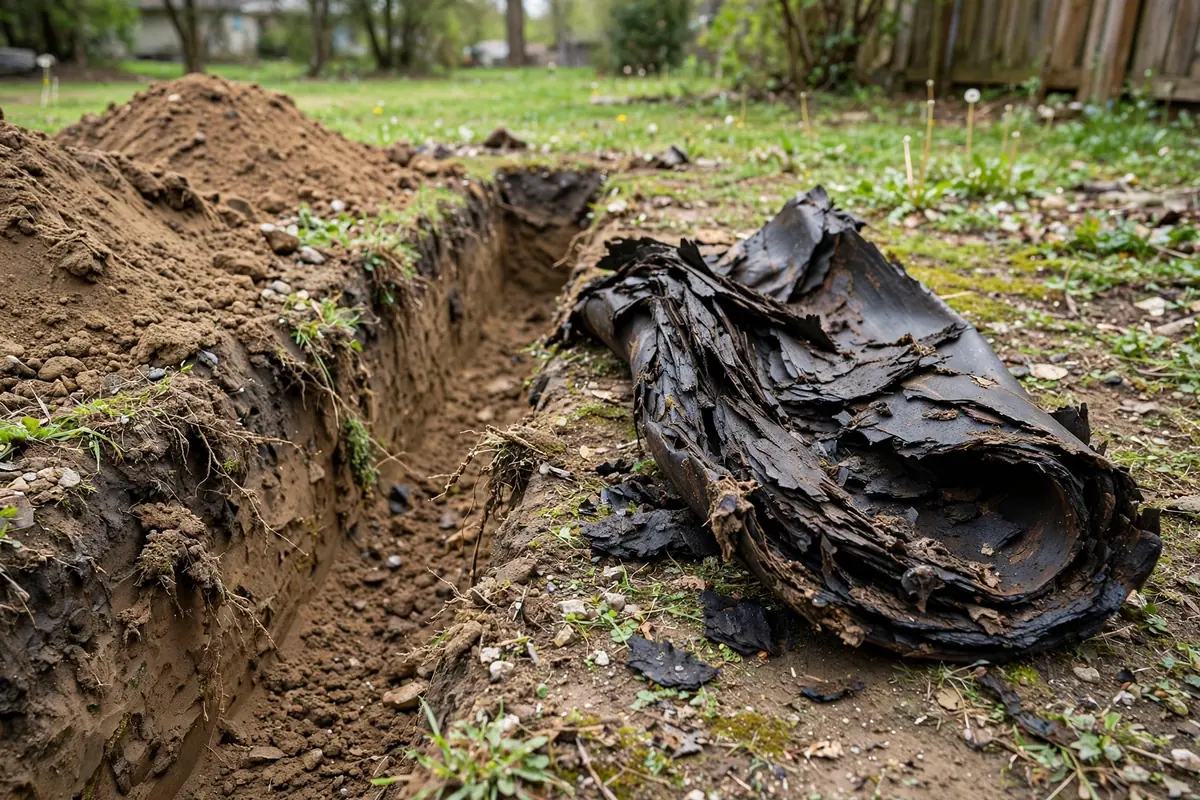
The job stops, and a digging problem becomes a plumbing problem. A cracked house pipe leaks sewage into the soil, draws odours into the yard and can leave the home with drains that barely work.
Stop digging at once and keep people and pets away from the wet ground, because spilled sewage is a health risk as well as a mess. Do not cover the break back over and hope it holds; a buried crack keeps leaking, washes soil away from around the pipe and can turn a short damaged section into a longer collapse.
The fix depends on how much pipe is damaged. A single short break may suit a spot excavation repair, where a crew digs only the damaged length and fits a new section. A pipe already weakened by age may make a wider repair the honest option, and the camera footage is what separates those two cases. Crews helping with sewer line repair in Allentown, PA see this after fence and deck jobs more often than after planned plumbing work.
Cost turns on factors, not a flat figure: how deep the pipe sits, how long the damaged run is, what surface sits above it, and whether the rest of the line is sound. One free call connects you with an independent local pro who can scope the damage first; lines are answered 24/7, and a pro can typically arrive in 30–60 minutes.
When Should A Digging Job Near The Line Go To A Pro?
Hand the job over when the dig is deep, when the new hole sits close to the buried run, or when the work itself is a pipe repair. Shallow garden digging and deep excavation are different risks.
Planting a shrub a clear distance from the marked path is one thing. Digging footings, a French drain trench or a replacement pipe run that crosses the line is another, because a spade or a mini excavator bucket can crack a clay or iron pipe before the operator feels any resistance.
Deep digging brings its own safety rules. Open trenches need trench shoring to keep the walls from caving in, spoil must be kept back from the edge, and nobody should enter a deep, unsupported trench. A pro crew brings that equipment as routine; a weekend hire usually does not.
A pro also protects the finished work. A replacement section has to keep the proper slope / grade of a sewer line, or the new pipe will hold water and solids instead of draining. Getting the fall right is measured work, and it is hard to check after the trench is filled.
What Should You Do On Digging Day Itself?
Walk the site before any tool touches the ground. Check that the public marks are still visible, confirm your own pipe's path is marked or safely clear of the work, and dig gently anywhere near either.
Photograph the paint and flags first, while they are fresh. Then walk the route your own line takes, from the house to the street, and picture it as a no-strike corridor. Within that corridor, hand tools only, shallow passes, and stop the moment a bucket or spade meets anything hard that is not soil or stone.
If you cannot say where your own pipe runs, that is the answer by itself: get it located before the dig, not during it. A camera and locator visit costs a fraction of the disruption a broken line causes, and it leaves you a marked route for every future job in that yard.
And if the work can move, move it. Shifting a post hole or a planting pit a short distance sideways is the cheapest protection there is. Call 811 for the public lines, get your own line traced, and only then dig with confidence.
Frequently Asked Questions
Straight answers to the questions homeowners ask about 811 and the pipe they own. If your question is not covered, call free and ask — lines are answered 24/7.
Still Have Questions? Call Free
One free call connects you with a local pro.
(800) 555-0100Free Call · Answered 24/7 · No Obligation
Reviewed By Hamza
Master Plumber & Trenchless Sewer Rehabilitation Specialist
Hamza is a licensed master plumber and underground infrastructure specialist with extensive field experience resolving sewer lateral collapses, root intrusions, and structural line offsets across Pennsylvania, Ohio, and New York. He specializes in high-definition CCTV pipe diagnostics, cured-in-place pipe (CIPP) lining, pipe bursting, and non-invasive trenchless rehabilitation to restore residential and commercial sewer systems without property destruction.
Updated October 31, 2026
Need Sewer Line Repair Near Me?
One free call connects you with an independent local pro — answered 24/7, no obligation.
Call (800) 555-0100Free Call · Answered 24/7 · Local Pros Near You