Sewer Scope Before You Buy: Inspecting the Lateral of an Older Home
Free Call · Answered 24/7 · Local Pros Near You
The Short Answer
Yes — if you are buying an older home, book a pre-purchase sewer scope during your inspection window. A normal home inspection cannot see the buried pipe, yet that pipe may be the oldest system on the property. A camera run gives you footage and a written report while you can still negotiate, ask for a repair, or walk away under your contract.
Call (800) 555-0100Sewer Inspection Before Buying A House, Explained In Plain Words
Why Does A Normal Home Inspection Miss The Underground Line?
A standard home inspection covers what can be seen inside the house: taps, traps and fixtures. The buried pipe outside is out of sight, out of the usual scope, and often the oldest part of the whole system.
Inspectors run water, flush toilets and check for leaks they can see. They do not send a camera through the buried line, so a pipe that is half blocked with roots can still pass a short visit on a dry day. The drains may run acceptably during the viewing, then fail in the first month of real family use, once laundry, baths and a dishwasher all run together.
That gap matters most with older homes, where the line may be decades old and made of materials that are now at the end of their working lives. Sellers may honestly not know its condition, because a buried line gives few warnings until it blocks. Buyers arranging sewer line repair in Akron, OH, after a move often say the same thing: everything looked fine on inspection day.
A pre-purchase sewer scope exists to close that gap before contracts become final. It is a separate booking from the home inspection, done by a drain pro with camera equipment, and it looks at the one system a normal walk-through cannot judge at all.
What Actually Happens During A Scope, Step By Step?
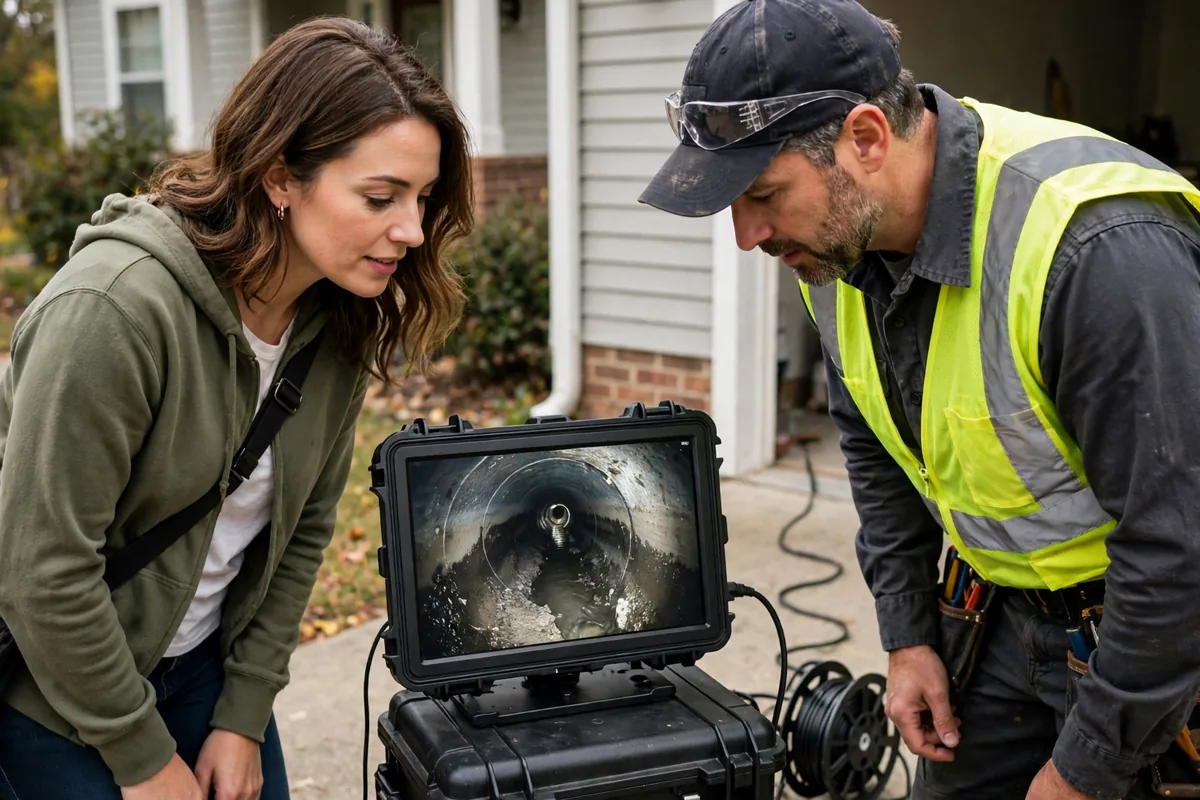
The pro runs a small camera through the whole buried line while you watch the screen, notes every fault with its distance, and hands over footage and a written report you can share with the seller.
A CCTV sewer camera inspection usually starts through a sewer cleanout, an access cap in the yard or basement, or sometimes through a toilet that is lifted for the visit. The camera head carries lights and a transmitter, and a sonde locator above ground tracks where the pipe runs, how deep it sits, and where each fault lies in the yard. The whole visit is normally measured in tens of minutes, not hours, and no digging is involved.
As the camera travels, the pro calls out what the screen shows: material changes, joints, root growth, standing water, cracks and the point where your line meets the street main. Afterwards you should receive the sewer inspection report and footage, with distances and still images, not just a verbal summary. That record is the document your agent, the seller and any repair pro will all work from.
Buyers viewing older homes in Amsterdam, NY, where a sewer scope is being booked should ask one question in advance: will the full run to the street be filmed, including any shared stretch? A scope that stops halfway tells you only half the story, and the far half is where street connections and shared junctions usually sit.
Which Pipe Materials Should Make A Buyer Look Closer?
Clay, cast iron and the fibre pipe sold under the Orangeburg name all age in predictable ways, and each fails differently. Knowing the material tells you which faults to expect and how serious they are.
Vitrified clay pipe was laid in short sections, so older clay lines have a joint every few feet, and every joint is a place roots can enter and sections can shift. A cast iron pipe line corrodes from inside: pipe corrosion and scaling roughens the walls, catches solids, and over many years channeling can eat a groove along the bottom of the pipe until it leaks into the soil around it.
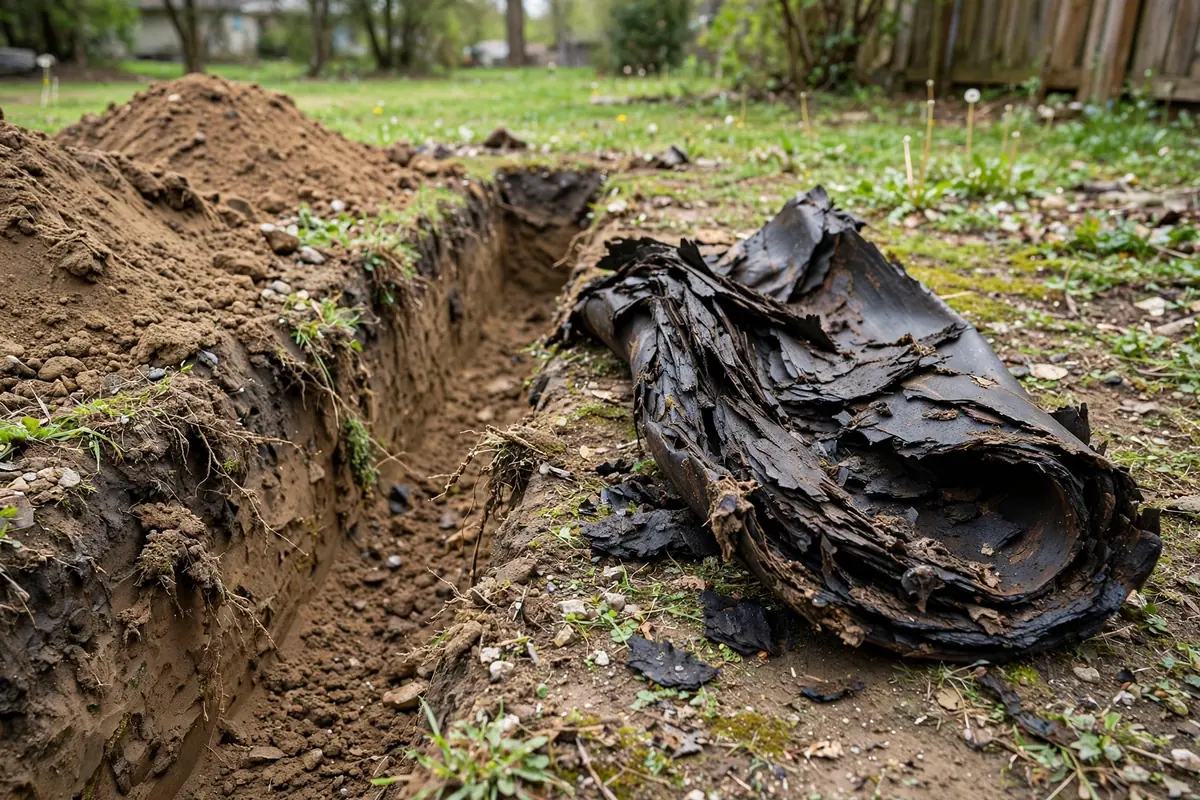
Orangeburg pipe deserves the closest look of all. Made from pressed wood fibre and pitch, it softens and goes oval with age, so an Orangeburg pipe that has lost its round shape is usually a replacement conversation, not a cleaning one. Newer PVC lines are not immune to problems — poor bedding can still let a section settle — but they do not corrode, and their joints are far fewer.
None of this means an older material is an automatic reason to walk away. Plenty of clay lines still work well. It means the camera evidence matters more than the age on paper, something buyers in Altoona, PA, checking an older home's line should keep in mind when a listing describes the house as updated inside but says nothing about the yard.
What Problems Does The Camera Find Most Often In Older Homes?
Roots at joints, a section that holds water, shifted joints and cracked pipe are the findings that come up again and again in older homes. Some need only cleaning and monitoring; others point to structural failure.
Tree root intrusion leads the list. Roots chase moisture to the pipe, slip in through a joint, and thicken inside until paper and solids catch on them. Next comes a belly / sag in the line, a low section where water pools instead of draining, which silts up and blocks repeatedly even after cleaning. An offset joint, where one section has dropped or shifted sideways, catches edges of debris in the same way.
A cracked or collapsed pipe is the serious end of the scale: the pipe wall has failed, soil may be washing in, and flow can stop completely. Grease buildup is the household finding, layers of kitchen fat narrowing the pipe, often where a family cooks heavily and the line runs cool and flat. The camera separates these clearly, which is why buyers in Athens, OH, scoping a home before buying should insist on seeing the footage rather than accepting a one-line summary.
Severity is about pattern, not just presence. A few fine roots at one joint, noted and cleared, are routine upkeep on an older line. Roots at every joint, standing water along half the run, and a section losing its shape together tell a different story: the line is reaching the end of its life, and your offer should reflect that.
How Should You Read The Report Before You Decide?
Read the report by distance and by type of fault. Cleaning faults are manageable; shape and structure faults are the ones that drive decisions, because they come back until the pipe itself is dealt with.
Work through the distances first. The report ties each fault to a measured point along the run, so you can see whether problems cluster near the house, sit mid-yard, or appear close to the public sewer main. Then sort faults into two piles: things cleaning can reset, such as roots and grease, and things it cannot, such as a lost shape, a dropped joint, or a section where the proper slope / grade of a sewer line has been lost to settling.
Hydro jetting and similar cleaning can clear roots and grease and give a sound pipe a fresh start, and a second short camera pass after cleaning shows the true wall condition. What cleaning cannot do is lift a low section, round out a flattened pipe, or rebuild the sewer lateral where it has cracked through. If the report mixes both kinds of fault, ask the pro to separate the quotes: cleaning now, structural work later, each described in writing.
Finally, check what the report does not say. Was the full run filmed? Was any section under water and unreadable? Was the line shared with a neighbour, which changes who pays for what? Gaps like those are reasons to ask for a fuller scope before you decide, not reasons to guess.
What Can A Buyer Do With A Bad Finding Before Closing?
You have more options than buying blind or walking away. Depending on your contract, you can ask the seller to repair, seek a credit, adjust your offer, or withdraw — but the contract wording decides, so take advice before you act.
Start by sharing the footage and report with your agent straight away, while inspection deadlines in your contract are still open. Sellers respond better to video evidence than to a claim that the line seemed old. Common outcomes are the seller arranging a repair before closing, a credit toward the work, a price adjustment, or the buyer accepting the line as it stands with eyes open. Which of these you can insist on depends on your contract, and that is a question for your agent or lawyer, not for this page.
Repair costs turn on factors, never a standard figure: the depth of the line, the length that has failed, access across the yard, what surface sits above it, and the season — a freeze-thaw cycle climate makes winter digging slower and ground restoration harder. Trenchless methods can limit digging where the pipe still holds its shape; a collapsed section usually cannot be saved that way. Our guide to sewer line insurance coverage is worth reading alongside any big finding, because cover checked at purchase is cover you actually have later.
If the scope reveals the line is shared with the house next door, pause and read our page on who pays for a shared line before you sign anything. A shared line is not a reason to panic, but it is a reason to ask who pays for the shared stretch, and to get whatever agreement exists in writing while the sale paperwork is still moving, as buyers across Ohio weighing sewer findings often need to do.
When Should Sellers Scope A Line Before Listing?
Yes — a scope before listing turns an unknown into a document. Sellers who can hand buyers clean footage, or show a fault already repaired, remove the objection that most often delays a closing.
The strongest moment is before the home goes on the market, especially for houses old enough to have clay or cast iron lines. If the footage is clean, it becomes a selling point kept with the house documents. If it shows a fault, the seller chooses the timing and the repair, instead of renegotiating under deadline pressure with a buyer's deadline looming and a moving date already booked.
First, though, confirm what system the home actually uses. Some older properties drain to a septic system rather than a street main, and the checks are entirely different; our guide on is my house on septic or sewer walks through the signs and records. Where the line passes close to or under the foundation, that detail belongs in the report too, because it shapes how any future repair would be done.
Sellers in New York preparing an older home for sale face the same logic as sellers anywhere: an underground unknown invites buyers to assume the worst and price it in. A scoped, documented line, good or repaired, sells on facts. Keep the footage, the report and any repair invoices together, and hand the full set to the buyer at closing.
Frequently Asked Questions
Direct answers for buyers and sellers weighing a scope on an older home. For a live problem at a home you already own, call free — lines are answered 24/7.
Still Have Questions? Call Free
One free call connects you with a local pro.
(800) 555-0100Free Call · Answered 24/7 · No Obligation
Reviewed By Hamza
Master Plumber & Trenchless Sewer Rehabilitation Specialist
Hamza is a licensed master plumber and underground infrastructure specialist with extensive field experience resolving sewer lateral collapses, root intrusions, and structural line offsets across Pennsylvania, Ohio, and New York. He specializes in high-definition CCTV pipe diagnostics, cured-in-place pipe (CIPP) lining, pipe bursting, and non-invasive trenchless rehabilitation to restore residential and commercial sewer systems without property destruction.
Updated October 31, 2026
Need Sewer Line Repair Near Me?
One free call connects you with an independent local pro — answered 24/7, no obligation.
Call (800) 555-0100Free Call · Answered 24/7 · Local Pros Near You