Start typing to search 150 cities, 3 states and all guides.
Sewer Line Repair In Argyle, NY
Sewer Line Repair Argyle, NY helps farm-country homeowners in Washington County deal with slow drains, backups and very old underground pipes. One free call connects you with a local pro.
MVERTCBCGL★★★★★“pinpointed the offset joint using sonar locating equipment” — Travis Calhoun, Buffalo
Free To CallAnswered 24/7Independent Local ProsNo ObligationServing 150 Cities In 3 States20+ Years Of Experience
Quick Answer
In Argyle, NY, drain trouble usually traces to the pipe that runs from the house out across the yard. With a median home built in 1938 and 85.9% of homes built before 1980 (ACS 2024), many of those runs are short clay sections or aging iron that now crack, narrow or fill with roots. A camera look inside shows the real fault before anyone digs.
Related Sewer Line Repair Services We Offer In Argyle, NY
On Argyle farm lots the underground run can stretch a long way past barns, driveways and mature trees, so guessing wastes money. These six services cover clearing, looking inside and fixing older clay and iron runs, starting with proof of what failed and where.
Hydro Jetting In Argyle, NY
Hydro Jetting In Argyle, NY uses high-pressure water to scour grease, scale and fine roots from inside an old farmhouse line. On big Washington County lots the run is long, so buildup collects far from the house. Jetting clears a path so a camera can judge the walls.
Sewer Line Cleaning In Argyle, NY clears soft blockages, soap and waste that collect along a long rural run without opening the ground. Low spots on big Argyle lots trap solids between the house and the road. Cleaning restores flow while you decide whether the pipe also needs repair.
Trenchless Sewer Repair In Argyle, NY fixes a damaged run from inside the pipe or through small pits, sparing long farm driveways, lawns and tree roots. That matters where the line crosses a big Argyle lot. A camera pass first confirms the old route can guide the repair.
Sewer Line Replacement In Argyle, NY takes out a failed underground run and lays new pipe at a steady fall from house to road or tank. Many Argyle farmhouses still drain through clay sections laid generations ago that have shifted apart. Replacement suits lines too broken or flattened to line.
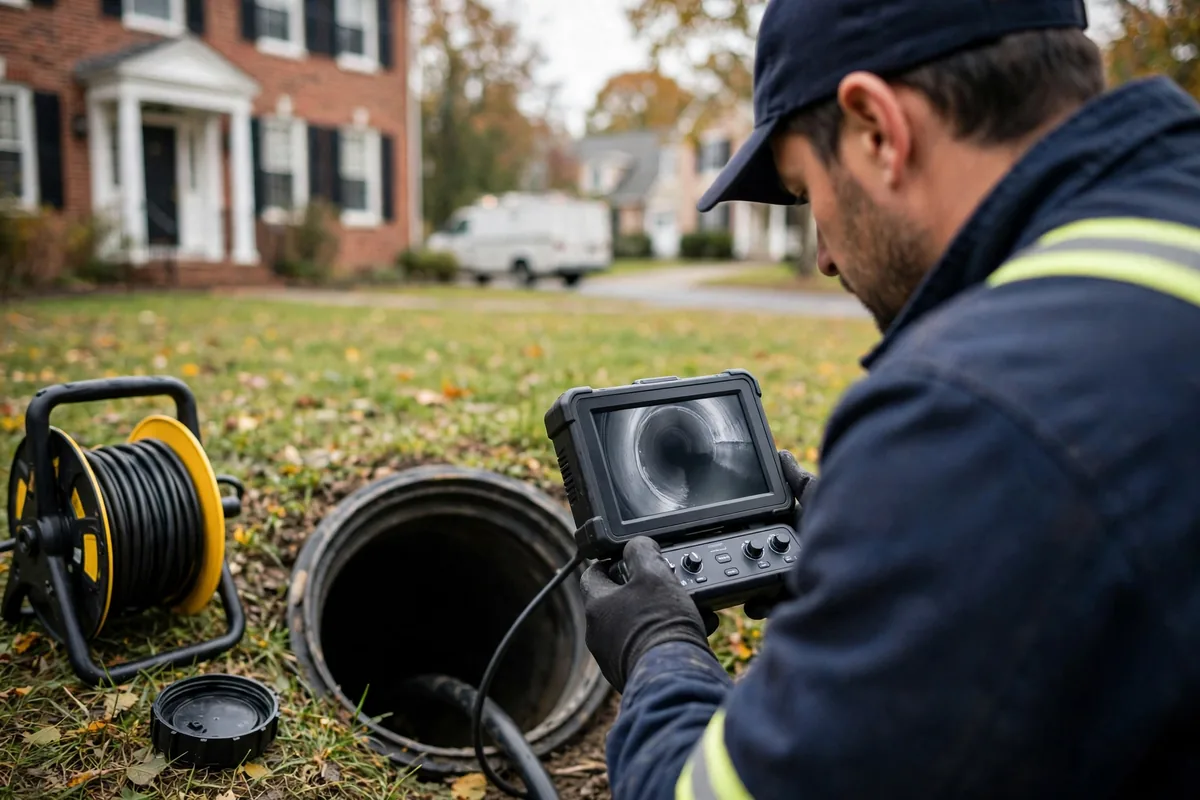
Sewer Camera Inspection In Argyle, NY sends a small camera through the access cap to show cracks, root masses, dips and shifted joints on screen. With a median Argyle home dating to 1938, the footage confirms the pipe material and the exact distance to the fault before digging.
Sewer Pipe Lining In Argyle, NY cures a new inner skin inside the old pipe, sealing cracks and joints and shutting roots out without a trench across the yard. It fits many older Argyle clay and iron runs that are cracked but still hold their round shape after cleaning.
Argyle is a small Washington County village of 355 people with 142 housing units (ACS 2024), and it has no separate named neighborhoods on a verified list. Homes and farmhouses spread along rural roads on large lots under one ZIP, and one free call connects any Argyle household with a local pro.
ZIP 12809 Coverage
This page covers all of ZIP 12809, the single ZIP listed for Argyle, from the village center out to farm roads at the edges.
Washington County Farm Country
Argyle sits in inland Washington County farm country, where houses stand on big lots and underground runs stretch far across yards and fields.
Homes Built Before 1980
85.9% of homes were built before 1980 (ACS 2024), so most Argyle pipes date to the clay and iron era and show decades of wear.
Median Year Built 1938
The median Argyle home was built in 1938 (ACS 2024), older than most homes in the state, and its drain pipes are usually just as old.
Owner-Occupied Homes
With 85.2% of occupied homes owner-occupied (ACS 2024), the person calling about a slow drain usually owns the underground line outright.
Long Laterals On Big Lots
Farmhouses set well back from the road mean a long run with many joints, and a fault can sit a field away from the house wall.
🚨 Sewer Line Problem Right Now In Argyle, NY?
A backup in an Argyle farmhouse can rise through a floor drain and soak a cellar floor within hours, and a deep northern freeze can finish off a cracked run overnight. Waiting lets wastewater spread. One free call connects you with a local pro at any hour, day or night.
Stop flushing and running water until the backup is checked
Keep children and pets away from sewage and standing water
Call right away, even at night, before the backup spreads further
Calls Answered 24/7 · Free To Call · No Obligation
What Happens When You Call
1
You Call — It's Free
You call and describe what you see, such as gurgling at several fixtures, a smell near the yard, or water rising at the lowest drain. The call is free, lines are answered 24/7, and you commit to nothing by calling.
2
We Connect You With An Independent Local Pro
Your details go to an independent local pro who covers Argyle and Washington County. That pro runs a separate business. You can ask directly about timing, methods and what the first visit will involve before anything starts.
3
The Pro Calls You Back Or Visits To Check The Problem
The pro calls back or comes out and starts at the sewer cleanout, running a camera toward the road to find the fault and its distance. You watch the footage, hear the options in plain words, and decide what happens next.
This page covers ZIP 12809, the ZIP listed for Argyle in Washington County. Every home in that ZIP, from the village center to outlying farm roads and long driveways, can use the number on this page to reach a local pro.
Real reviews from homeowners who called for sewer line help.
CSCynthia SterlingAlbany, New York
★★★★★
Historic brownstone plumbing can be difficult, but these specialists knew exactly how to navigate our fragile cast iron infrastructure. They replaced our crumbling sewer drain line and installed a cleanout port right at the curb for easy future access.
TAThomas AlbrightYonkers, New York
★★★★★
Persistent slow draining turned out to be a partially crushed terra-cotta pipe beneath our driveway. Their trenchless pipe bursting method replaced the entire 60-foot lateral run in hours without damaging our asphalt.
NMNatalie MercerWhite Plains, New York
★★★★★
Our sewer line suffered a major belly that caught waste every few weeks. They excavated down, corrected the bedding pitch, and re-laid the line to exact municipal slope specs. Haven't had a single issue since.
VSVictor SandovalNew Rochelle, New York
★★★★★
Raw sewage backup flooded our finished basement. The crew arrived with industrial pumps, cleared the obstruction, and performed an epoxy inversion lining that gave our old cast iron another 50 years of life.
PZPatricia ZimmermanBinghamton, New York
★★★★★
Our drain line froze and ruptured during a severe sub-zero cold snap. The technicians thawed the frozen plug, cut out the split section, and insulated the exterior penetration thoroughly.
DFDustin FoleyUtica, New York
★★★★★
Roots from a nearby silver maple completely clogged and cracked our main sewer line. They pulverized the roots with hydro-jetting and relined the pipe with seamless epoxy. Zero mess left behind.
MSMelanie SuttonSchenectady, New York
★★★★★
Clear quotes, friendly technicians, and no hidden charges. When our cast iron pipe rotted along the bottom channel, they installed a continuous pull-in-place liner that completely sealed the void.
RNRussell NewtonNiagara Falls, New York
★★★★
Freezing winter weather caused a shift in our foundation that cracked our main waste lateral. Their crew handled the deep excavation in freezing weather, replaced the line with schedule 40 PVC, and tested every joint.
JMJoyce MoranTroy, New York
★★★★★
When tree roots breached our clay sewer pipe near the sidewalk, this company coordinated with the city engineering office, pulled all required permits, and completed a clean trenchless fix within 48 hours.
WLWayne LittleMount Vernon, New York
★★★★★
Fast and honest pipe relining crew. They repaired a cracked section of our cast iron pipe directly beneath our stone terrace without removing a single stone. Highly recommend their trenchless approach.
BHBeverly HoustonNew Rochelle, New York
★★★★★
Punctual, professional, and transparent about costs. They replaced our collapsed sewer trap and installed a double cleanout in our front yard to meet modern building codes.
ELEugene LambertIthaca, New York
★★★★★
Steep hillside terrain made our sewer replacement tricky, but this crew navigated the slope with specialized equipment and replaced the broken line without causing any erosion issues.
Sewer Line Repair Near Argyle
Argyle sits far from the other towns we serve, which is normal for this rural corner of Washington County. The nearest listed city is Athol at 30.5 miles, then Alplaus at 33.8 miles and Amsterdam at 40.8 miles. Each nearby city has its own page with its own local data and sewer facts.
Where a home connects to a public system, the homeowner usually owns the sewer lateral (building sewer) from the house wall to the public sewer main and pays to maintain and repair it. The village or district looks after the main itself. Many Argyle homes use a private tank instead, which changes the answer, so confirm which system serves your address before work begins.
Many rural Washington County homes use a private septic system, and its failures can mimic a blocked public line: slow drains everywhere, gurgling and odors. Check a past utility bill, your deed, or ask the village which system serves your address. If your home drains to a tank and field, slow fixtures point there. If it connects out to the road, this page covers your run.
A farmhouse of that age often drains through vitrified clay laid in short sections, with iron pipe inside the house. Some mid-century Argyle homes have Orangeburg pipe, a compressed fibre tube that softens and flattens with age. Clay cracks at its many joints and iron narrows from inside. A camera confirms the material in your yard rather than guessing from the build year alone.
Yes. Northern Washington County winters bite deep, and repeated freezing and thawing heaves moist soil around a buried run. That frost heave can shift two sections apart, open a joint or crack a rigid clay piece. A shallow run or one holding water in a dip faces the most risk. If drains slow every winter, have the depth and slope checked.
A clog that returns within weeks usually means a structural fault, not leftover waste. Roots re-enter the same open joint, a sunken dip keeps trapping solids, or rough scaled walls catch paper again. Clearing treats the symptom each time. A camera run along your long Argyle lot shows which fault keeps refilling the line, and that footage decides whether a lasting repair makes more sense than another clearing.
A CCTV sewer camera inspection travels from the access point toward the road and shows cracks, root masses, dips holding water, shifted joints and the pipe material on a screen. It also counts distance, which matters on a big Argyle lot where the fault may sit far from the house. The footage is recorded, so you can compare repair options against what the pipe actually looks like.
Often yes. A liner cures a new pipe inside the old one, and bursting pulls a new HDPE pipe through the old path, both using small pits instead of a trench the length of the yard. That protects driveways, lawns, gardens and trees on large Argyle lots. The run must first be clean and round enough, and a fully caved-in stretch may still need digging.
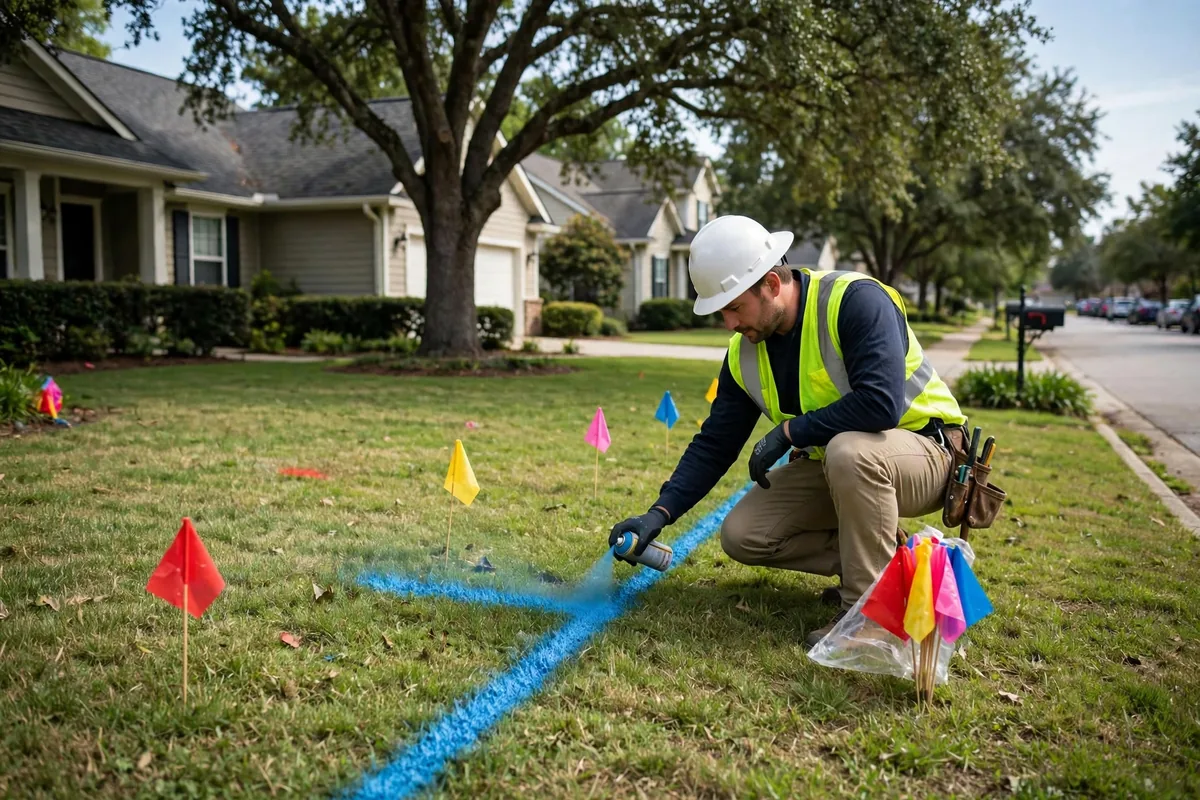
Yes. Contact New York 811 before any excavation so public utilities in the work area get marked for free. That marking covers public lines only. It does not mark your private underground run, tank parts or other private pipes, so the pro still traces your own line with a camera and a sonde locator before the dig starts on your lot.
A standard homeowners policy usually pays for sudden water damage inside the home but not for an underground pipe that wore out. A service line endorsement, where you bought one, can cover the run itself, and a backup endorsement covers cleanup after wastewater rises indoors. Limits and wording sit in your own policy. Camera footage and a written report help if you file a claim.
Stop running water and stop flushing, because every gallon sent down has nowhere to go and will rise at the lowest opening. Keep children and pets out of affected rooms and avoid skin contact with the water. Move dry items up only where you can reach them without stepping in it. Then call the number on this page. A pro can typically arrive in 30 to 60 minutes.
Argyle winters are colder and longer than downstate, and the ground freezes deep around buried pipes. Each freeze-thaw cycle / frost heave season lifts and resettles moist farm soil, working at the joints of a rigid run year after year. A joint nudged open in January admits roots and groundwater by spring. Shallow stretches and dips that hold water feel the cycle hardest, which is why a line that slows every winter deserves a camera check rather than another clearing.
Farmhouse Stock With A 1938 Median Build Year
The median Argyle home was built in 1938, and 85.9% of homes predate 1980 (ACS 2024). Working farmhouses of that age commonly drain through a vitrified clay pipe laid in short sections, with cast iron pipe inside the walls. Clay stays hard but its many joints loosen as soil moves. Iron corrodes from within, building rough scale that narrows the passage. After eighty-plus winters, age alone makes a camera look worthwhile at the first repeat clog.
Long Runs Across Big Farm Lots
Argyle houses often stand well back from the road, behind lawns, gardens and sometimes pasture, so the underground run stretches much farther than a village line. More length means more joints, more chances for a sunken dip, and more pipe passing under mature trees whose roots hunt moisture at every joint. The fault can sit a long way from the house wall, so measuring its distance before digging saves opening the wrong stretch of yard.
Owners Who Stay And Decide At 85.2%
In Argyle, 85.2% of occupied homes are owner-occupied (ACS 2024), far above the New York state share of 54.3%. The caller usually owns the run and expects to live with the repair for decades. That favors fixing the structural fault once, such as lining or replacing a cracked clay stretch, over paying to clear the same joint every season. It also makes recorded camera footage valuable, since the owner can judge the choice directly.
Sewer Line Repair Argyle, NY: At A Glance
Argyle is a village of 355 people in Washington County with 142 housing units and a median home built in 1938 (ACS 2024). One ZIP, 12809, covers the area, and 85.2% of occupied homes are owner-occupied.
The Argyle Sewer Line Guide
What Are The Warning Signs On A Long Argyle Farm Lot?
Watch for several drains slowing together, gurgling, a sewage smell, wastewater rising in the lowest fixture, and one soggy or extra green strip of yard above the buried run.
One slow sink usually blames that fixture alone. When the tub, toilet and basement drain all slow at once, the shared underground run is the likely limit, because everything in the house leaves through that single pipe. Sewage backing up into the lowest fixtures comes first at the floor drain, the lowest opening in most Argyle farmhouses, so check there when upstairs drains misbehave.
Gurgling toilets and drains happen when air pushed by a partial blockage bubbles back through trap water. A sewage smell indoors or in the yard can mean gas escaping at a crack or a dry trap. Outside, wastewater leaking from a broken joint feeds the grass above it, leaving a soggy or unusually green patch over the sewer line. Repeated clogs that return after clearing point to structure, not dirt. See New York for the statewide picture.
Why Do Old Argyle Farmhouse Pipes Fail?
Most failures trace to roots at clay joints, iron corrosion, ground movement that shifts or cracks sections, cooking grease, and plain age at the end of a material service life.
Tree root intrusion starts as fine hairs entering a joint where moisture escapes, then thickens into a mass that traps paper and waste and can pry the joint wider. Corrosion scaling and channeling of cast iron attack from inside: scale narrows the bore while a trough wears along the bottom until the wall leaks. Ground movement can leave an offset joint, a lip where one section sits higher than the next and catches solids, or a cracked or collapsed pipe that blocks flow outright.
What Is A Low Spot In The Line?
A belly / sag in the line is a stretch that has sunk below proper slope, so water and solids pool in the dip instead of flowing on. The pooled stretch clogs again weeks after cleaning. Grease buildup / fatberg makes it worse: hot cooking grease cools on pipe walls and narrows rough old bores fastest. A camera shows whether you face cleanable buildup or a sunken stretch needing repair.
How Long Do Pipe Materials Last?
Clay and iron runs serving a 1938 median-year Argyle home have often worked for many decades past their expected span. Orangeburg pipe from the mid-century years commonly deforms sooner under soil load. Modern replacement materials, PVC pipe (SDR-35 and Schedule 40) and HDPE pipe, resist corrosion and use sealed or fused joints. Age alone does not condemn a run, but age plus repeat clogs is a strong reason to inspect.
How Is The Exact Fault Found Under A Big Argyle Lot?
A pro runs a camera from the access point to view the fault directly, then uses a locator above ground to mark where it sits and how deep it lies.
A CCTV sewer camera inspection shows cracks, roots, dips, shifted sections and pipe material in real time, and the footage can be saved for your records. A sonde locator picks up a signal from a small transmitter on the camera head, letting the pro stand in your yard and pinpoint the fault and its depth. On a long Argyle run that keeps digging to the right stretch instead of opening the whole yard.
A blocked line sometimes needs cleaning first, because a camera cannot see through standing water or a dense root mass. Hydro jetting or a cutting head clears a path for a clear view. Watching the footage yourself helps you judge whether one repaired section will hold or whether damage runs the length of the pipe. Mature street trees and root pressure in older neighbourhoods add to the risk where the run passes old plantings near the road.
Which Fix Fits A Damaged Argyle Run?
One broken section often suits a spot repair, a cracked but round pipe often suits lining, a caved-in run may suit bursting, and a line failed in several places may need full replacement.
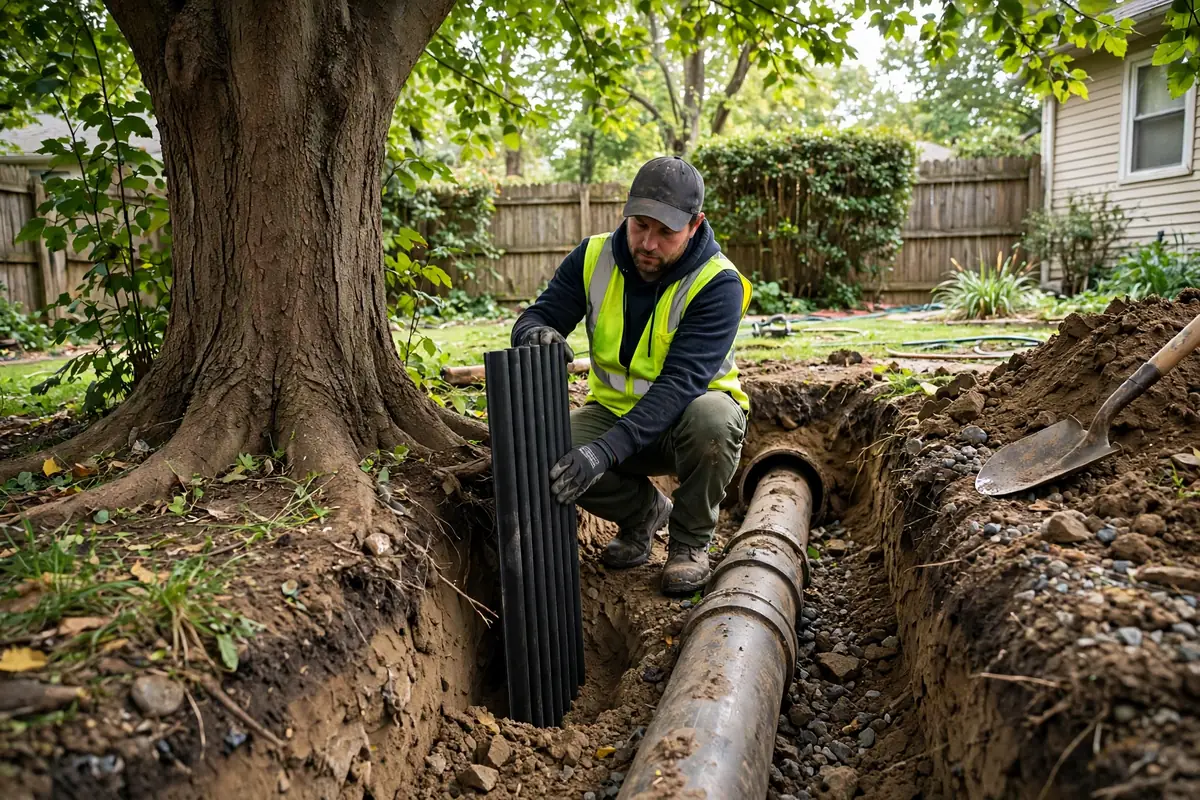
Spot excavation repair digs only above the failed section, cuts it out and joins the new piece with a coupling. Cured-in-place pipe lining (CIPP) cures a resin liner inside the old pipe; the CIPP liner (epoxy resin-saturated felt tube) seals joints and blocks roots with no trench along the yard. Bursting breaks the old pipe outward while pulling a new line in behind it, suiting a caved-in run that still holds its path. Full open-trench replacement lays a new line at the correct slope where several stretches have sunk or flattened.
What the work costs depends on the method, the length and depth of the run, the pipe material and size, and how much driveway, lawn or planting must be restored afterward. A backwater valve is worth asking about where a public main surcharges toward homes. Homeowners weighing cover should read Sewer Line Insurance Coverage, and anyone planning a dig should first read Does 811 Mark Sewer Lines. Neighbors face similar old-pipe issues; see Athol, NY and Alplaus, NY.
Hamza is a licensed master plumber and underground infrastructure specialist with extensive field experience resolving sewer lateral collapses, root intrusions, and structural line offsets across Pennsylvania, Ohio, and New York. He specializes in high-definition CCTV pipe diagnostics, cured-in-place pipe (CIPP) lining, pipe bursting, and non-invasive trenchless rehabilitation to restore residential and commercial sewer systems without property destruction.
Updated October 31, 2026
How Argyle, NY Compares
Argyle compares as one of the oldest housing stocks we serve in New York. Its median home was built in 1938, the 25th highest median year among the 32 New York cities we serve, and 85.9% of its homes predate 1980, the 9th highest share, well above the state share of 73.9% (ACS 2024).
Housing Units142
142 Housing Units — 31st Highest Of The 32 New York Cities We Serve.
Source: US Census Bureau, ACS 2024 5-year, 2024
Median Year Built1938
1938 Median Year Built — 25th Highest Of The 32 New York Cities We Serve.
Source: US Census Bureau, ACS 2024 5-year, 2024
% Owner-Occupied Homes85.2%
85.2% Owner-Occupied Homes — 5th Highest Of The 32 New York Cities We Serve.
Source: US Census Bureau, ACS 2024 5-year, 2024
% Of Homes Built Before 198085.9%
85.9% Of Homes Built Before 1980 — 9th Highest Of The 32 New York Cities We Serve.
Source: US Census Bureau, ACS 2024 5-year, 2024
Do I Have This Problem?
Use this quick check if drains across your Argyle home misbehave at the same time. Tick the signs you notice, such as a backup at the lowest drain, gurgling, odors or a soggy patch over the buried run. The result only points to a possible problem. Only a pro can confirm it.
These Signs Can Point To A Sewer Line Problem — Call A Local Pro To Check.