Cast Iron Sewer Pipe: Corrosion, Scaling, Channeling and Remaining Life
Free Call · Answered 24/7 · Local Pros Near You
The Short Answer
There is no single lifespan figure that fits every cast iron sewer line, because condition matters more than age alone. Inside the pipe, rust and scale narrow the opening over time, and the bottom can wear into a groove that leaks. Two lines fitted in the same year can be in very different shape today. A camera check shows which stage yours has reached, and whether cleaning, lining, a short repair or replacement is the sensible next step for your home.
Call (800) 555-0100Cast Iron Sewer Pipe Lifespan, Explained In Plain Words
How Long Does Cast Iron Last, And Why Does Age Alone Not Decide It?
No honest answer can be one number of years. What decides remaining life is the state of the inside wall right now: how much sound metal is left, how rough that wall has become, and whether waste still moves through the line cleanly.
A cast iron pipe was a common choice for homes built decades ago, and plenty of those lines are still carrying waste today. Homeowners arranging sewer line repair in Albany, NY often start with the same question about the iron line under an older house, and the useful answer always begins underground rather than on a calendar. The year a line went in tells you its age, not its condition.
Two lines of the same age can age very differently. One may sit in dry, stable ground and carry a modest load for years with little wear. Another may sit in damp, expansive, clay-heavy soil, shift slightly as the ground moves, and rust faster where moisture stays in contact with the metal. How the home has been used matters too: what has been flushed, rinsed and poured down the drains over decades all leaves its mark on the wall.
What Happens Inside The Line As It Ages?
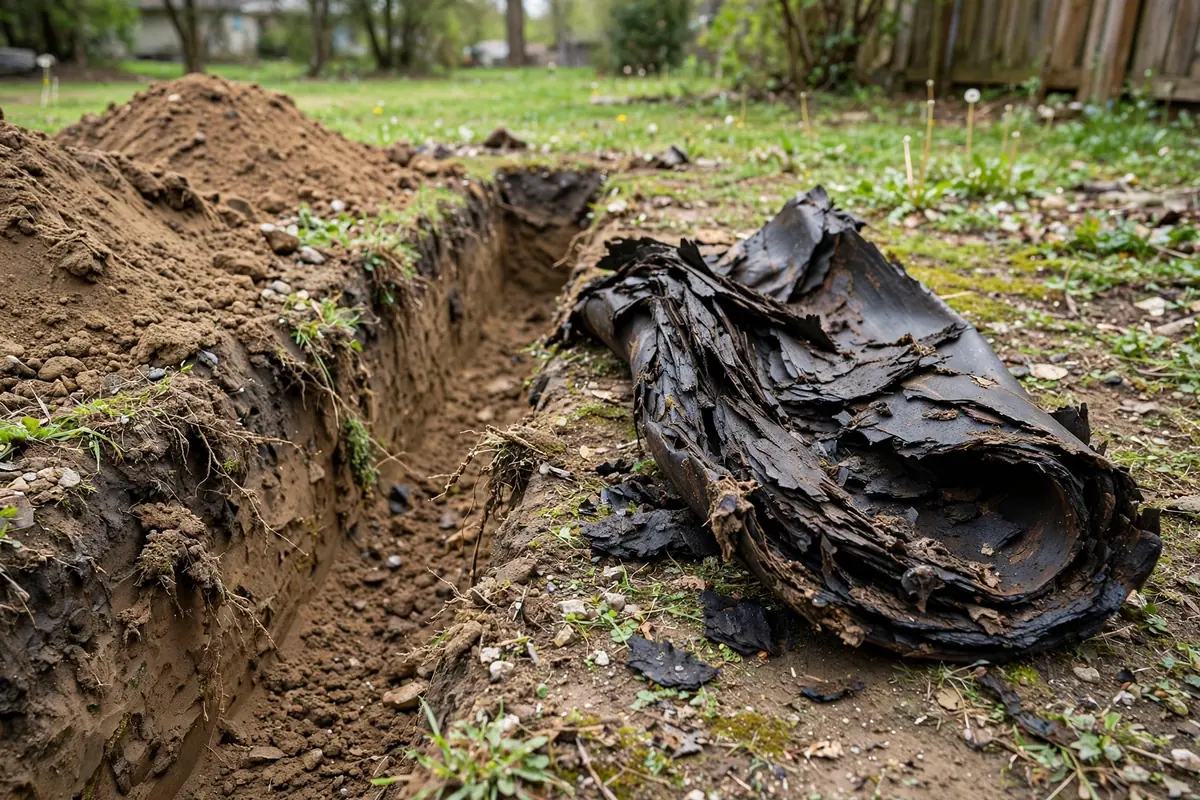
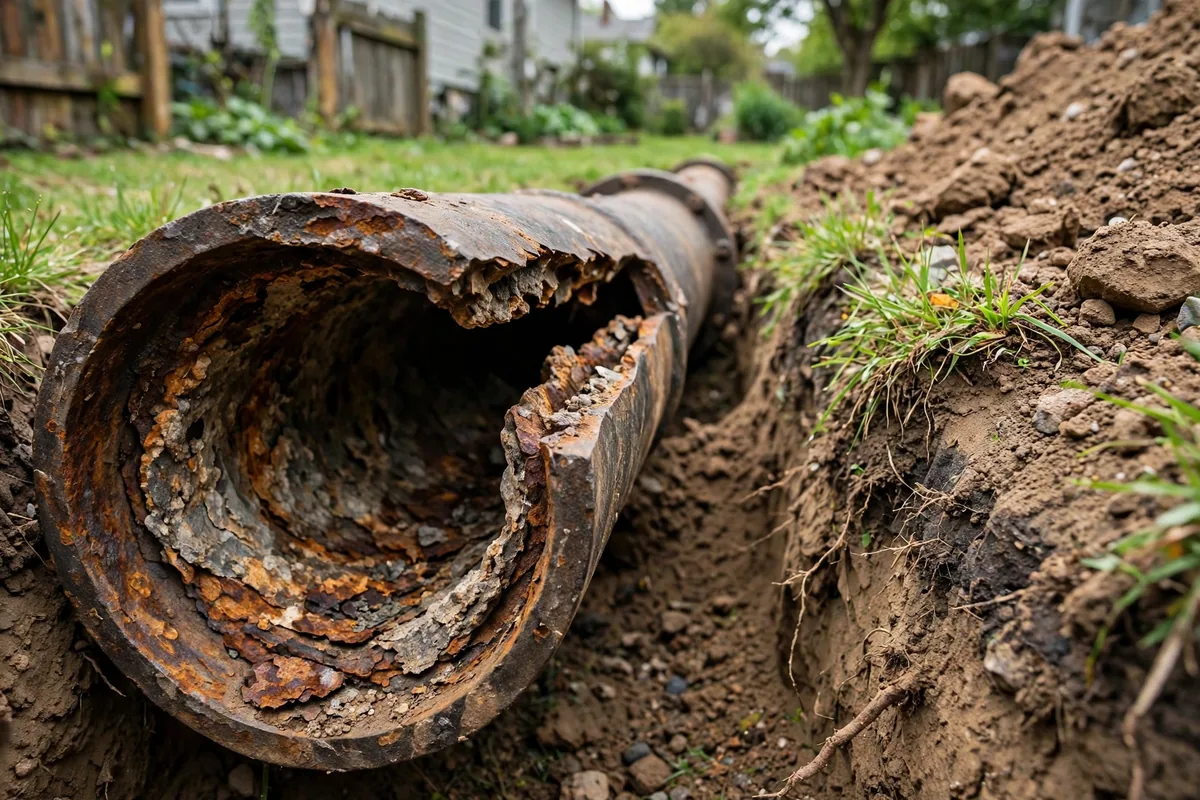
The slow change is pipe corrosion and scaling. Rust forms on the inner wall, mineral and waste deposits cling to that rough surface, and layer builds on layer until the open space in the middle is much smaller than the day the pipe was new.
A fresh iron wall is smooth, so water and waste slide along it and leave little behind. A roughened wall behaves the opposite way. Paper snags on it, fat cools and sticks to it, and fine grit settles where the flow slows. Each deposit makes the surface rougher still, so the next deposit sticks more easily. Drains that once cleared quickly begin to linger, not because anything dramatic has broken, but because the passage has quietly narrowed.
That narrowing also changes how the line handles a heavy moment. A bath emptying, a washing machine draining and a toilet flushing at the same time ask for room the line no longer has. Water backs up toward the lowest opening in the home, then clears slowly once the surge passes. Repeated slowdowns of that kind are the pipe telling you the inside is no longer the size it started out as.
What Is Channeling, And Why Does It Matter?
A worn channel along the bottom is wear concentrated there, where flow runs most of the time. Instead of the wall thinning evenly, a groove forms along that lower path and deepens while the upper wall can still look fairly sound.
The groove matters because the bottom is where the pipe can least afford to lose metal. Once that worn path breaks through, waste leaks into the ground around the line instead of travelling onward. Leaking waste washes fine soil away, and soil erosion and voids around the pipe follow. With support gone from underneath, the line can drop slightly, a joint can shift out of line, and the leak grows worse in a cycle that feeds itself.
Homes dealing with sewer line repair in Athens, OH sometimes find this pattern during a camera run booked for a simple blockage: the upper wall looks presentable, yet the bottom has worn thin enough to weep. That is why a report that only notes the pipe is old misses the point. Where the metal has gone, and how much remains along that bottom path, is the detail that shapes every repair choice.
What Signs Suggest An Old Iron Line Is Struggling?
The early warnings are usually ordinary: drains that slow together, gurgling after a flush, and odors that come and go near the lowest fixtures. One slow sink is rarely the underground line. Several fixtures misbehaving at once often is.
Watch the pattern rather than any single event. A tub that drains slowly on the same day a toilet bubbles points away from one blocked fixture and toward the shared line leaving the home. Tree root intrusion adds another pattern: drains that clear after cleaning, behave for a while, then slow again on a repeating cycle, because fine roots have found a joint and keep regrowing into the flow.
Outdoor clues help too. A patch of yard that stays greener, softer or damper than the ground around it can mark where waste has been leaking and feeding the soil. Homeowners looking into sewer line repair in Abington, PA and across sewer line repair in New York describe the same mix: indoor slowdowns first, then a yard clue that confirms something underground has changed. Together they justify a camera check, not guesswork.
How Can A Camera Check Show How Much Life Is Left?
A CCTV sewer camera inspection travelling the full length of the line turns guesswork into evidence. It shows where the wall is rough, where the bottom has worn, and where joints have opened, with distance readings that tie each finding to a spot in the yard.
The run usually starts at the sewer cleanout, the capped access point on the line. From there the camera records the wall, the joints and any standing water as it goes. A good pro pauses at each defect so the sewer inspection report and footage show the finding clearly, not as a blur. That record is what lets you compare options calmly: the same footage that reveals heavy scale in one stretch may show sound, round pipe in the next.
Sometimes the wall first needs cleaning before it can be judged fairly. A chain descaling pass can strip built-up layers off the iron so the camera sees metal rather than deposits, which changes the verdict in both directions: some lines look far sounder once cleaned, while others are revealed as thin and fragile. For buyers, a pre-purchase sewer scope gives the same clarity before money changes hands on a home with an older iron line, as owners arranging sewer line repair in Amsterdam, NY have found.
Can A Worn Line Be Cleaned, Lined, Or Repaired In Sections?
Often, yes, provided enough sound, round pipe remains. Cleaning restores flow, lining renews a line from inside, and a short dug repair can replace one failed stretch. None of them helps a pipe that has lost its shape or its metal altogether.
Cleaning is the lightest step. Mechanical root cutting clears roots at joints, and a descaling pass knocks down the rough layers that catch waste. Both restore room inside the pipe, but neither adds metal back, so they suit a line whose wall is still thick enough to trust. Cured-in-place pipe lining goes further: a new inner layer forms inside the old pipe and seals cracks and joints, as long as the host pipe still holds a round shape it can form against.
Shape is the dividing line. Our guide to Orangeburg pipe covers a material that often fails that test because it turns oval, and heavily worn iron can reach a similar point at its bottom groove. Where only one stretch has failed, a spot excavation repair digs just that section and replaces it, leaving sound pipe on either side in place. Pros working across sewer line repair in Ohio weigh the same question each time: how much of the run is still worth building on?
When Does Replacement Make More Sense Than Another Repair?
Replacement moves to the front when the damage is spread along the run rather than confined to one spot: a cracked or collapsed pipe, a bottom worn through in several places, or a line that has dropped so far that the proper slope is gone and waste settles instead of flowing.
An open-trench replacement removes the old run and lays a new one, commonly a PVC pipe chosen for its smooth wall and long, sealed joints. The digging is the disruptive part, and the yard, path or driveway above the line has to be put back afterwards, which is why this route is normally weighed against lining and section repairs first. Before any digging, underground lines need marking, and our guide on does 811 mark sewer lines explains what that service does and does not locate on private property.
If your cast iron pipe is showing several of the signs in this guide at once, another clearing visit is unlikely to change the story for long. One free call connects you with an independent local pro who can scope the line, show you the footage and talk through the options in plain terms. A pro can typically arrive in 30–60 minutes, and the line is answered 24/7, so an active backup does not have to wait until morning.
Frequently Asked Questions
Plain answers about ageing iron lines, camera evidence and repair choices. If your question is missing here, one free call connects you with an independent local pro — lines are answered 24/7.
Still Have Questions? Call Free
One free call connects you with a local pro.
(800) 555-0100Free Call · Answered 24/7 · No Obligation
Reviewed By Hamza
Master Plumber & Trenchless Sewer Rehabilitation Specialist
Hamza is a licensed master plumber and underground infrastructure specialist with extensive field experience resolving sewer lateral collapses, root intrusions, and structural line offsets across Pennsylvania, Ohio, and New York. He specializes in high-definition CCTV pipe diagnostics, cured-in-place pipe (CIPP) lining, pipe bursting, and non-invasive trenchless rehabilitation to restore residential and commercial sewer systems without property destruction.
Updated October 31, 2026
Need Sewer Line Repair Near Me?
One free call connects you with an independent local pro — answered 24/7, no obligation.
Call (800) 555-0100Free Call · Answered 24/7 · Local Pros Near You