Filing a Sewer Line Insurance Claim: Camera Footage, Reports and Photos That Help

Free Call · Answered 24/7 · Local Pros Near You
The Short Answer
The documents that help most are dated camera footage of the fault, the written inspection report that explains it, clear photos of the damage inside and outside the home, and the quotes and invoices for the repair. Together they show what failed, where, when and what fixing it involves. Keep originals, send copies, and build the folder before repair work starts — records made after the pipe is replaced cannot show the failure that the claim is about.
Call (800) 555-0100Sewer Line Insurance Claim Documents, Explained In Plain Words
What Documents Help A Sewer Line Insurance Claim Most?
The strongest folder pairs moving pictures with paper: dated camera footage, the written inspection summary, clear photos of the damage, and the quotes and invoices that tie the fault to a cost. No single document carries a claim on its own.
Begin with a CCTV sewer camera inspection carried out before any repair work starts. The footage shows the fault underground in a way no description can, and the matching sewer inspection report and footage summary turns those pictures into plain findings an adjuster can read quickly. File the two together from the start, not in separate places.
Add the evidence from inside and outside the house: dated photos of sewage on floors, marked boxes or damaged items, the yard before digging, and any street flooding you witnessed. Homeowners arranging sewer line repair in Albany, NY often hold most of this on a phone already — the job is gathering it into one claim folder while dates and details are still fresh.
Finish with the money paper: the written quote for the repair, the final invoice and proof of payment. Our companion guide on sewer line insurance coverage explains which add-ons respond to which losses; this page is about proving the loss itself. Whether cover applies is the insurer's call, and honest, complete records are what let them make it.
What Should The Camera Footage Show For An Adjuster?
It should show the fault itself, its distance from the access point, and enough healthy pipe around it to place the damage in context. A clear date and time stamp ties the pictures to the day the problem appeared.
Adjusters look for cause, not just breakage. Footage that shows tree root intrusion filling a joint, a sharp offset joint where two sections have shifted, or a belly in the line holding dirty water, or a cracked or collapsed pipe section that no longer holds its shape, each points to a different story about how the failure developed. Ask the operator to pause on each fault and state the distance out loud.
Material tells part of the story too. The recording may show pipe corrosion and scaling narrowing the bore, or a section that has split along its length. If the line is badly blocked, note in the folder whether any cleaning was done before filming; a pass of hydro jetting can clear the view, but the insurer should know the order events happened in, so keep the cleaning invoice with the footage date beside it.
Keep the raw file untouched. Do not trim, rename with a new date or film a screen playing the video, because copies like that invite questions. Send the original file or a clean duplicate, and keep your own backup somewhere separate from the phone or laptop the claim was filed from.
Which Photos Beyond The Footage Should You Take?
Take wide shots that place the damage in the room, close shots that show what was ruined, and the same views again after cleanup. Outside, photograph the yard, path and planting before digging starts, so restoration arguments never begin.
Work through the house in order. Photograph every room the water reached, starting at the floor drain where sewage usually appears first, then the walls, skirting and any furniture or stored items it touched. A shot down a hallway or across a basement does more to show scale than five close-ups of one puddle.
Capture the building as well as the mess. Pictures of staining near the foundation, a hearth or step sitting oddly, or ground that has dipped over the buried line can support the written account of how the failure showed itself. Date settings matter: check your phone is stamping the real date before you rely on it.
Then repeat the set after cleanup and again after the repair. Homeowners in Allentown, PA, arranging sewer line help after a backup often find the after-photos settle questions about what was actually damaged versus what was simply wet, because the folder shows the same room at three clear points in time.
Which Written Records Tie The Damage To A Date And A Cause?
Notes made at the time: when drains first slowed, when sewage appeared, who you called and what they found. A simple dated timeline, written the same week, links the underground fault to the damage in the house.
Start the timeline with the earliest sign you can honestly date — a gurgling fixture, a smell, a slow shower — and mark the day the backup happened. Beside each entry, keep the matching record: the call log, the inspection report, the quote. A claim reads far more clearly when every date in your account has a document standing behind it.
Note where the fault sits. The report should state whether the damage lies in your own sewer lateral, out near the public sewer main, or at the join between them, because responsibility and cover can turn on that line on a map. Distances from the access point make the location checkable by anyone who scopes the pipe later.
Previous records help as well. An older inspection, a past cleaning invoice or a seller's disclosure from when you bought the home can show the line's history and when its condition changed. Across New York, sewer line repair claims on older streets often hinge on exactly that kind of before-and-after paper, because the pipes are old enough to have a long story.
How Should You Organise And Send The Claim Folder?
Build one folder with five parts: footage, report, photos, quotes and invoices, and your dated timeline. Send copies, keep originals, and note the date and name of everyone you send anything to.
Name files so a stranger can follow them: the footage by date, the report by the company that wrote it, photos by room. Inside the folder, add one short covering note that lists what is enclosed and the order of events in five or six lines. Adjusters handle many files; a claim that explains itself gets read properly the first time.
Send only what was asked for, but keep the rest ready. If the insurer requests the full recording, send the whole run rather than a short clip of the worst moment, because context around a fault matters. Log each sending in your timeline, with the claim reference the insurer gives you written at the top of every page you submit afterwards.
If a claim stalls or a decision looks wrong, the regulators for your state publish consumer guidance and complaint routes: the New York State Department of Financial Services, the Ohio Department of Insurance and the Pennsylvania Insurance Department. Their pages explain what insurers must do when handling a claim, which is firmer ground than advice from a forum. A post-repair check also belongs in the folder later — see our guide to sewer repair camera verification.
What Can Documentation Not Do For A Claim?
They cannot create cover your policy does not have, rescue a failure the policy excludes, or turn years of slow wear into a sudden event. Good paperwork proves facts; it does not rewrite the contract.
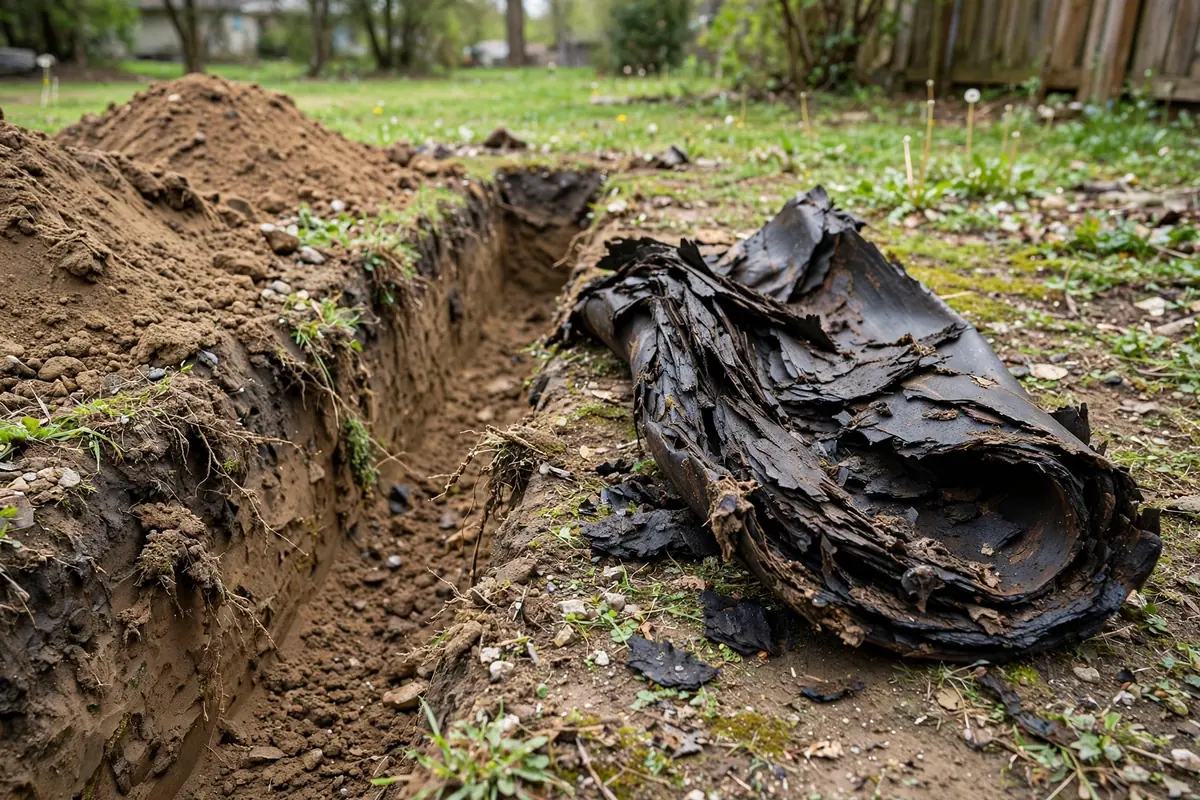
Be ready for that honesty to cut both ways. Footage of an Orangeburg pipe that has slowly gone oval, with Orangeburg deterioration visible along its length, may show exactly why the line failed — and an insurer may still class that failure as long-term wear. The records remain worth keeping, because they shape the repair decision and any future cover discussion, whatever the claim outcome.
Method recommendations face the same test. A report may favour cured-in-place pipe lining (CIPP) where the old pipe still holds its shape, or open-trench replacement where it does not. The insurer can question the method as well as the cause, so the written reasoning behind the recommendation — shape, depth, access — is part of the evidence, not decoration.
What you should never do is shape the record to fit the claim: backdating notes, editing footage or asking a pro to soften a finding. A folder that stays truthful keeps its value with the insurer, with a future buyer and with you, long after this claim is closed either way.
What Should You Do Before Authorising The Repair?
Ask, and note the answer in writing. Some insurers want to view the line or the damage before work begins, and authorising a full replacement first can make the claim harder even where cover exists.
Make two calls in the right order. First the insurer or agent, to open the claim, get the reference and ask what they need to see. Then the pro, to scope the line from the sewer cleanout and gather the evidence while the fault is untouched. Homeowners facing a sewer line problem in Akron, OH run this sequence backwards surprisingly often, and spend weeks rebuilding records that one day of patience would have preserved.
Keep the physical evidence too. Photograph any old pipe sections that come out of the ground before they are taken away, especially where the material itself is the story — a split length of vitrified clay pipe or a cast iron pipe eaten thin tells an adjuster more than a paragraph can. Note who holds the sections and where.
Some steps protect the home regardless of the claim. Note any sign of infiltration where groundwater seeps into the line, and ask whether a backwater valve would reduce the chance of sewage returning indoors; it is prevention, not proof, and belongs in the folder as a recommendation only. If sewage is in the house now, one free call connects you with an independent local pro — a pro can typically arrive in 30–60 minutes, and lines are answered 24/7 — while the paperwork follows behind.
Frequently Asked Questions
Practical answers about gathering sewer claim paperwork, kept honest about what records can and cannot do. For help collecting evidence on a live problem, call free — lines are answered 24/7.
Still Have Questions? Call Free
One free call connects you with a local pro.
(800) 555-0100Free Call · Answered 24/7 · No Obligation
Reviewed By Hamza
Master Plumber & Trenchless Sewer Rehabilitation Specialist
Hamza is a licensed master plumber and underground infrastructure specialist with extensive field experience resolving sewer lateral collapses, root intrusions, and structural line offsets across Pennsylvania, Ohio, and New York. He specializes in high-definition CCTV pipe diagnostics, cured-in-place pipe (CIPP) lining, pipe bursting, and non-invasive trenchless rehabilitation to restore residential and commercial sewer systems without property destruction.
Updated October 31, 2026
Need Sewer Line Repair Near Me?
One free call connects you with an independent local pro — answered 24/7, no obligation.
Call (800) 555-0100Free Call · Answered 24/7 · Local Pros Near You