Service Line Coverage vs Sewer Backup Coverage: Two Different Endorsements

Free Call · Answered 24/7 · Local Pros Near You
The Short Answer
They are two separate add-ons that pay for two different losses. Service line coverage is about the buried pipe itself: digging it up, repairing or replacing the failed section, and putting the ground back. Sewer backup coverage is about the mess inside your home after sewage or drain water comes back through your drains: cleanup, flooring and damaged belongings. Many policies include neither, and having one does not mean you have the other.
Call (800) 555-0100Service Line Coverage Vs Sewer Backup Coverage, Explained In Plain Words
Which Endorsement Pays For The Pipe, And Which Pays For The Mess?
Service line coverage is the one aimed at the pipe itself. Sewer backup coverage is aimed at damage inside the home. If you remember only that split — underground work versus indoor damage — the rest of the wording in your policy becomes much easier to read.
Picture two problems landing in the same week. The underground line from your house cracks, and a day later sewage comes up in the basement during rain. The first problem sits in your sewer lateral, the pipe that runs from your foundation wall to the street. The second problem is the damage that water leaves behind indoors. Insurers treat those as two different losses, which is why our main guide to sewer line insurance coverage keeps coming back to the same split: pipe versus property.
Your declarations page lists each endorsement by name, with its own limit and deductible. Nothing about one add-on carries over to the other. Homeowners comparing sewer line repair across Ohio with neighbours often find one home has both endorsements, the next has only the backup one, and a third has neither, even though all three pay a similar premium for the main policy. The names sound alike. The cover is not alike at all.
What Does Service Line Coverage Usually Pay For?
It can pay for the work on your own buried line when that line fails from wear or damage named in the endorsement: digging or trenchless work on the failed section, the new pipe, and putting soil and surface back over it, up to the limit you chose.
The failures named are the slow underground ones. Tree root intrusion through old joints, pipe corrosion and scaling that thins the wall, and soil pressure that cracks a tired line are typical examples. Material matters here. A vitrified clay pipe with many joints, a cast iron pipe near the end of its working life, and an Orangeburg pipe that has softened and lost its round shape all fail in ways this endorsement was written to address, because each connects your home to the public sewer main and sits on your side of it.
The repair itself can take different forms, and the endorsement speaks to the failure rather than to one method. A spot excavation repair fixes one short failed length. Open-trench replacement renews the whole run where the line has failed in several places. Cured-in-place pipe lining (CIPP) rebuilds the line from inside where the old pipe still holds its shape. Homeowners arranging sewer line repair in Albany, NY meet all three options, because the city's older housing includes lines from several different eras.
Two limits shape every claim. There is a maximum the endorsement pays per event, and a deductible you pay first. A line that was already known to be failing before the endorsement started is commonly excluded, and damage from your own digging or building work is commonly excluded too. Exact wording varies by insurer and by policy, so treat your own documents as the only version that counts.
What Does A Sewer Backup Endorsement Usually Pay For?
It can pay for damage inside your home after sewage or drain water backs up: professional cleanup, flooring and wall material that has to come out, and belongings ruined by the water, up to its limit. It does not pay for work on the pipe outside.
The water usually shows itself low. It rises through a floor drain, a basement shower or a laundry tub, and it can push past a house trap when pressure builds in the line. What comes up through the main stack's lowest openings is not clean water, so the endorsement is written around cleanup and repair of the rooms and items it touches. Homeowners dealing with sewer line repair in Alliance, OH often learn that the indoor bill and the outdoor bill are handled as two entirely separate matters.
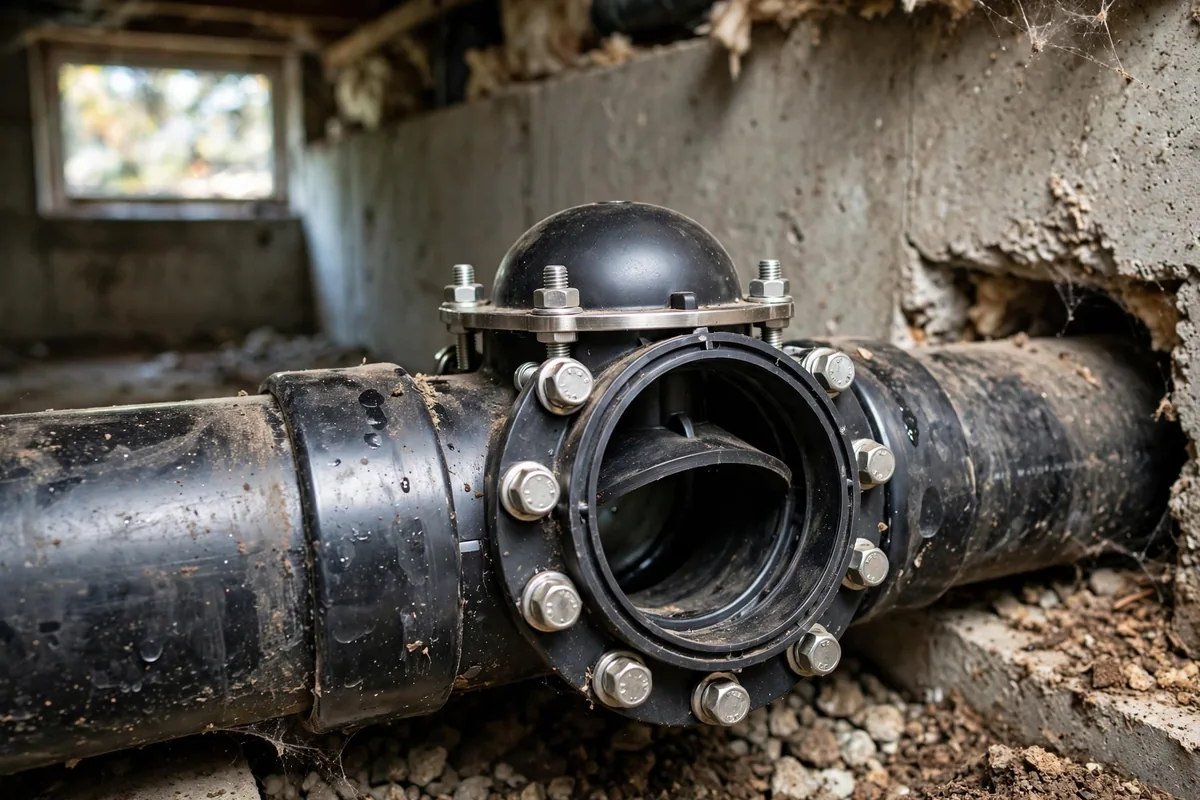
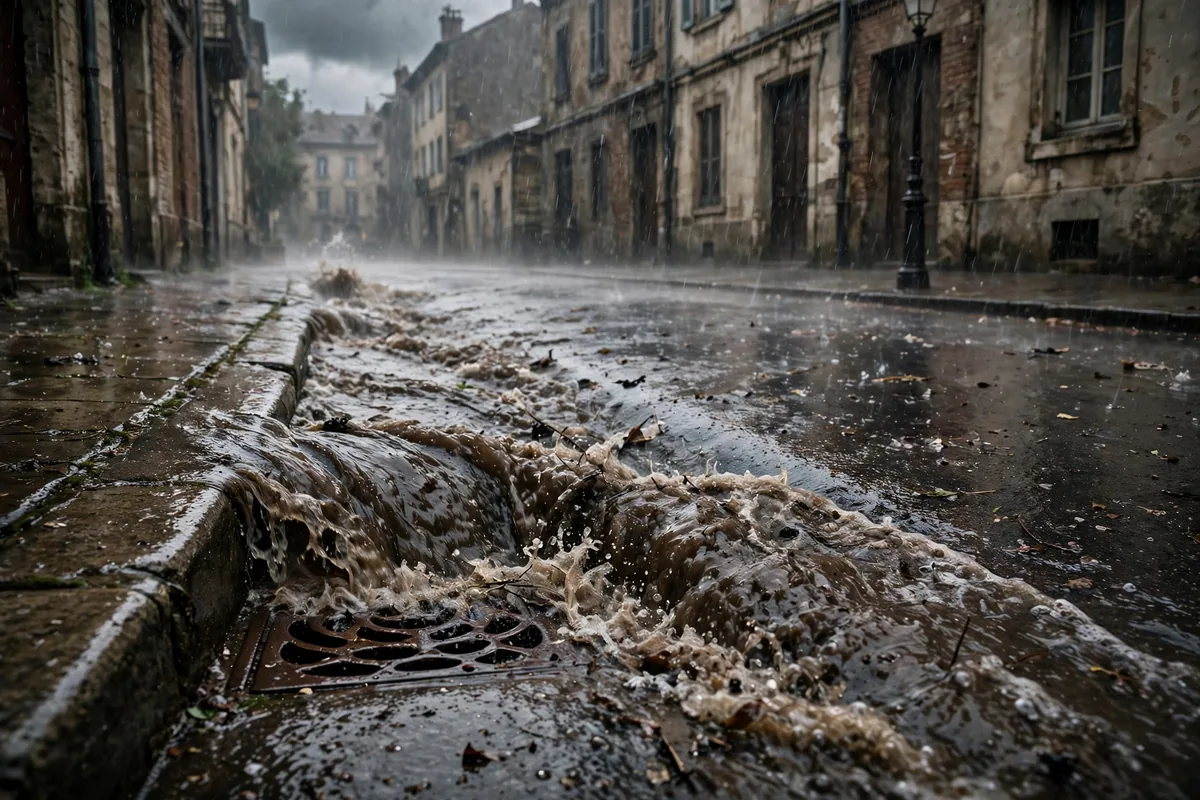
A backup can also start outside your property. In older districts one shared system carries both sewage and storm rain, and a combined sewer system backup can push water back toward homes even when a home's own line is sound. The backup endorsement still speaks to the indoor damage, not to the city system and not to your pipe. Prevention is separate again: a backwater valve can reduce how often sewage enters, and our guide to backwater valve sewer backup prevention explains how that fitting works.
Can One Storm Leave You With Both Bills At Once?
Yes, and it happens more often than people expect. A cracked line lets extra water in during rain, the flow overwhelms what the line can carry, and sewage backs up indoors while the pipe itself also needs repair. One event can involve both endorsements at once.
Follow the water. Rain soaks the soil, and groundwater finds the crack. That entry through cracks and joints is infiltration, while water delivered straight into the system from a connected downspout is inflow. Together they can double the flow in a line that was already partly narrowed. A sump pump that discharges into the same line adds still more water at the worst possible moment.
When both bills land together, keep the paperwork apart from the start. Photograph the indoor damage before cleanup, and keep the outdoor repair quote as its own document. Homeowners sorting out sewer line repair in Allentown, PA after a storm find claims move faster when each set of photos, dates and invoices clearly belongs to one loss or the other, instead of arriving as one mixed bundle.
What Do Neither Of These Endorsements Usually Cover?
Neither add-on is a maintenance plan. Gradual wear on its own, a problem you already knew about, flood water that enters from outside the plumbing system, and work needed because a line was installed badly are all commonly outside both endorsements.
Some homes sit outside this picture entirely. A house on a septic system has no connection to a street main, so neither endorsement is written for its tank and drain field. Other gaps are about cause rather than equipment: a line laid at the wrong angle from the start, so waste settles instead of flowing, points to the proper slope / grade of a sewer line as a construction fault, and insurers commonly treat construction faults as the owner's to put right.
Flood is its own subject. Water that arrives over land or through a basement wall is normally handled under separate flood cover, not under either of these endorsements. Reading about sewer line repair in Pennsylvania will not settle that question for your home; only the flood wording in your own policy, or a separate flood policy, can. When a storm is involved, note in writing which route the water took to get in.
How Do You Tell Which Endorsements You Already Have?
Look for the two names on your declarations page, in the endorsements section. If either name is missing, the working assumption is that you do not have it. A short call to your insurer or agent, answered in writing, settles it for certain.
Names vary a little between insurers, which is where confusion starts. Ask directly: does my policy include service line coverage, does it include sewer backup coverage, and what are the limit and deductible on each? If the person on the phone cannot answer in those terms, ask for the endorsement pages themselves. Consumer guides from the New York State Department of Financial Services, the Ohio Department of Insurance and the Pennsylvania Insurance Department explain how these add-ons are regulated in each state, in plain language.
Buying a home is the other natural moment to check. A pre-purchase sewer scope shows the condition of the buried line while you can still negotiate, and it tells you how much weight to put on adding the pipe endorsement at your first renewal. An older line in fair condition is a different risk from a line already showing cracks at several joints, and your cover choices should reflect what the camera actually found.
What Proof Helps If You Ever Claim On Either Endorsement?
Footage and paper. Insurers judge claims on evidence of what failed, where it failed and why, and the records a pro makes during a camera inspection are exactly that evidence, for either endorsement.
Ask the pro to run a CCTV sewer camera inspection through the sewer cleanout before any digging is approved. Keep the sewer inspection report and footage, still photos of any indoor damage, and a note of the dates when you first saw slow drains, gurgling or odour. If the insurer wants to see the line before authorising work, that footage is what they will ask for, and having it ready shortens the wait.
Photograph the yard, path and driveway before excavation, and keep the failed pipe sections if you are asked to. Keep every invoice in one folder, indoor cleanup bills separate from outdoor pipe bills. Small habits like these settle most disputes about what was damaged and what the work involved, without anyone relying on memory months later.
What Changes The Cost Of Adding Or Using Each Endorsement?
Two different costs are in play. The yearly price of each endorsement turns on the insurer, the limit and the deductible you choose. The cost of using one turns on the repair itself: depth, length, material, access and method.
On the repair side, a shallow short section under soil costs less to reach than a deep line under a driveway, whatever the policy says. Method matters too. Pipe bursting pulls a new line through the old route with limited digging, while a full dig needs the surface above the line restored afterwards. Those factors, not a headline figure, are what a written quote should itemise.
If you are deciding whether to add one or both endorsements, compare the yearly cost and deductible of each against the repair factors for your own line: its age, its material, its depth and what sits above it. One free call connects you with an independent local pro who can scope the line and explain what a repair would involve at your home; a pro can typically arrive in 30–60 minutes, and lines are answered 24/7.
Frequently Asked Questions
Plain answers about the two endorsements, what each one pays for, and how to check which ones you hold. For anything not covered here, lines are answered 24/7.
Still Have Questions? Call Free
One free call connects you with a local pro.
(800) 555-0100Free Call · Answered 24/7 · No Obligation
Reviewed By Hamza
Master Plumber & Trenchless Sewer Rehabilitation Specialist
Hamza is a licensed master plumber and underground infrastructure specialist with extensive field experience resolving sewer lateral collapses, root intrusions, and structural line offsets across Pennsylvania, Ohio, and New York. He specializes in high-definition CCTV pipe diagnostics, cured-in-place pipe (CIPP) lining, pipe bursting, and non-invasive trenchless rehabilitation to restore residential and commercial sewer systems without property destruction.
Updated October 31, 2026
Need Sewer Line Repair Near Me?
One free call connects you with an independent local pro — answered 24/7, no obligation.
Call (800) 555-0100Free Call · Answered 24/7 · Local Pros Near You