Combined Sewers Explained: Why a City Storm Can Push Sewage Into Your Basement
Free Call · Answered 24/7 · Local Pros Near You
The Short Answer
Yes. In a combined system, household sewage and street rainwater travel in the same city pipe. During a heavy storm that shared pipe can fill faster than it can drain. Pressure then builds, and the flow looks for the lowest opening it can find, which is often a basement drain in a nearby home. The backup can arrive even when your own underground line is in sound condition, because the problem starts out in the street, not in your yard.
Call (800) 555-0100Combined Sewer System Backup, Explained In Plain Words
What Is A Combined Sewer, In Plain Words?
A combined sewer is a single underground network that carries both household sewage and rain that runs off streets and roofs. Older cities built their systems this way. Newer areas usually keep the two flows in separate pipes, so a storm there adds nothing to the sewage flow.
The design made sense when it was laid. One trench, one large main — often concrete pipe — carried everything to treatment in dry weather, and rain simply diluted the flow. The U.S. Environmental Protection Agency (EPA) describes these systems as a product of an earlier era of city building, found mainly in older cities and older districts, which is why homeowners reading about sewer line repair in Albany, NY meet the term so often: the oldest streets were built first and combined first.
Your home connects to that shared main through the pipe in your yard. In dry weather everything you flush or drain travels out and away as designed. The weakness only shows when rain arrives faster than the shared system can move it, because then sewage and storm water are competing for the same space in the same pipe, at the same time.
How Does A Storm Turn Into Sewage In A Basement?
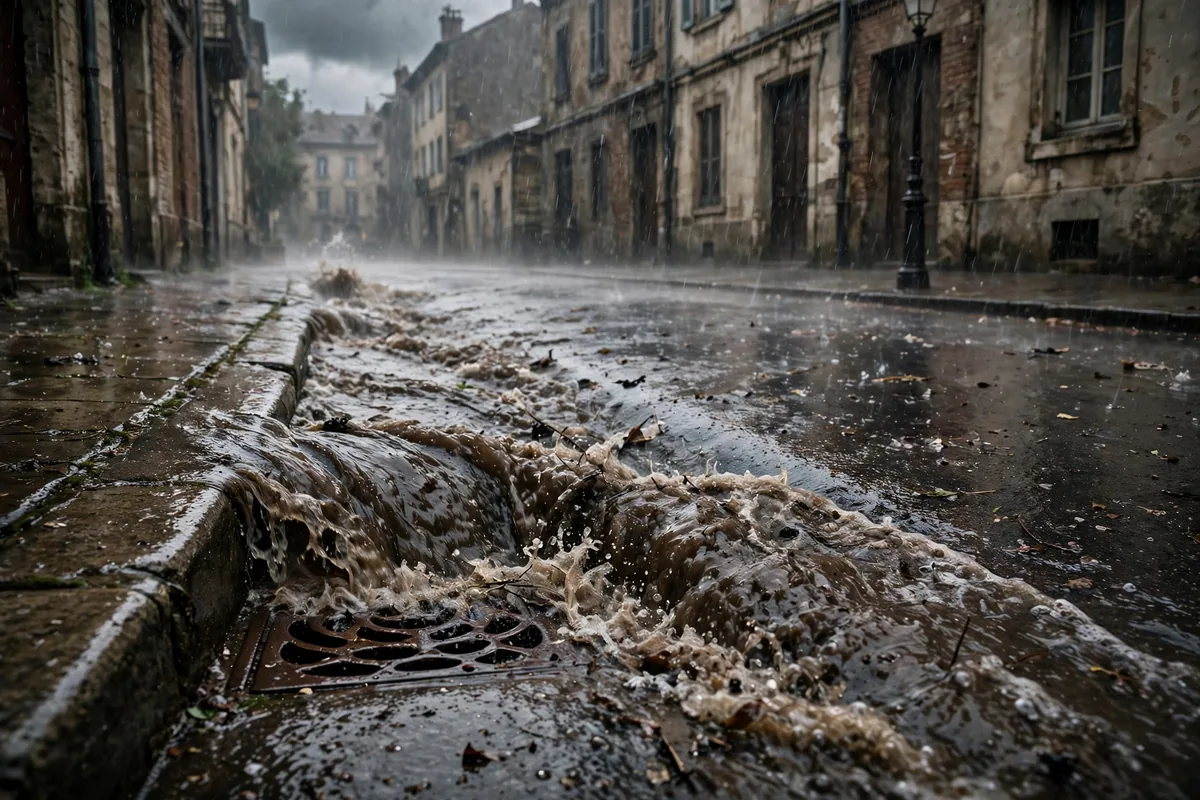
When heavy rain fills the shared main, pressure builds and the flow reverses toward the lowest openings it can find. That event has a name: a combined sewer surcharge. Sewage that should be leaving your street instead pushes back toward your home.
Follow one storm. Rain pours off roofs and roads, and extra water also works into the system through cracks, which is infiltration, and through direct connections such as drains that feed straight in, which is inflow. The public sewer main fills to the top. Openings that normally let flow out — a manhole cover lifting, a basement drain — become the pressure's escape routes, and flow direction at your connection can reverse.
Inside the house, the lowest fixtures meet the rising water first. It can bubble up through the floor drain, push past the house trap, and show at the main stack's lowest joint before any upstairs fixture is affected. Homeowners checking sewer line repair in Akron, OH after a storm often describe the same sequence: a gurgle, a smell, then water at the lowest drain, all while rain is still falling outside.
How Can You Tell A City-Wide Surcharge From A Blockage In Your Own Line?
Timing and company. A surcharge arrives during or just after heavy rain and usually affects several homes on the street at once. A blockage in your own line builds slowly, affects only your home, and shows up in dry weather as well as wet.
Ask your neighbours before you assume the fault is yours. If three homes on the block have water at their lowest drains on the same rainy evening, the shared system is the likely story. If only your home is affected, look closer to home: tree root intrusion at a joint, grease buildup narrowing the pipe, or an offset joint catching waste can each block one line while every neighbour drains normally.
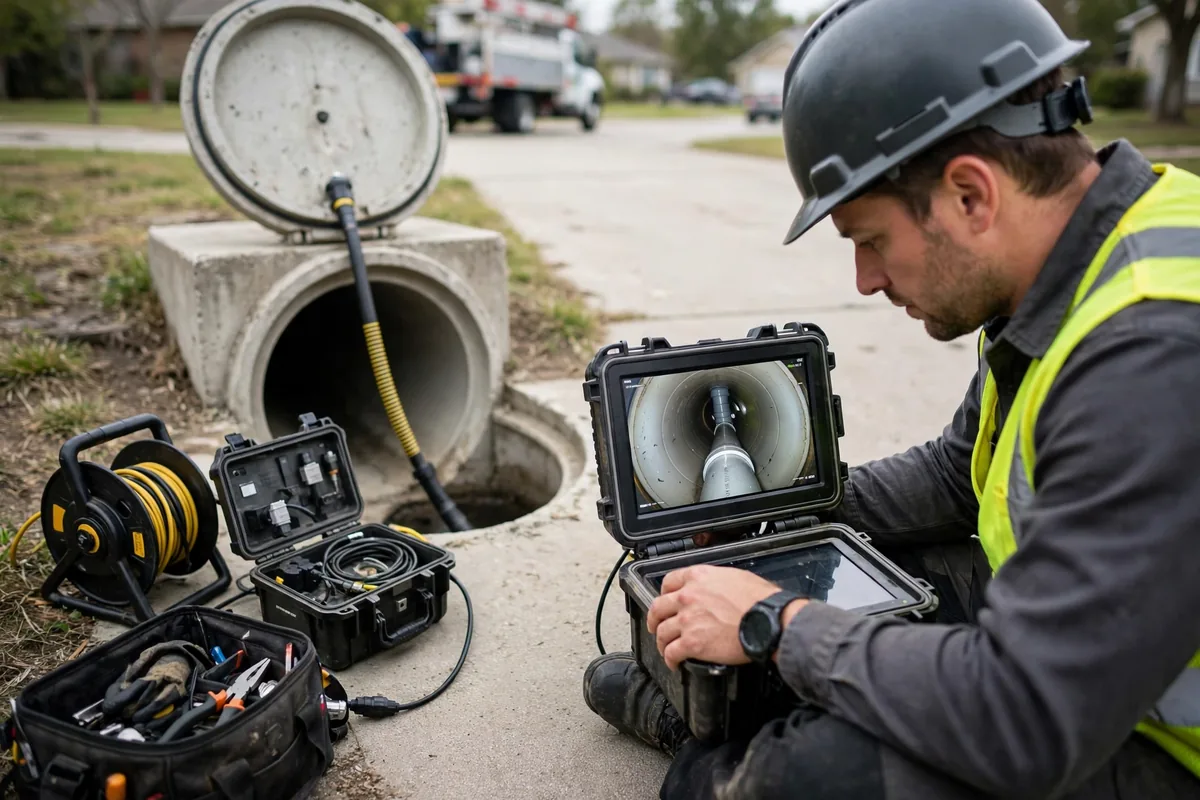
A camera settles the argument after the water drops. A CCTV sewer camera inspection, run in through the sewer cleanout, shows whether your own line is clear, narrowed or damaged, and our guide to sewer repair camera verification explains what that footage proves. Cities use dye testing and smoke testing in the same spirit, tracing where rain connections and breaks feed extra water into the shared system.
Which Homes Face The Highest Risk In Older Cities?
Homes with basements below street level, in the oldest districts, on lines built from early materials. A low basement puts your lowest drain closest to a full main, and an old, tired line gives surcharge pressure more ways to reach it.
Material and condition set the odds. A vitrified clay pipe with a joint every few feet, a cast iron pipe thinned by decades of use, a line with a belly that already holds standing water, or a cracked or collapsed pipe at one weak point all cope badly when flow reverses. The lower your foundation drains sit compared with the street, the less pressure it takes for water to choose your basement as its outlet.
That pattern is why risk clusters by district rather than by luck. Streets laid out a century ago in places like Allentown, PA, for sewer line repair and Alliance, OH, for sewer line help share the same early building era, the same combined design and the same low basements. Newer suburbs a few miles away, built with separate storm pipes, can sit out the same storm with dry floors.
What Should You Do While Sewage Is Coming Up?
Stop adding water, keep clear of what has come up, and make two calls. Every flush, shower and wash cycle sends more flow into a system that is already pushing back, so pausing water use protects your home more than any quick fix.
Keep people and pets out of the affected area, and do not try to open, pump or clear anything yourself while sewage is rising — contaminated water is a health risk, not a cleaning job. Note the time the water appeared and whether neighbours are affected. Then contact your city / municipal sewer utility, because a surcharge in the street main is their system to report and record, and your report helps show the event was area-wide.
For help inside your home, one free call connects you with an independent local pro, and a pro can typically arrive in 30–60 minutes; lines are answered 24/7. Photograph everything before cleanup begins, including the height water reached and any items it touched. Those dated photos, plus the city's record of the storm event, are the two pieces of paper that matter most afterwards, whatever route the cost takes.
What Actually Lowers The Risk Of A Repeat Backup?
A one-way fitting on your line, fewer rain connections feeding the system, and a sound pipe. None of these changes the city main, but together they decide whether a surcharge in the street becomes a backup in your basement or passes your home by.
The fitting is a backwater valve. Fitted on your line, it lets your wastewater out and swings shut when flow tries to return, which blocks the route a surcharge would take into your home. It needs periodic checking to stay free-moving, and it is prevention, not a repair: it cannot fix a damaged pipe, and during the hours it is closed you should use water sparingly, because your own drains have nowhere to go.
Rain connections matter at street scale. Where your city allows it, redirecting a downspout so roof water soaks into the yard instead of entering the shared system takes your roof out of the surge. A sump pump should discharge outside the house, not into the sanitary line, for the same reason. Each change is small on its own; across a whole street of older homes, they lower the peak the shared main has to carry.
Who Is Responsible When The City System Overflows?
Responsibility splits at your property line, and the details vary by city. The shared main and the storm response belong to the city. Your own line, your fittings and the damage inside your home are normally yours to handle, sometimes with help from a city programme or your policy.
Oversight of these systems sits with state environmental agencies: the Ohio Environmental Protection Agency (Ohio EPA), the Pennsylvania Department of Environmental Protection (PA DEP) and the New York State Department of Environmental Conservation (NYSDEC) all regulate wastewater in their states, and cities work under long-term plans to reduce overflows. Separation projects that give storm water its own pipe are the permanent fix, but they run street by street over years, as readers of sewer line repair in New York will know from their own roadworks.
For the indoor damage, cover turns on the backup wording in your own policy, which is a different question from who runs the street main. Our comparison of service line coverage vs sewer backup coverage walks through which endorsement speaks to indoor damage and which speaks to the pipe, and the wider guide to sewer line insurance coverage sets out the standard policy position. Programmes that help with valve fitting or repairs exist in some cities covered by sewer line repair across Ohio, so ask your utility what your city currently offers.
Frequently Asked Questions
Plain answers about combined systems, storm surcharges and what protects a basement. If sewage is rising in your home now, call first and read afterwards — help is answered 24/7.
Still Have Questions? Call Free
One free call connects you with a local pro.
(800) 555-0100Free Call · Answered 24/7 · No Obligation
Reviewed By Hamza
Master Plumber & Trenchless Sewer Rehabilitation Specialist
Hamza is a licensed master plumber and underground infrastructure specialist with extensive field experience resolving sewer lateral collapses, root intrusions, and structural line offsets across Pennsylvania, Ohio, and New York. He specializes in high-definition CCTV pipe diagnostics, cured-in-place pipe (CIPP) lining, pipe bursting, and non-invasive trenchless rehabilitation to restore residential and commercial sewer systems without property destruction.
Updated October 31, 2026
Need Sewer Line Repair Near Me?
One free call connects you with an independent local pro — answered 24/7, no obligation.
Call (800) 555-0100Free Call · Answered 24/7 · Local Pros Near You