After the Repair: Re-Scoping the Line and the Paperwork to Keep
Free Call · Answered 24/7 · Local Pros Near You
The Short Answer
Yes. Before a repair job is closed, the repaired section should be run on camera again to prove the fix holds its shape, flows freely and joins cleanly to the untouched pipe on both sides. That second look catches a shifted joint, leftover debris or standing water while the crew is still on site. Ask for the new footage, the written notes and the final invoice together — those records protect you with insurers, buyers and the company that did the work.
Call (800) 555-0100Sewer Repair Camera Verification, Explained In Plain Words
Should The Repaired Line Be Camera-Checked Again Before The Job Is Closed?
Yes — a short verification run should happen before the crew packs up and the job is signed off. It is the only way to see the finished repair from inside the pipe rather than trusting how it looks from the surface.
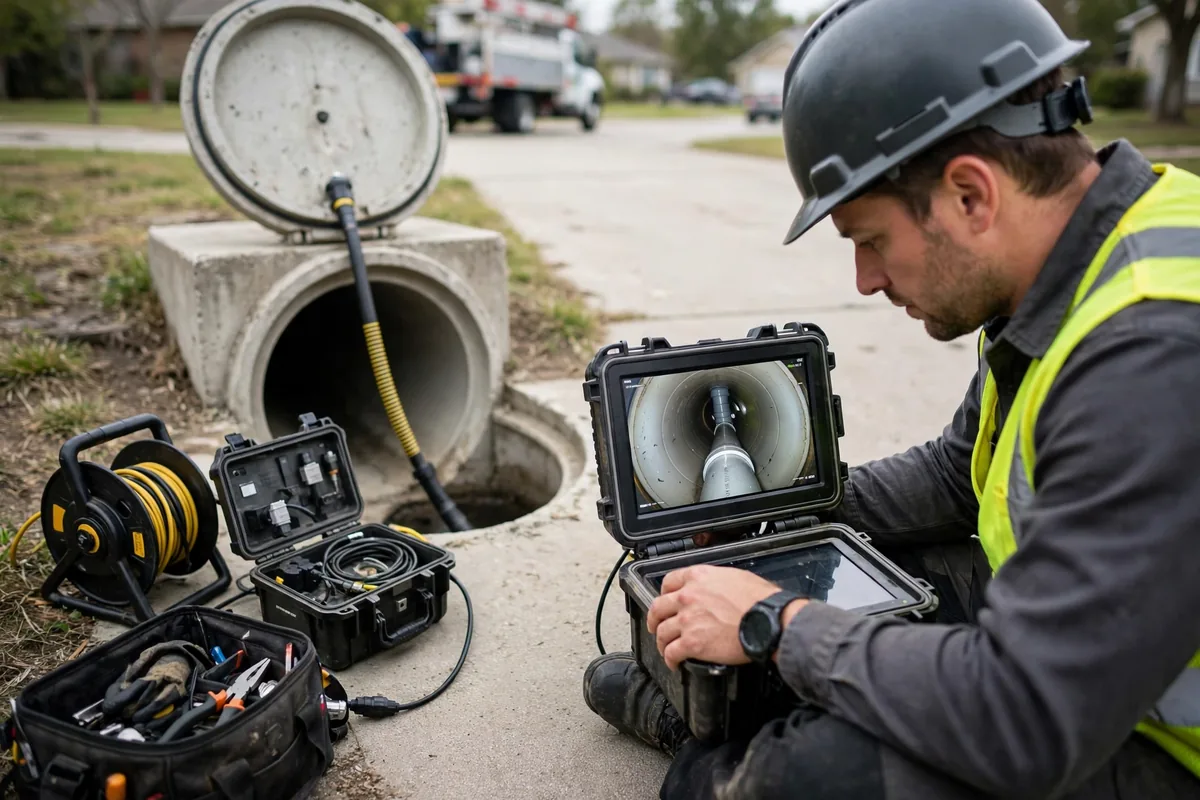
The check is a fresh CCTV sewer camera inspection, started from the same access point used for the first scope so the two recordings can be compared fairly. The camera travels through the repaired stretch and a little beyond it in both directions, with the distance counter visible on screen. Homeowners reading about sewer line repair in Albany, NY often learn this step exists only after a job was closed without it.
Ask to watch the run live if you can. You should see the new section pass under the camera, hear the operator call out the footage distance at the start and end of the repair, and see water run through without pooling. Anything that looks off at this stage can still be put right with tools already on the truck.
The visit should end with a copy of the recording and an updated sewer inspection report and footage summary that names what was fixed, where it sits and what the final pass showed. A verbal "all clear" with no recording is not the same thing, because memory fades and a file does not.
What Should The Post-Repair Footage Actually Show?
It should show a round, smooth pipe with clean joints, no ledges that catch paper, and water moving steadily through the whole repaired length. The inside of the new work is the product you paid for, so judge it directly.
After cured-in-place pipe lining (CIPP), the screen should show an even tube with no wrinkles, folds or resin puddles. A well-fitted CIPP liner hugs the old wall and leaves a surface that waste can slide along. Blistered or sagging-looking sections in the recording are worth a question on the spot, while the crew can still explain or correct them.
Replacement work reads differently on screen. A new PVC pipe section should look bright and uniform, with each joint flush. Pipe bursting leaves an HDPE pipe run in place of the old line, and the footage should show that new run as one smooth bore with no crushed or pinched spots where it passed tight ground.
Where a short new piece joins old pipe, look at the connection itself. A Fernco fitting that sits square and tight shows as a neat band on screen, not a step. Steps and lips matter because toilet paper and solids catch on them first, and a small catch point can grow into a repeat blockage over time.
What Problems Can A Verification Pass Still Catch?
It can catch a shifted joint, leftover rubble, a low place holding water, or damage just beyond the repair that the first scope never reached. Finding any of these on the day is far cheaper than finding them after the yard is restored.
Joints move during backfilling. An offset joint that looked fine in an open pit can shift a fraction as soil settles around it, and only the camera shows that shift from inside. The same pass can reveal an older cracked or collapsed pipe section a few feet past the repair zone, which changes the honest advice about what to watch next.
Water behaviour tells its own story. A run of water sent through the line should clear steadily. If it slows and stands, the proper slope / grade of a sewer line may not have been kept across the repair, and that low place will collect solids. Standing water on the recording is a finding, not a detail to wave past.
Fine roots and seepage also show up. A trace of tree root intrusion at a joint beyond the repair, or infiltration where groundwater beads through a crack, will not undo the finished work, but both belong in the written notes. They set the date for the next routine check instead of becoming a surprise blockage later.
How Does Verification Differ After A Spot Repair Versus A Full Replacement?
A spot repair needs a close look at two joints and a short stretch of pipe. A full replacement needs the whole new run checked end to end, because every joint in it is new and unproven.
After a spot excavation repair, the camera work is focused: in through the sewer cleanout, across the untouched pipe, and slowly over the patched section. The operator checks that the patch lines up with the old pipe on both sides and that no soil or gravel entered while the pit was open. The pass is quick, but it should still be recorded, not just eyeballed.
A full open-trench replacement covers far more ground. The recording should travel the entire new run, pausing at each joint, and a sonde locator can be used above ground to confirm exactly where the new line sits under the yard. That location record matters years later when someone digs, plants or builds near the line.
Crews working on sewer line repair in Allentown, PA follow the same logic at any scale: the bigger the replaced length, the more footage you should hold at the end. In Pennsylvania, sewer line repair jobs that end with a full-length recording leave the owner with proof that covers every new joint, not just the one nearest the house.
What Paperwork Should You Keep After The Repair?
Keep the before and after footage, the written report, the itemised invoice and any warranty note together in one folder. Together they show what your sewer lateral looked like, what was done to it and what it looked like afterwards.
Start with the pair of recordings. The first one explains why work was needed; the second proves the sewer lateral was returned to a round, free-flowing condition. Label each file with the date, the address and the distance range it covers, from the house wall toward the public sewer main, so a stranger can follow it without you in the room.
Add the paper trail from the job itself: the signed quote, the final invoice showing the method and length repaired, notes on the pipe material used, and the distance from the foundation where any new section begins. If a section of old pipe was kept or photographed, file those pictures with the rest rather than in a phone gallery they will vanish from.
Keep the claim angle in mind even if you never file one. If the failure might involve your policy, the folder you build here is the same evidence our guide to sewer line insurance claim documents describes. Records made on the day carry more weight than memories written down months later.
How Long Should You Keep The Records And Footage?
Keep them for as long as you own the home, and hand them over when you sell. Underground work cannot be inspected from the kerb, so your files are the only history the line has.
Repairs rarely cover the whole line. The untouched stretches of an older home may still be vitrified clay pipe or cast iron pipe, quietly ageing out of sight. Your verification folder shows which parts are new and which are original, and that split guides every later decision about cleaning intervals, watch points and future budgets.
At sale time the folder works quietly in your favour. A buyer asking about drains can be shown dated footage instead of hearing an assurance, and their own inspector can compare a fresh scope against yours. Owners across Ohio, where sewer line repair records change hands with older homes every week, find the handover smoother when the line has a paper history.
Store copies in two places: the originals in a house file and a backup in cloud storage or on a spare drive. Video files are easy to lose when a phone changes, and the one recording you cannot recreate is the one taken inside a pipe that has since been buried again.
What Should You Do If The Verification Footage Shows A Problem?
Do not sign the job off as complete. Ask the crew to explain the finding on screen, fix what belongs to the repair while they are equipped for it, and record a second final pass once it is corrected.
Stay specific. Point to the distance reading and describe what you see: a lip at a joint, grit sitting in the invert, or water that does not clear. A clear note of the distance lets the crew return to the exact spot instead of reopening guesswork. If the issue is leftover construction debris, a plain rinse and a repeat camera run may settle it the same day.
Some findings sit outside the repair zone, like rain-driven extra flow entering from a downspout connection or an older fault further down the run. Those are not the crew's failure, but they should land in the written notes with a distance and a recommendation. Our explainer on a combined sewer system backup shows why extra storm flow matters more in some streets than others.
If your job was closed without any final check, you can still get one. One free call connects you with an independent local pro who can scope the line now and write up what the camera finds; a pro can typically arrive in 30–60 minutes, and calls are answered 24/7. A late recording is far better than none when a problem returns.
Frequently Asked Questions
Straight answers about checking a sewer repair on camera and keeping the records. If your repair ended without footage, call free — lines are answered 24/7.
Still Have Questions? Call Free
One free call connects you with a local pro.
(800) 555-0100Free Call · Answered 24/7 · No Obligation
Reviewed By Hamza
Master Plumber & Trenchless Sewer Rehabilitation Specialist
Hamza is a licensed master plumber and underground infrastructure specialist with extensive field experience resolving sewer lateral collapses, root intrusions, and structural line offsets across Pennsylvania, Ohio, and New York. He specializes in high-definition CCTV pipe diagnostics, cured-in-place pipe (CIPP) lining, pipe bursting, and non-invasive trenchless rehabilitation to restore residential and commercial sewer systems without property destruction.
Updated October 31, 2026
Need Sewer Line Repair Near Me?
One free call connects you with an independent local pro — answered 24/7, no obligation.
Call (800) 555-0100Free Call · Answered 24/7 · Local Pros Near You