Backwater Valves: When One Protects Your Basement and When It Does Not
Free Call · Answered 24/7 · Local Pros Near You
The Short Answer
A one-way fitting in the line leaving your home can stop sewage being pushed backward into a low basement when the street system is overwhelmed, most often during heavy rain. It does nothing for a backup caused by a blockage or collapse inside your own pipe, and while it is closed your household must use very little water. Whether it helps you depends on the height of your basement, your backup history, and the condition of your line.
Call (800) 555-0100Backwater Valve Sewer Backup Prevention, Explained In Plain Words
Why Does A Valve Not Help Every Kind Of Backup?
No valve on your own line can stop a problem that starts inside your own home. If a blockage, a collapsed section, or heavy grease in your line is causing the backup, sewage never needs to travel in reverse from the street to flood your basement.
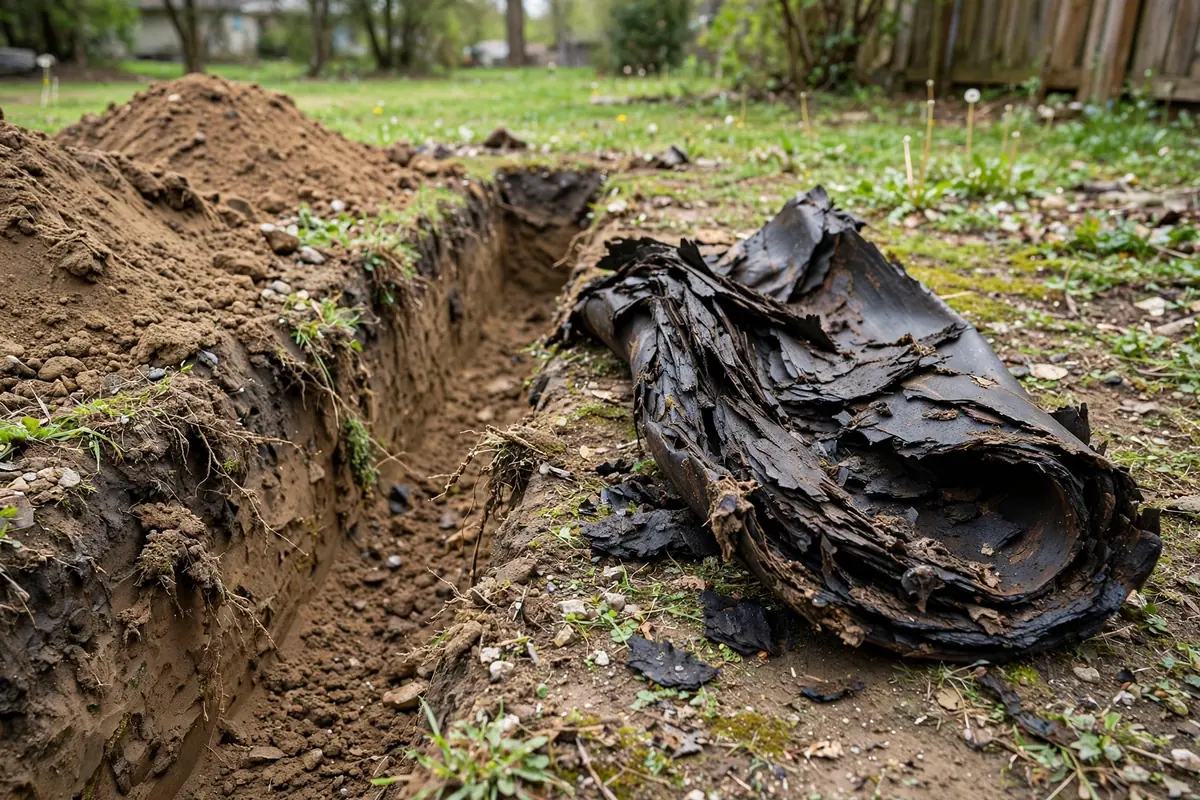
Picture two different nights. On the first, heavy rain overwhelms the street system and sewage is pushed backward toward houses. On the second, your own underground line is narrowed by roots and a normal laundry load backs up on its own. The first is a reverse-flow problem. The second is a drainage problem in your pipe, and closing a gate against the street changes nothing about it.
That distinction decides whether the fitting is worth installing at all. Homeowners in Abington, PA, considering backup protection should first know which kind of backup they have actually had, from a camera look at the line and the pattern of when trouble happens, not from a guess after one bad night.
A valve also cannot raise a low basement, fix a line pitched the wrong way, or clear an existing blockage. It is one protective device for one direction of flow, which is why the rest of this guide keeps coming back to fit, limits, and condition rather than treating it as a cure for every wet basement.
How Does A One-Way Fitting Actually Stop Reverse Flow?
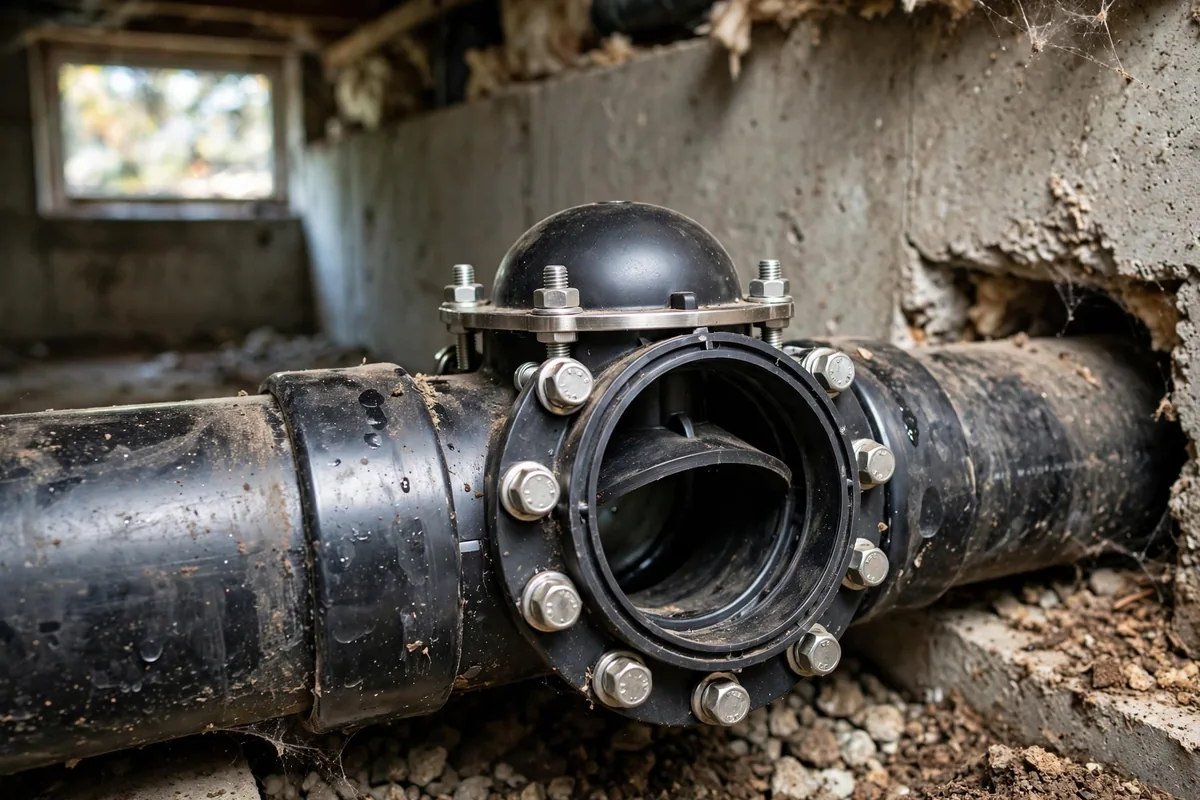
The fitting sits in the line leaving the house and contains a flap that hangs open during normal drainage. When flow tries to reverse, that flap is pushed shut, and the pressure from the street side holds it closed until levels outside fall again.
In normal use your wastewater lifts or passes the flap and continues toward the public sewer main without the device slowing it in any way you would notice. The flap only moves when the direction changes, which is the whole point: open for your flow out, closed against flow coming back in.
Better designs let you reach the flap from a small access cover at floor or yard level, because a flap you cannot reach is a flap you cannot clean. Some models also add a gate you can close by hand during a severe storm, giving a second layer when a combined sewer surcharge is forecast and the street system is already known to be straining.
Where the device is placed matters. It needs to sit on the main run leaving the house, before branches join, so that every basement fixture is behind it. Our guide to what home cover may pay for after a backup is a useful companion read, because a valve reduces risk but does not repair damage that has already happened.
Which Homes Gain The Most From Fitting One?
Homes with basement fixtures below street level, a history of neighbourhood backups during storms, or a connection to an older combined system gain the most. The one-way valve is most valuable where reverse flow from outside, not trouble inside it, is the proven risk.
Height is the clearest test. If your lowest floor drain, toilet, or shower sits below the level of the nearest street manhole, sewage pushed backward has a downhill path into your home. Homes above that level are far less exposed, because reverse flow would have to climb to reach their fixtures.
History is the second test. Repeated backups across several homes on the same street during the same storm point outward, toward a shared system under strain. A single backup in one house during dry weather points inward, and residents across Pennsylvania dealing with sewer backups see both patterns, sometimes on neighbouring streets with different systems underneath them.
A CCTV sewer camera inspection before any decision shows whether your own line is already narrowed or damaged. Fitting a protective device onto a line that is failing for its own reasons spends money in the wrong place, and a pro should be able to show you the footage behind that judgement.
Can You Use Water While The Flap Is Closed In A Storm?
Using your own water while the flap is shut sends it against a closed gate, so it can back up into your lowest fixtures from the inside. During a storm surge, heavy home water use is one of the main ways a protected basement still gets wet.
This is the limit owners are told least often. The device protects you from the street, but while it is closed your home is effectively cut off from drainage. A long shower, a bath emptied quickly, or a washing machine cycle has nowhere to go, and the lowest opening, often a floor drain, is where that water reappears.
The practical rule during a severe storm is simple restraint: use little water, avoid laundry and the dishwasher, and wait until the weather and street levels settle. A sump pump should discharge outside the protected line where rules allow, so groundwater handling does not add to the trapped flow indoors.
Households in Albany, NY, weighing backup prevention should ask how their basement plumbing is arranged before fitting anything. If a basement bathroom is used daily, the household needs a clear storm routine, not just a device in the floor and good intentions.
What Affects The Cost Of Fitting A Valve?
The honest answer is: the line itself, the flap's condition, the depth of the basement, and the digging needed to reach the main run. A shallow line under a utility area is a simpler job than a deep line under finished flooring or concrete.
Access drives much of the work. The crew must reach the main run where it leaves the house, which can mean opening a section of basement floor, working through an existing access point, or digging outside near the foundation wall. Restoring concrete, flooring, or paving afterwards belongs in the quote, not as a surprise at the end.
Material and size matter too. Many modern fittings use a PVC pipe section matched to the diameter of the existing run, and keeping the proper slope through the new section matters, because a fitting set too flat can catch solids in normal use. An older line that is already damaged where the device would sit may need a short repair first.
Local approval can add a step. Some towns want the work inspected, and the city / municipal sewer utility is the office that can confirm local expectations before work starts. In Alliance, OH, planning this kind of fitting, asking that question early keeps the schedule simple. Compare quotes on the same basis: device, access, restoration, and inspection.
Does The Fitting Need Looking After Once It Is Fitted?
Yes. A flap fouled by grease, wipes, or debris may sit partly open and fail on the one night it is needed, and a flap stuck shut can slow normal drainage for weeks unnoticed. A simple periodic check through the access cover keeps both failures from building up quietly.
Grease buildup is the common enemy, because a sticky film stops the flap seating fully, and stringy material can wedge under its edge. The check itself is visual and quick where the access cover is reachable: lift it, confirm the flap moves freely, clear anything caught, and make sure the cover seals back down so sewer gas stays out of the room.
Homes discussing upkeep in Allentown, PA, for sewer protection often tie the check to a season, such as early spring before heavy rain, plus one extra look after any backup event nearby. If your sewer cleanout is hard to reach, our guide to where that access point is usually found helps you locate the right cover before you start lifting the wrong one.
Skip risky do-it-yourself opening of a pressurised or flooded line. If sewage is standing in the basement, if the flap area is submerged, or if you cannot identify the cover with confidence, stop and call instead. One free call connects you with an independent local pro, and a pro can typically arrive in 30–60 minutes when the situation is urgent.
How Should You Decide Whether To Fit One At All?
Start with evidence: when backups happen, whether neighbours are affected at the same time, how low your basement sits, and what a camera shows inside your own line. With those four facts, the case for or against the device usually becomes clear without any sales pressure.
Dry-weather backups, slow drains throughout the house, and gurgling at several fixtures point to your own line, where tree root intrusion, a cracked or collapsed pipe, or a sagging section should be dealt with first. Storm-only backups shared across a street point outward, and that is the pattern the device was designed for, as background from the U.S. Environmental Protection Agency (EPA) on combined systems helps explain.
Dye testing can help trace where water is entering or leaving, and records from your town about past street flooding add context a single household cannot see alone. Homes across Ohio facing repeat sewer backups often find the town pattern, more than any single incident, settles the question.
If you do fit one, treat it as part of a wider plan: keep the line itself in sound condition, keep roof water out of the sanitary line, and know the household storm routine. A related guide on temporary pumping while a line is open for repair and our comparison of the two kinds of backup-related cover round out the picture before you commit.
Frequently Asked Questions
Short answers on fit, limits, and upkeep for reverse-flow protection. For an active backup, one free call connects you with an independent local pro, answered 24/7.
Still Have Questions? Call Free
One free call connects you with a local pro.
(800) 555-0100Free Call · Answered 24/7 · No Obligation
Reviewed By Hamza
Master Plumber & Trenchless Sewer Rehabilitation Specialist
Hamza is a licensed master plumber and underground infrastructure specialist with extensive field experience resolving sewer lateral collapses, root intrusions, and structural line offsets across Pennsylvania, Ohio, and New York. He specializes in high-definition CCTV pipe diagnostics, cured-in-place pipe (CIPP) lining, pipe bursting, and non-invasive trenchless rehabilitation to restore residential and commercial sewer systems without property destruction.
Updated October 31, 2026
Need Sewer Line Repair Near Me?
One free call connects you with an independent local pro — answered 24/7, no obligation.
Call (800) 555-0100Free Call · Answered 24/7 · Local Pros Near You