Grease in the Sewer Line: How Kitchen Fat Narrows a Pipe and How to Stop It
Free Call · Answered 24/7 · Local Pros Near You
The Short Answer
Kitchen fat is the quiet cause. Oil and dripping leave the sink as a liquid, cool against the buried pipe wall, and set into a sticky film. Wash after wash adds another film until the opening is too narrow for normal flow, so sinks empty slowly, smells linger, and other drains follow. The fix starts in the kitchen: cool the fat, container it, bin it, and never let the sink carry it away. Small daily choices at the stove decide how long the run stays open.
Call (800) 555-0100Grease Buildup In Sewer Line, Explained In Plain Words
How Does Kitchen Fat End Up Coating The Pipe Wall?
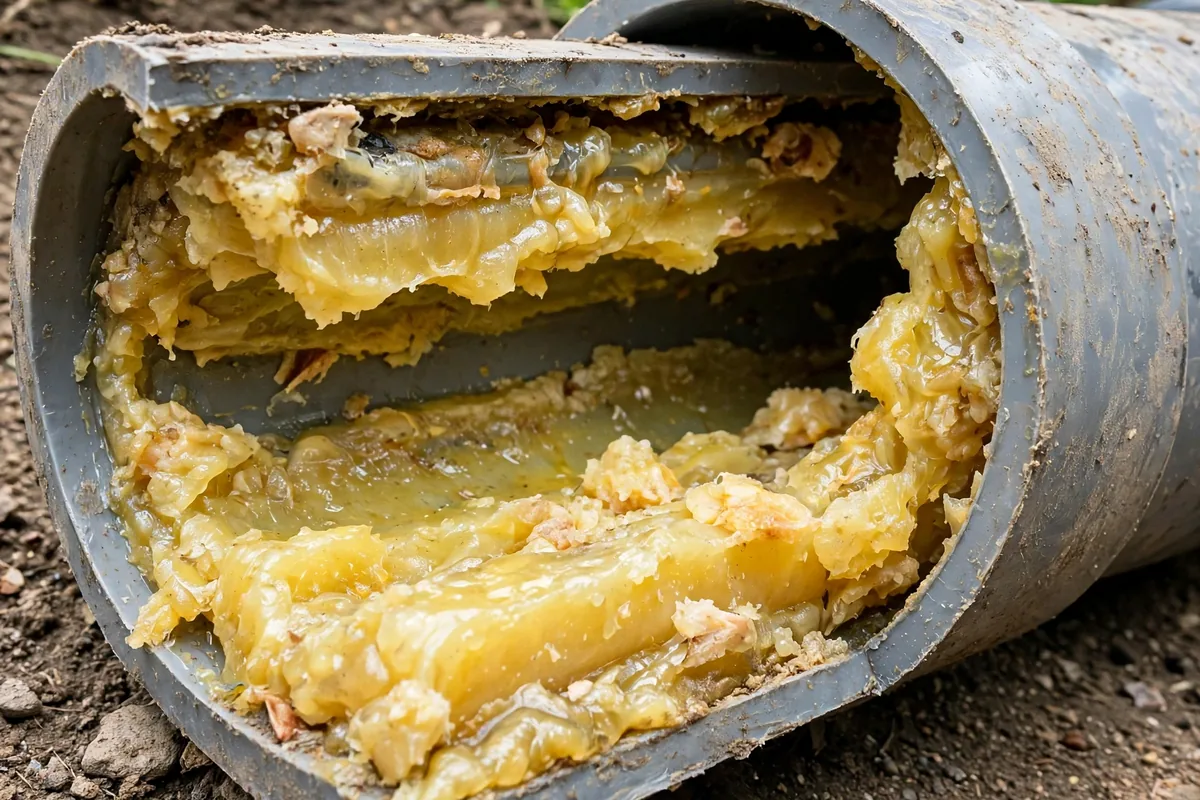
Hot fat leaves a pan as a liquid, then cools on the underground pipe wall and turns into a waxy layer. Each wash adds another film, the opening shrinks a little at a time, and ordinary waste that once slid through begins to catch on the rough coating.
The change happens because the pipe is colder than the pan. Melted butter, meat dripping and cooking oil stay runny in warm dishwater long enough to leave the sink, then meet a buried wall at ground temperature and set. That first film is thin, but it is sticky, and the next meal's wash sticks to it instead of to smooth pipe.
This is the process behind fatty deposits in a sewer line, and it is slow enough to hide for months. The opening does not close in a week. It narrows over seasons of roasts, fry-ups and rinsed roasting tins, which is why a household can swear nothing changed in the week the drains finally stopped. Nothing did. The change had been layering up for a long time.
Running hot water after the fat does not solve it. Heat only pushes the melted film further along before it cools and sets again, sometimes deeper in the run, where a later blockage is harder to reach. Cold ground always wins that race.
Where Inside The Run Does The Coating Grow Thickest?
Fat sticks fastest where flow slows or the wall is already rough: in a low stretch that holds water, on rusted iron, on scale, and just before a bend or a joint where the current changes direction and drops what it was carrying.
A cast iron pipe is the most welcoming surface in many older homes. Years of pipe corrosion and scaling leave its inside wall pitted, and channeling can wear a groove along the bottom where water runs. Fat fills those pits first, then builds upward from them, so a pipe that still looks round at a glance can carry a thick ledge of deposit along its base.
A vitrified clay pipe gives fat a different foothold. Its joints, spaced every few feet, interrupt the smooth run, and cooled film collects at each small step in the bore. A PVC pipe sheds deposits better because its wall stays smooth, which is one reason newer runs can tolerate the occasional greasy rinse that would steadily coat an older iron or clay line.
Slope decides the rest. Where the proper slope / grade of a sewer line has been lost and the run dips, water sits instead of running, and a belly / sag in the line becomes a still pool where fat floats, cools and settles onto the wall. Homes asking about sewer line repair in Auburn, NY often learn their kitchen habit only became a blockage once a low stretch gave the fat somewhere quiet to collect.
What Signs Show The Opening Is Getting Narrower?
The usual order is a kitchen sink that empties slowly, a gurgling sound from a nearby drain, smells that linger after washing up, and then slow drainage showing up in rooms that have nothing to do with the kitchen at all.
Early on, the only clue is at the sink itself, because hot greasy water is the first flow the narrowed section struggles to pass. A sink that fills while the dishwasher runs, or that burps air back as it empties, is describing a downstream restriction, even if every other drain in the house still behaves normally that day.
Later the problem spreads. A shower tray that drains slowly in the morning and a toilet that flushes weakly point to the shared underground run, not to three separate faults appearing at once. A floor drain lifting water in the basement during a laundry wash is the clearest late sign: the run could not move that volume past the narrowed stretch, so it found the lowest opening indoors.
Smell tells its own part. Waste held up by a narrowed pipe sits in the run longer than it should, and its gases find their way back through traps and the main stack. If the smell is worst after cooking and washing up, rather than after rain, kitchen fat belongs high on the suspect list.
What Should Never Go Down A Drain Or Toilet?
Wipes, paper towels, coffee grounds, rice, pasta and food scraps should all stay out of drains and toilets. Each one either holds together in water, swells as it soaks, or settles as grit, and a fat-coated wall will catch all of them.
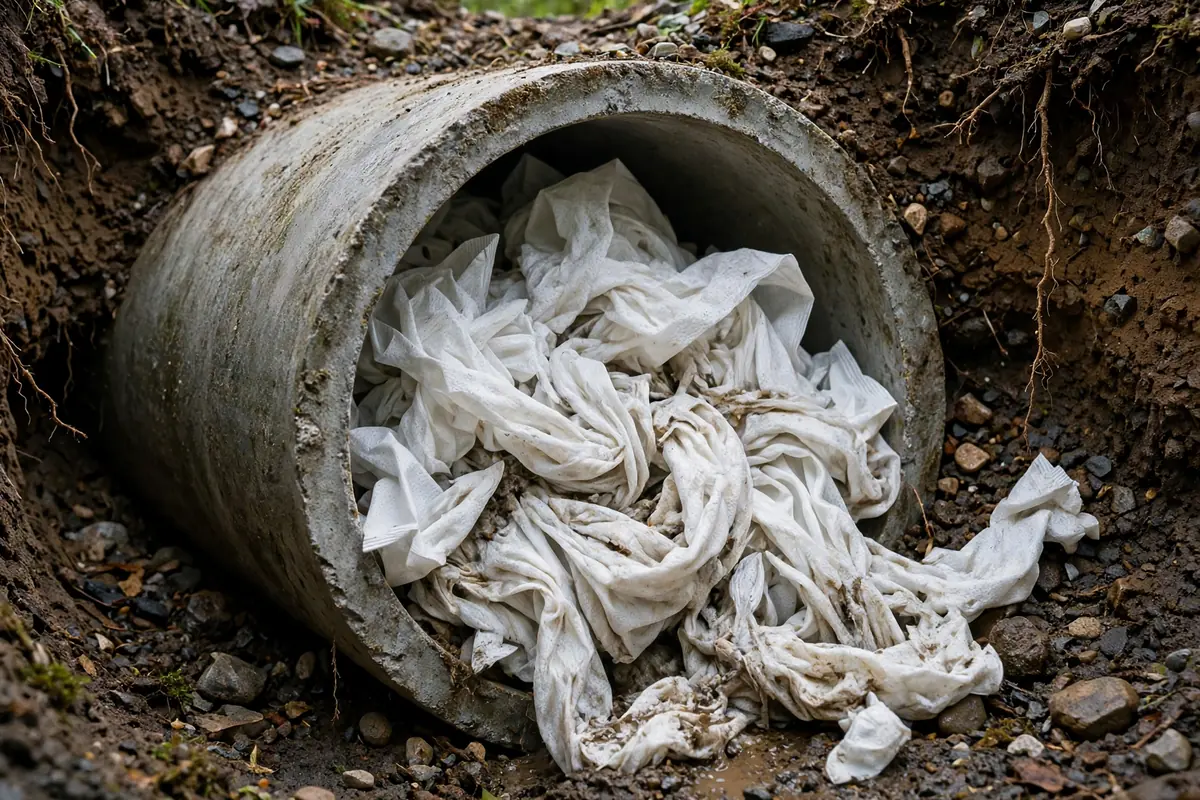
Our companion guide asking do flushable wipes clog sewer lines explains the toilet side in full. The short shared rule is simple: a coated pipe catches anything that does not fall apart in water. A sheet, a wad of grounds or a handful of rice that might have washed through a clean pipe instead embeds in the waxy layer and starts a plug.
Kitchen habits matter more than bathroom ones for this particular problem, because the kitchen supplies the coating itself. Scraped plates add crumbs and sauces, the sink strainer catches only the largest pieces, and a waste disposal unit can mislead a household into treating the sink as a bin. Ground food still has to travel the same narrowed run, and its fats still coat the wall on the way.
Keep a simple test in mind: if an item would not dissolve in a glass of cold water within a minute, it does not belong in the drain. That one test correctly rejects grounds, grains, peels, stringy vegetables, fats and every wipe and towel.
What Kitchen Habits Stop Fat Reaching The Pipe?
Never pour used cooking oil, pan dripping or fryer fat down the sink, and never rinse a greasy pan under a hot tap as your main cleanup. Let fat cool in the pan, scrape or pour it into a container for the trash, and wipe the last film out with paper that goes in the bin.
The container habit is the whole change. Keep a heat-safe jar or a lined can near the stove, pour cooled fat into it after cooking, and throw it away when full. For a pan with only a thin film, a paper wipe before washing removes most of what would otherwise ride the dishwater underground. The sink then carries soap and water, not a fresh coating in the making.
Small routines around big meals matter most, because holidays and family gatherings send several pans' worth of fat toward the sink in one evening. Assign the scraping and container step to whoever washes up, just as drying and putting away are assigned. In homes across Ohio, sewer line repair visits after holiday weekends follow this pattern so often that pros ask about big meals before they ask about anything else.
Renters and shared houses need the rule written down, not remembered. A note inside the cupboard under the sink, naming the container and where it lives, survives a change of housemates in a way a verbal agreement does not.
How Does A Pro Remove A Thick Fat Layer?
A pro opens access, washes or cuts the coating out of the run, and then inspects the wall to see whether fat was the whole story or whether it was coating damage that will collect the next layer just as fast.
Work usually starts at the sewer cleanout. From there, hydro jetting sends high-pressure water along the run to strip the waxy layer off the wall and flush the broken pieces onward toward the public sewer main. In an iron run where hard scale sits under the fat, chain descaling may be used to knock that crust loose so the water can finish the wash.
Cleaning is only half the visit. A CCTV sewer camera inspection after the wash shows the true wall: pits, cracks, joints and low stretches that were hidden under the coating. The sewer inspection report and footage from that look tells you whether a change of kitchen habits will be enough, or whether a damaged section needs repair before it coats up again in the same place.
That distinction decides the honest next step, and a fuller comparison is set out in our guide to comparing water cleaning with a full repair. Households arranging sewer line repair in Akron, OH hear the same sequence: strip the layer, look at the wall, then choose, with footage in hand rather than guesswork.
How Do You Keep The Pipe Clear After A Cleaning?
Keep fat out, keep the access point reachable, and have the run looked at again if sink drainage slows within months of a cleaning. Fast return of symptoms usually means a low spot or damaged wall is collecting fat again, not that the cleaning failed.
The first month sets the pattern. Put the container by the stove the same day the line is cleared, while the memory of slow drains is fresh, and tell everyone who cooks what changed. A household that returns to pouring pan fat away will rebuild the layer on exactly the timetable the camera footage and the thickness of the old coating would predict.
Access helps if there is a next time. Knowing where your sewer cleanout is, and keeping boxes, soil or decking off it, means a returning problem can be reached in minutes. The same habit protects a septic system at homes off the street network: fat still coats the run to the tank and adds to what must be pumped.
The U.S. Environmental Protection Agency (EPA) treats fats, oils and grease as a blockage cause worth preventing at home in its wastewater guidance, and that prevention-first view fits a single house just as well as a town system. If several rooms are already draining slowly, or water has appeared indoors, stop adding to the line and call. One free call connects you with an independent local pro, a pro can typically arrive in 30–60 minutes, and lines are answered 24/7. That route serves smaller towns too, including homes near Altoona, PA, sewer line repair and Amsterdam, NY, sewer line repair.
Frequently Asked Questions
Short answers about kitchen fat, slow sinks and keeping a household run clear. If drains are already backing up, call free — lines are answered 24/7.
Still Have Questions? Call Free
One free call connects you with a local pro.
(800) 555-0100Free Call · Answered 24/7 · No Obligation
Reviewed By Hamza
Master Plumber & Trenchless Sewer Rehabilitation Specialist
Hamza is a licensed master plumber and underground infrastructure specialist with extensive field experience resolving sewer lateral collapses, root intrusions, and structural line offsets across Pennsylvania, Ohio, and New York. He specializes in high-definition CCTV pipe diagnostics, cured-in-place pipe (CIPP) lining, pipe bursting, and non-invasive trenchless rehabilitation to restore residential and commercial sewer systems without property destruction.
Updated October 31, 2026
Need Sewer Line Repair Near Me?
One free call connects you with an independent local pro — answered 24/7, no obligation.
Call (800) 555-0100Free Call · Answered 24/7 · Local Pros Near You