Hydro Jetting, Root Cutting and Descaling: Cleaning Is Not a Structural Repair
Free Call · Answered 24/7 · Local Pros Near You
The Short Answer
Cleaning and mending do different jobs. Pressurised water, spinning cutters and chain tools strip roots, cooking fat and scale off the inside wall and restore flow, sometimes within one visit. None of them seals a crack, straightens a shifted section or lifts a low spot, so a damaged tube stays damaged underneath. The reliable sequence is a camera look first, cleaning only where the wall is sound, then a second look before anyone talks about structural work.
Call (800) 555-0100Hydro Jetting Vs Sewer Repair, Explained In Plain Words
Does Clearing A Blockage Mend The Pipe Wall?
No. Washing, cutting and scouring remove material that has built up inside the tube. They do not seal cracks, rejoin separated sections or restore strength to a wall that has thinned, split or caved in.
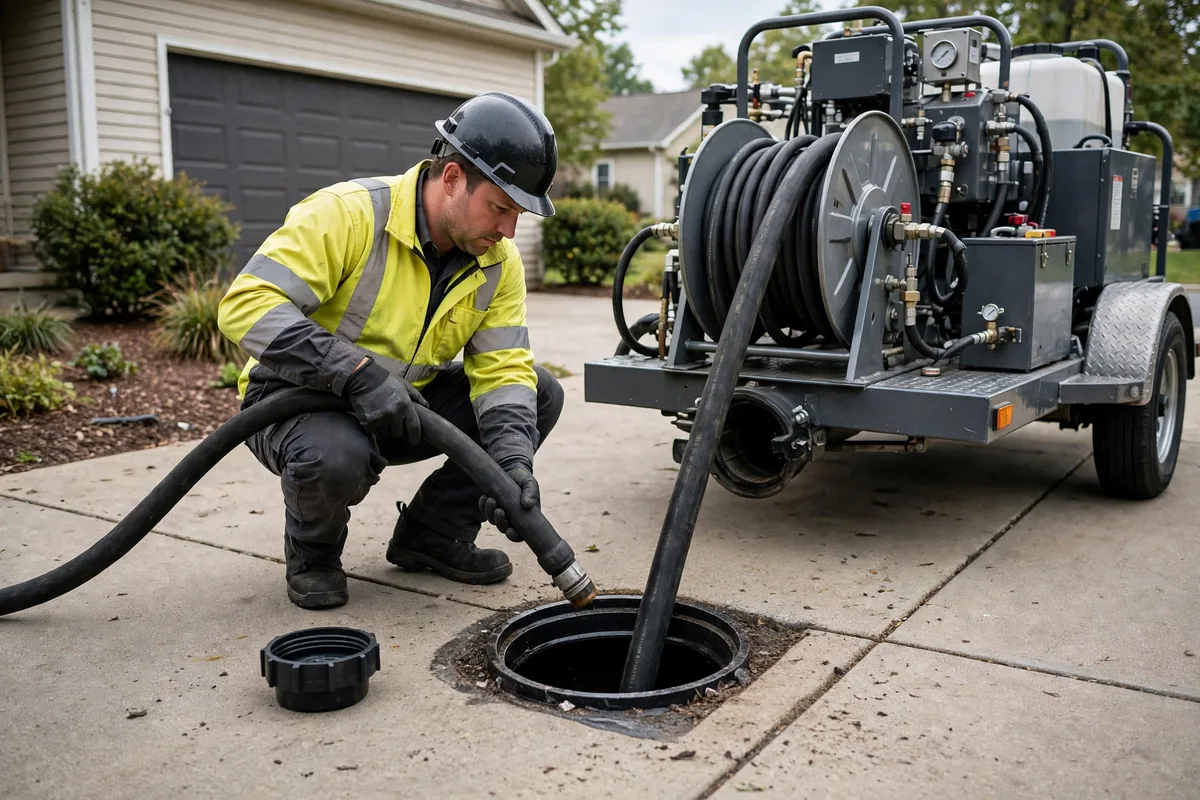
Think of two different layers of trouble. The first sits inside the bore: roots creeping through a joint, cooking fat cooling on the wall, grit and scale narrowing the passage. High-pressure water cleaning belongs to this layer. A high-pressure stream scours the inner surface and flushes the loosened material downstream, and flow often returns the same day because the passage is open again.
The second layer is the wall itself. Once clay has cracked, iron has rusted through or a section has dropped out of line, an open passage is only half the story. Water still escapes through the break, soil still washes in, and roots find the same gap again. That is why a line can run freely on Friday and slow again within weeks: the passage was cleared, but the opening that let the trouble in was never closed. Homeowners often judge the visit by the first flush afterwards, and that test misleads. A clear bowl and a fast-draining bath say the passage opened; they say nothing about whether the wall will hold for a month or a year. Keeping a short note of when drains slow again, which fixtures complain first and whether wet weather changes things gives the next visit a head start and turns a vague worry into a pattern a pro can read.
What Do The Three Cleaning Approaches Each Remove?
Each tool suits a different deposit. Water scours soft coatings and flushes debris out, spinning blades shave roots back to the wall, and chains knock hard mineral crust off iron. None of them changes the pipe itself.
Mechanical root cutting sends a rotating head through the line, trimming growth back so waste can pass. It suits tree root intrusion that has entered through a joint or crack, but the roots are cut, not removed at the source, and the gap they entered through stays open. A pro working on a blocked line in Amsterdam, NY will usually pair cutting with a camera look to see which joint the growth came through.
Chain descaling tackles a different deposit: the rough crust left by pipe corrosion and scaling inside a cast iron pipe. Flailing chains chip that crust away and smooth the bore. Water scouring sits between the two jobs, shifting soft deposits and washing everything downstream. All three are cleaning passes. Each leaves the host tube exactly as old, as cracked and as uneven as it was before the tools went in.
Which Problems Look Fixed After Cleaning But Are Not?
A shifted joint, a low spot and a split wall can all drain better for a while once the debris sitting in them is washed out. The improvement is real, but it rests on a fault that is still there.
Take an offset joint. Waste catches on the lip where two sections have shifted, solids pile up behind it, and drains slow. Clear the pile and water moves again, yet the lip remains and starts collecting the next load. The same pattern follows a belly, where a sunken stretch holds water between uses: scour it out and it drains, then it quietly fills and traps solids again because the dip itself never changed.
A cracked or collapsed pipe follows the same script in a worse key. Washing can move loose soil and fragments out of a damaged stretch serving a home needing sewer line repair in Akron, OH, but the break still lets groundwater and dirt in and still snags paper. Where the proper slope / grade of a sewer line has been lost, no cleaning pass puts the fall back. The fault is geometry and structure, not dirt.
When Is Washing The Line The Right And Only Job Needed?
When the wall is sound and the problem is only what has collected inside it. A soft coating in a healthy tube, cleared once and confirmed on camera, may need nothing further at that visit.
Grease buildup is the clearest case. Cooking fat poured away warm cools on the wall, layer by layer, until the bore narrows and water crawls. If a camera shows a round, intact tube under that coating, scouring it clean is the whole job, and our guide to how cooking fat coats a line explains how the layer forms. The same holds for loose sediment after building work, or a one-off object flushed by mistake.
The deciding evidence is the condition of the wall, not how dramatic the blockage felt. Homes covered by sewer line repair across Ohio include plenty where one thorough clean, backed by footage of a sound tube, ends the matter for years. Without that footage, nobody honestly knows whether the clean solved the problem or simply reset the clock on a structural fault hiding under the debris. That distinction also protects you from the opposite mistake: paying for structural work on a tube that was only dirty. A sound wall filmed after a thorough scour does not need renewing just because a blockage once felt dramatic. Evidence cuts both ways, sparing a healthy line from needless digging just as surely as it exposes a failing one.
How Does A Camera Check Draw The Line Between Cleaning And Mending?
Footage separates deposits from damage. Before cleaning it shows what is blocking the bore; after cleaning, with the debris gone, it shows the wall itself, which is the evidence any structural decision should rest on.
A CCTV sewer camera inspection starts at the sewer cleanout and travels the full run, recording distance as it goes. The first pass often shows little more than roots, fat or standing water, because deposits hide the surface underneath. That is why a single quick look before any work can mislead: a tube can appear merely dirty when a split is sitting under the sludge, or look ruined when it only needs scouring.
The second pass is the one that counts. With the bore clear, the camera picks out the shifted joint, the hairline split and the rough patch, and the sewer inspection report and footage records each fault with its distance from the access point. A homeowner arranging help with a sewer line in Altoona, PA can then compare like with like: cleaning faults on one list, wall faults on another, and no guessing in between.
What Structural Fixes Follow When Cleaning Is Not Enough?
Once footage proves wall damage, the choices turn structural: a liner renewed from inside, a new tube pulled through the old one, or digging to the fault. The camera findings, the ground above and access decide which fits.
Cured-in-place pipe lining (CIPP) creates a new inner surface inside a host tube that still holds its shape, sealing cracks and stopping roots at the joints. Pipe bursting takes the opposite route, breaking the old tube outward while drawing a replacement in behind it, which suits a wall too far gone to line. Neither begins until cleaning and filming have shown exactly what the wall looks like along the whole run.
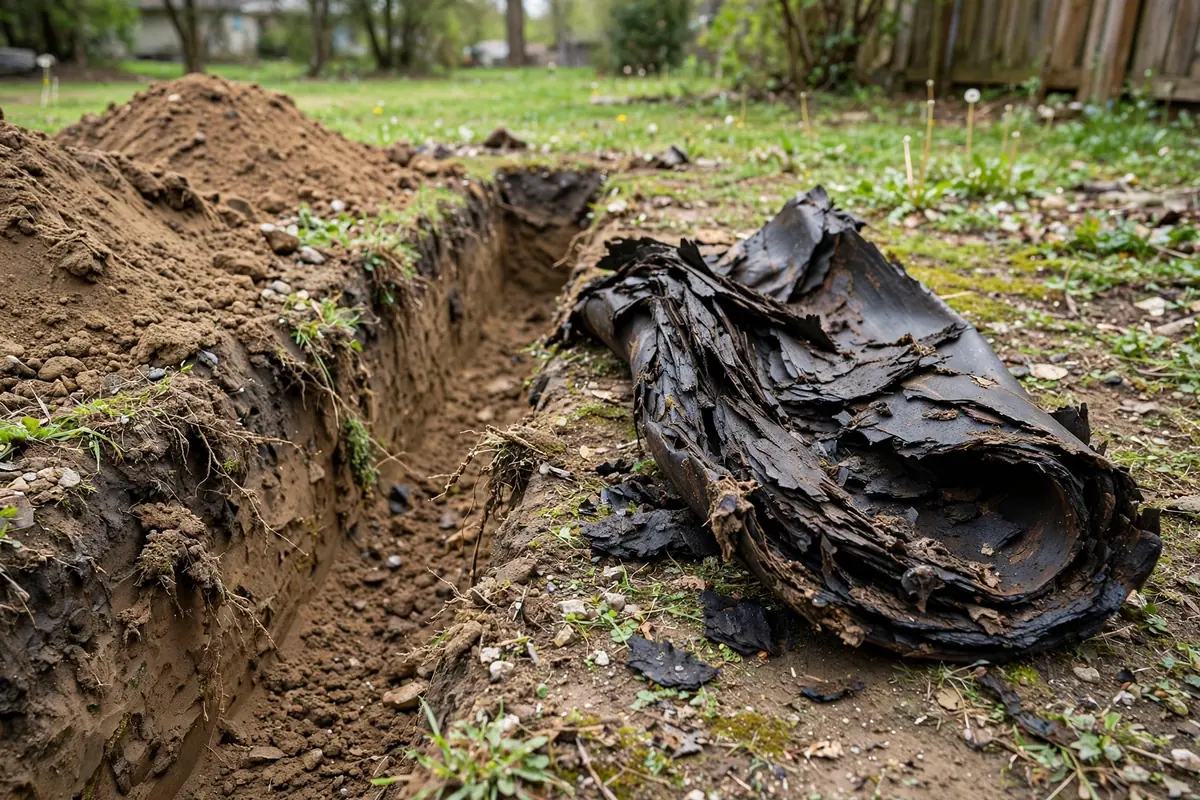
Sometimes digging is the honest option. Spot excavation repair opens the ground at one proven fault, while open-trench replacement uncovers the full run where damage is widespread or the tube has caved in. Depth, length, what sits above the line and how close it passes to the foundation all shape that choice. A softened fibre line is a special case, covered in our guide to the old fibre pipe: there, aggressive scouring of an Orangeburg pipe wall can do more harm than good, so material is checked first.
How Should You Decide What To Book First?
Book the diagnosis first. A camera survey, cleaning only where the wall proves sound, then a second survey gives you a decision based on the wall itself rather than on how the drains behaved for one week.
A sensible order protects your money. Open the sewer cleanout, film the run, and let the footage say whether you are dealing with deposits, damage or both. If cleaning is booked, treat it as preparation for a clear answer as much as a fix in itself: the post-clean film is what separates a finished job from a recurring one. Keep the files, because comparing footage a year apart shows whether a fault is stable or moving. Ask, too, what the visit will not do. An honest answer names the limit plainly: cleaning restores flow, filming shows condition, and only structural work changes the wall. When those three are kept separate in the quote, you can see what you are paying for and what decision still waits on the footage.
If drains are backing up now, act on the symptom but keep the question open. One free call connects you with an independent local pro who can typically arrive in 30–60 minutes, answered 24/7, and a visit that starts with a camera gives you more than a cleared drain. For a home needing sewer line help in Athens, OH, or anywhere across Pennsylvania sewer line coverage, that sequence — look, clean if sound, look again — is what turns a repeat call-out into a lasting decision.
Frequently Asked Questions
Short answers on where cleaning ends and structural work begins. If your question is not here, call free and ask — lines are answered 24/7.
Still Have Questions? Call Free
One free call connects you with a local pro.
(800) 555-0100Free Call · Answered 24/7 · No Obligation
Reviewed By Hamza
Master Plumber & Trenchless Sewer Rehabilitation Specialist
Hamza is a licensed master plumber and underground infrastructure specialist with extensive field experience resolving sewer lateral collapses, root intrusions, and structural line offsets across Pennsylvania, Ohio, and New York. He specializes in high-definition CCTV pipe diagnostics, cured-in-place pipe (CIPP) lining, pipe bursting, and non-invasive trenchless rehabilitation to restore residential and commercial sewer systems without property destruction.
Updated October 31, 2026
Need Sewer Line Repair Near Me?
One free call connects you with an independent local pro — answered 24/7, no obligation.
Call (800) 555-0100Free Call · Answered 24/7 · Local Pros Near You