When Trenchless Sewer Repair Will Not Work: Collapse, Severe Bellies and Offsets
Free Call · Answered 24/7 · Local Pros Near You
The Short Answer
Trenchless work depends on the old pipe still holding a round, fairly even shape. When a section has caved in, sunk into a deep low spot, or shifted so far where two pieces meet that equipment cannot pass cleanly, a liner or pull-through fix has nothing sound to follow. In those cases digging is not a failure of planning — it is the method that lets a pro remove the bad section and rebuild the run properly.
Call (800) 555-0100When Trenchless Sewer Repair Is Not Possible, Explained In Plain Words
Why Does The Shape Of The Old Pipe Decide The Method?
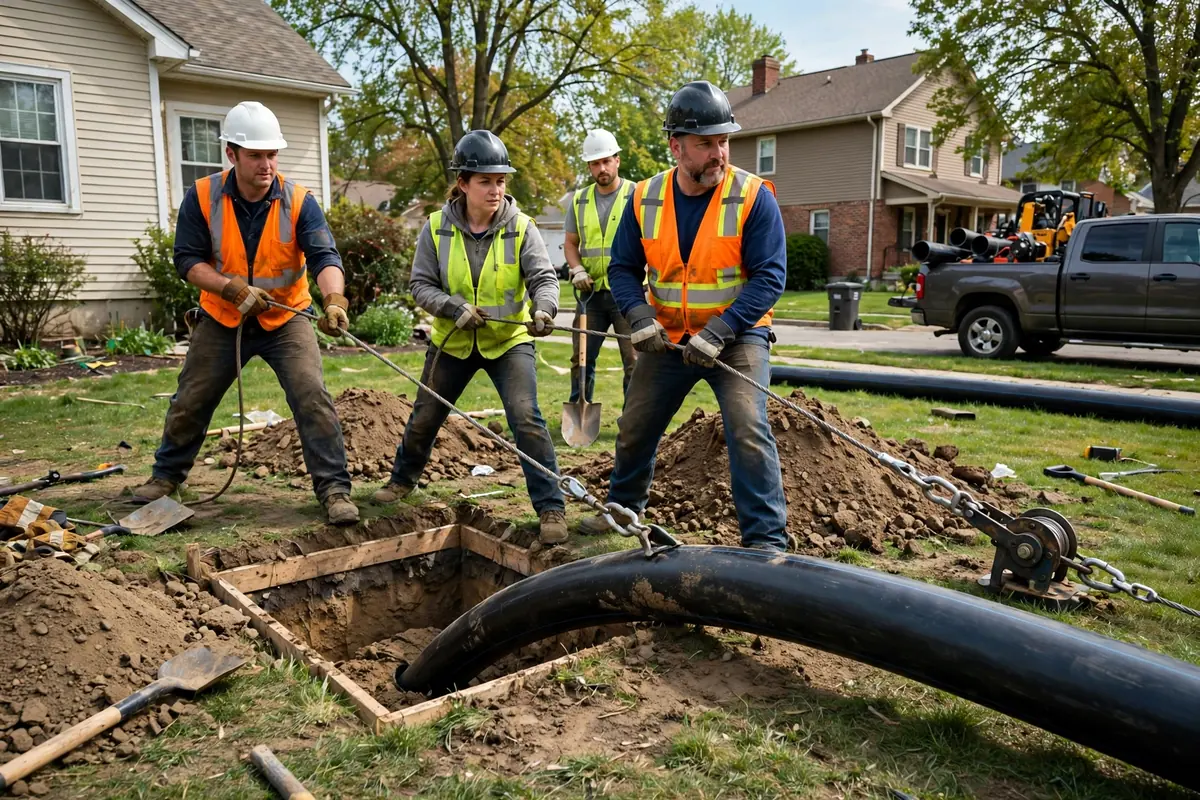
Both trenchless approaches borrow the old run as their guide. Pipe bursting follows the path of the existing run while a liner is formed inside it, so the existing pipe needs to stay open, round enough, and passable from end to end.
Cured-in-place pipe lining (CIPP) starts with a flexible tube that is pushed through the line and then hardened against the wall of the host pipe. If that wall has folded inward, flattened, or broken away in places, the new surface copies the flaw instead of correcting it. A tight restriction can also stop the tube travelling the full length, leaving a repair that never reaches the damaged part it was meant to cover.
The same logic applies before any work begins in a city with older housing. Homeowners looking into sewer line repair in Albany, NY often assume no digging is automatic, yet the honest answer comes only after the inside of the run has been seen. Shape, openness, and a clear path matter more than the age on paper, and a pipe that fails those three checks needs a different plan.
What Happens When A Section Has Caved In Completely?
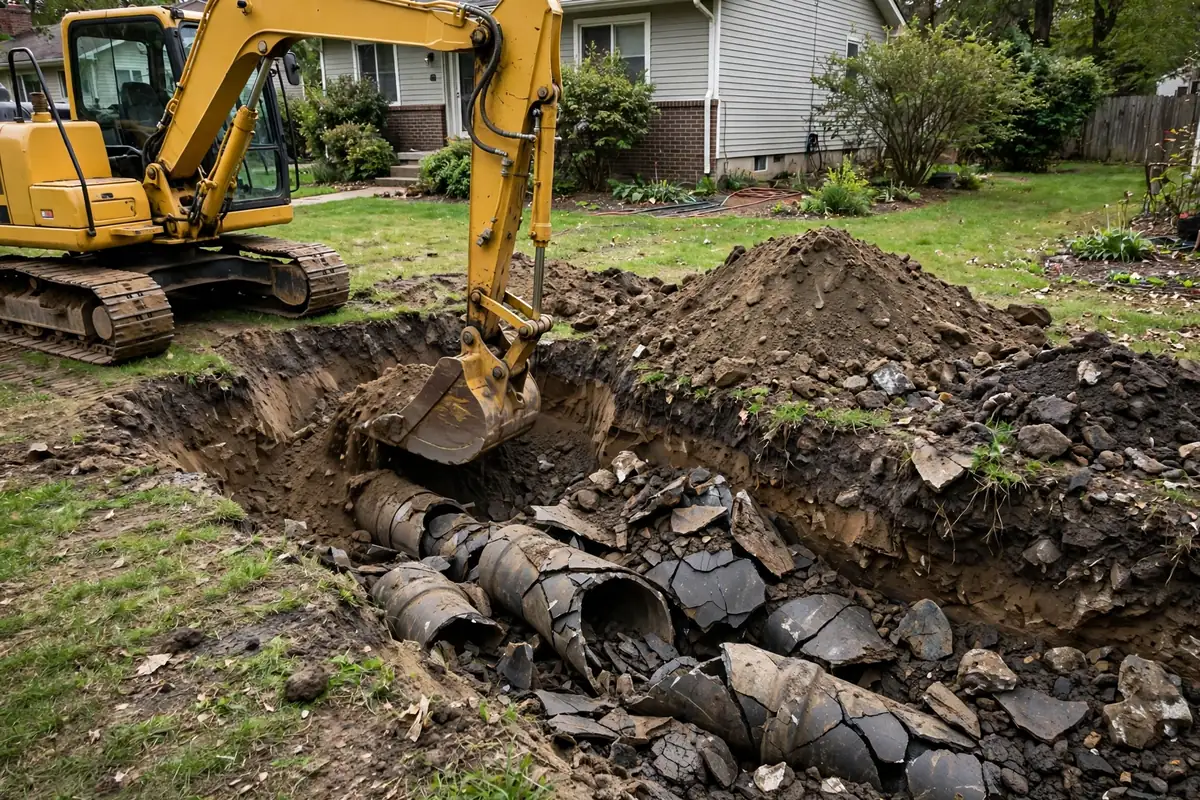
A fully caved-in section closes the route that trenchless equipment needs. There is no open channel to pull or push anything through, and the soil that fell in with the pipe has to come out before a new run can sit correctly.
A cracked or collapsed pipe at this stage is more than a narrow spot. The wall has given way, earth has dropped into the opening, and flow may be blocked or escaping into the ground around the line. That escaping water can wash more soil away over time, a process described as soil erosion and voids around the pipe, which leaves the surrounding ground less able to support the replacement section.
Access is the practical problem. The line is usually reached through a sewer cleanout, and a camera pushed from there will stop at the cave-in rather than pass it. For a household dealing with a sewer line problem in Akron, OH, that blocked view is itself useful information: it tells the pro where the failure sits, how much of the run beyond it cannot yet be judged, and why open ground work is now part of the conversation.
When Is A Low Spot Too Deep For A Liner To Fix?
A shallow dip may be monitored, but a deep low spot that holds water and waste after every use cannot be corrected from inside. Lining follows the existing fall, so it preserves the low area instead of lifting it.
The condition has a name on inspection reports: belly / sag in the line. Water settles there because the run has lost the fall it was laid with, and solids settle with it, which is why drains in the house may clear for a while and then slow again. A liner adds a smooth inner skin, yet the skin still dips at exactly the same point, so the standing water remains after the work is finished.
Restoring proper slope / grade of a sewer line means changing the height of the pipe in the ground, and that can only be done by exposing it. In a case like this around Allentown, PA, sewer line help usually turns on how long the sunken stretch is. A short sunken piece may be dug and re-laid on its own, while a long one can mean rebuilding much of the run at the correct fall.
Why Can A Badly Shifted Joint Block Both Trenchless Options?
Where two pieces of pipe have moved far apart sideways or vertically, the step between them can catch equipment, leave a gap a liner cannot bridge cleanly, and keep leaking even after the rest of the line is renewed.
Reports describe the fault as an offset joint, but the plain picture is simple: one piece sits higher or to one side of the next, leaving a lip inside the run. Waste catches on that lip, roots find the gap, and a camera may bump against the step instead of sliding through. Ground movement is a common reason the pieces moved, including expansive / clay-heavy soil that swells when wet and shrinks as it dries, nudging the joint a little further each season.
A small step and a severe step are different jobs. A modest misalignment with sound pipe on both sides can sometimes be worked around, while a large displacement usually means the joint itself has to be uncovered and rebuilt so the two ends meet evenly again. Judging which one you have depends on how the step looks on camera and whether anything can pass it, not on guesswork from the surface of the yard. Depth matters here as well: a shallow joint near the house may be reached with a modest opening, while the same fault far out in the yard, at full depth and under paving, is a larger piece of work with more surface to restore afterwards.
Which Pipe Materials Are Most Likely To Rule Out Trenchless Work?
Materials that have gone soft, oval, or thin cannot support a repair formed inside them. The weaker and more distorted the host pipe, the more likely a pro is to recommend removing it rather than building on it.
Orangeburg pipe is the clearest example. Made from layered fibre and pitch, it can soften and lose its round shape with age, so there is no firm circle left for a liner to press against. Vitrified clay pipe fails differently: the material itself is hard, but its many short joints open over time and invite tree root intrusion, and once several joints have moved, treating the run as one smooth host becomes unrealistic.
Cast iron pipe brings another pattern, pipe corrosion and scaling that narrows the inside and eats the wall thin from within. A heavily thinned wall may not withstand the pressure involved in pulling a replacement through, and a rough, narrowed interior can stop equipment before it starts. In each material the question is the same: is the old pipe still a reliable mould and pathway, or has it become the problem itself?
What Digging Options Remain When Trenchless Work Is Ruled Out?
Digging is not one single job. A short failed stretch can often be uncovered and replaced on its own, while a run that has failed in several places may need the full length opened and rebuilt in one project.
Spot excavation repair suits a single cave-in, one badly shifted joint, or a short sunken section, because only that part of the yard is opened. Open-trench replacement covers the wider case, where damage repeats along the run. During either job, bypass pumping can keep wastewater moving around the work area, trench shoring / trench box equipment keeps the sides of a deep dig safe, and Call 811 (national dig-safe number) should be used before digging so other buried services are marked first.
The new section itself is chosen for the ground and depth involved, which is why you may hear a pro discuss PVC pipe (SDR-35 and Schedule 40) for a buried run or HDPE pipe where a continuous length suits the layout. For properties near sewer line repair in Auburn, NY, the choice between a single dig and a full rebuild usually comes down to how much of the line the camera showed as sound, not to a preference for digging. Ask before work starts how the opened ground will be left: soil settled back in layers, paving or turf replaced, and planting restored all belong in the written scope, so the finished job is judged on the yard as well as on the pipe beneath it.
How Is The Decision Made Before Anyone Picks Up A Shovel?
The decision rests on footage, not on a sales preference. A camera survey shows whether the run is open and round, where it holds water, and where pieces have shifted, and those findings point to the method that can actually work.
A CCTV sewer camera inspection travels from the sewer cleanout and records the run with distance readings, so each fault can be placed in the yard rather than guessed at. One free call connects you with an independent local pro who can carry out that survey; lines are answered 24/7 and a pro can typically arrive in 30–60 minutes. Our companion guide on how often sewer line inspection is needed explains how those findings are recorded for older lines.
Cost is then shaped by factors rather than a single figure: how much of the run has failed, how deep it sits, what passes over it at the surface, and how much ground has to be put back afterwards. Where damage is limited, a second trenchless look may still be worth asking about; where a cracked or collapsed pipe closes the route completely, digging is the honest route. The wider state picture is set out on our page covering sewer line repair in New York.
Frequently Asked Questions
Plain answers on the limits of trenchless work and what replaces it. If your line has already failed, call free — lines are answered 24/7.
Still Have Questions? Call Free
One free call connects you with a local pro.
(800) 555-0100Free Call · Answered 24/7 · No Obligation
Reviewed By Hamza
Master Plumber & Trenchless Sewer Rehabilitation Specialist
Hamza is a licensed master plumber and underground infrastructure specialist with extensive field experience resolving sewer lateral collapses, root intrusions, and structural line offsets across Pennsylvania, Ohio, and New York. He specializes in high-definition CCTV pipe diagnostics, cured-in-place pipe (CIPP) lining, pipe bursting, and non-invasive trenchless rehabilitation to restore residential and commercial sewer systems without property destruction.
Updated October 31, 2026
Need Sewer Line Repair Near Me?
One free call connects you with an independent local pro — answered 24/7, no obligation.
Call (800) 555-0100Free Call · Answered 24/7 · Local Pros Near You