How Often Should an Older Sewer Line Be Camera-Inspected?
Free Call · Answered 24/7 · Local Pros Near You
The Short Answer
For a line laid decades ago, timing is set by condition more than by the calendar. A camera look is due when the last footage is old enough that roots, shifting ground, or slow wear could have changed the picture, and it moves to the front of the list after repeated slow drains, a backup, or before a home changes hands. Each visit should end with a dated record and a clear reason for when to look again.
Call (800) 555-0100How Often Sewer Line Inspection, Explained In Plain Words
What Makes A Line Count As Older For Inspection Purposes?
Older in this context usually means a line laid before 1980, when clay, cast iron, and fibre-based pipe were the common buried materials. Those runs have now spent decades in damp ground, and their weak points are well known.
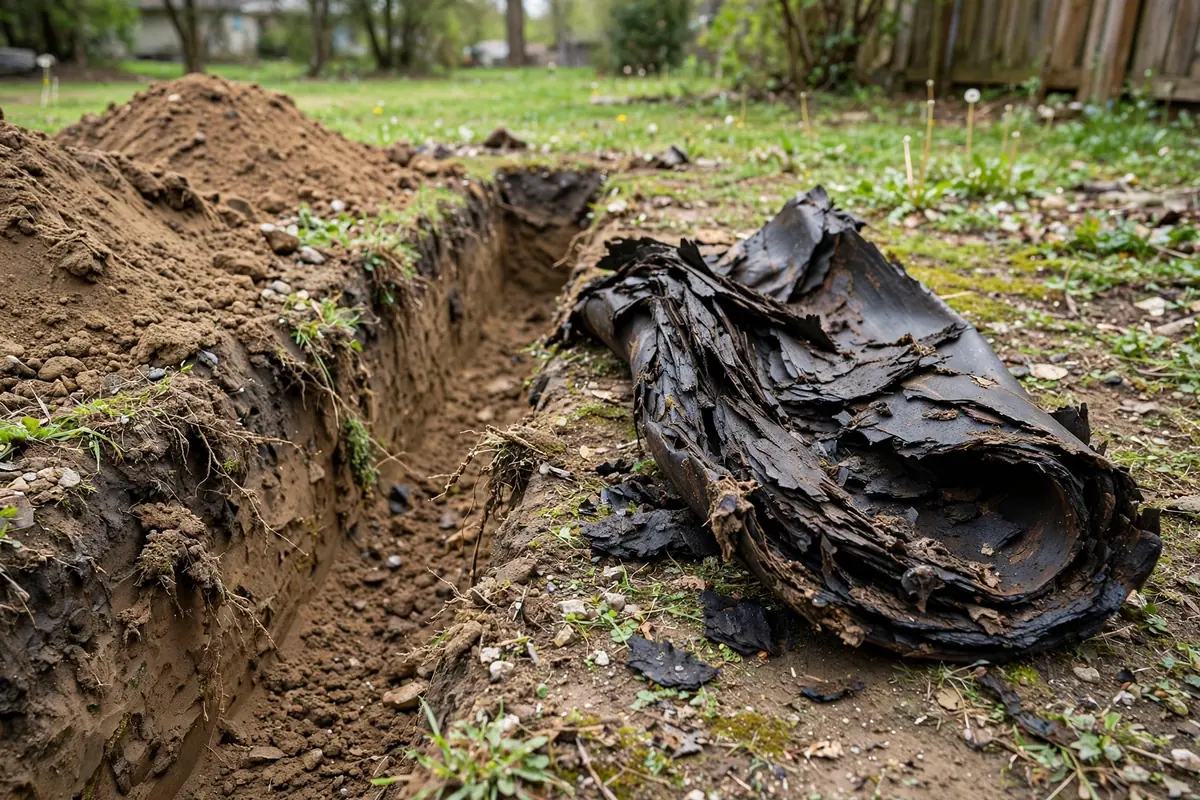
Vitrified clay pipe was built in short sections, so an old run has many joints, and each joint is a possible entry point for roots and a possible place for pieces to move apart. Cast iron pipe ages from the inside as much as the outside, while Orangeburg pipe can soften and change shape as the layers break down. A newer PVC pipe (SDR-35 and Schedule 40) run has far fewer joints and does not age in the same ways, which is why the checking rhythm for the two is different.
Homes across the three-state area share this pattern. Owners arranging sewer line repair in Akron, OH are often dealing with a line as old as the house itself, never checked since it was buried. Age alone does not prove a fault, but it changes the odds enough that guessing is a poor plan: a look inside replaces suspicion with a dated picture of what is actually there.
Can A Line Need Checking Even When Every Drain Runs Freely?
Yes, because the early stages of most underground faults are silent from inside the house. Roots thicken, joints creep apart, and walls thin for a long time before the first drain slows, so waiting for symptoms means waiting until the problem is established.
Consider tree root intrusion. Fine roots enter through a hairline opening and grow thicker inside the pipe, yet water still passes around them for a long while. By the time flow slows noticeably, the growth may be dense enough that clearing it is a bigger job, and the opening it entered through has widened. A scheduled look catches that growth while it is still a thin fringe at one joint, which is a very different conversation.
Ground movement works the same quiet way. Expansive / clay-heavy soil swells and shrinks with the seasons, and the freeze-thaw cycle / frost heave shifts shallow sections a little at a time. Neither change announces itself indoors until a joint has moved enough to catch waste. Regular footage, compared visit to visit, shows that slow movement as it happens instead of revealing it all at once on the day the line blocks.
Which Warning Signs Should Bring A Planned Check Forward?
Repeated slow drains, gurgling sounds from the lowest fixtures, sewage smells outdoors near the line, and any backup into the house all move a check from routine to urgent. One sign may have a simple cause; several together point underground.
Pattern matters more than any single event. A kitchen sink that drains slowly once is usually a local blockage in that branch, while several fixtures slowing in the same week, or the same drain slowing again soon after it was cleared, suggests the main run out of the house is narrowing. Wet, extra-green patches of yard above the line's route can also hint that water is escaping through a crack and feeding the ground from below.
When those signs appear, waiting for the next routine date is the wrong economy. One free call connects you with an independent local pro — lines are answered 24/7 and a pro can typically arrive in 30–60 minutes — who can look inside and settle whether the cause sits in a branch line or in the buried run to the public sewer main. Early footage also protects your options, because faults found while the pipe still holds its shape are the ones with the widest choice of repairs.
What Actually Happens During A Camera Check Of An Older Line?
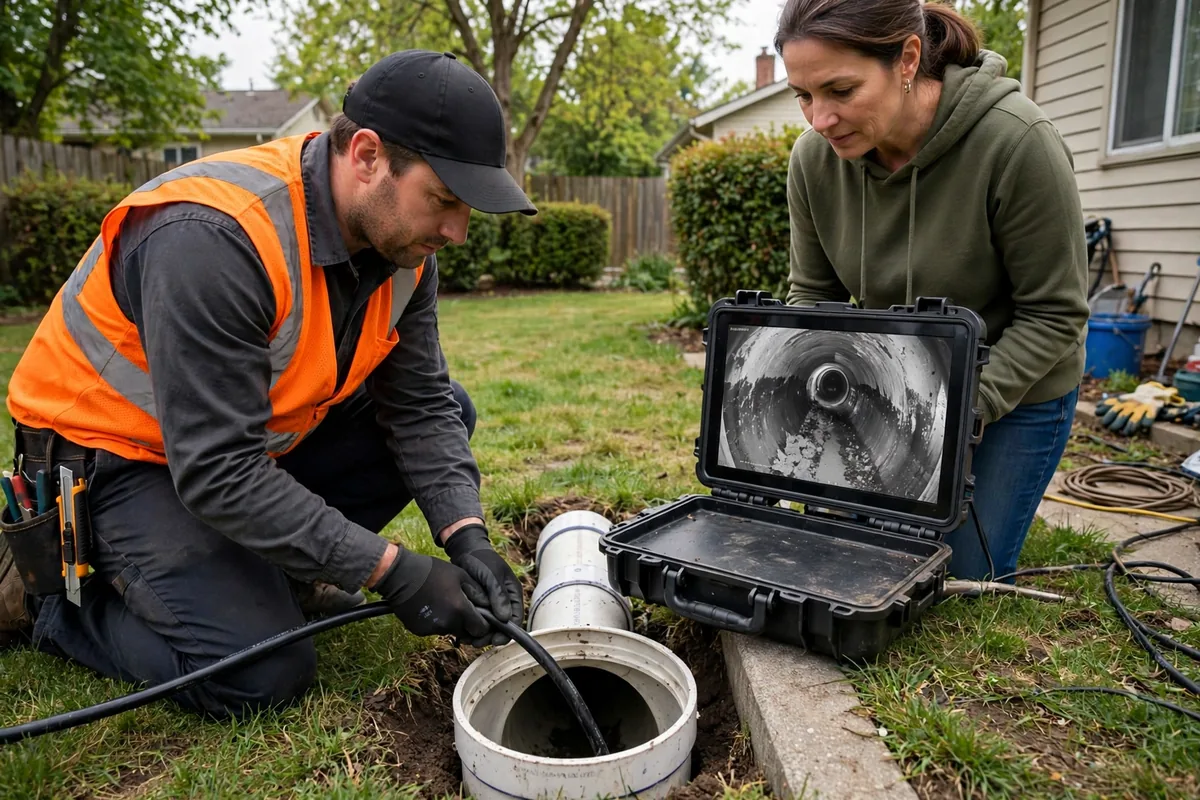
A small camera is fed into the line, usually through an access fitting in or near the home, and travels the run while the operator watches a live picture. Distance readings and a signal above ground pin down where each fault sits.
A CCTV sewer camera inspection shows the inside directly: joint by joint, the operator notes root growth, cracks, standing water, and walls that look thin or rough. The camera head carries a sonde locator signal, so the pro can stand in the yard above the exact spot where a fault appears on screen and mark its position and depth. Entry is normally through a sewer cleanout, the capped access point fitted for exactly this job.
You should come away with more than a verbal summary. The sewer inspection report and footage form the record of that visit — what was seen, where, and how severe it looked — and they are yours to keep with the house papers. Smoke testing has a different purpose, tracing where vapours escape to find hidden connections or breaks above the water level, and a pro may suggest it as a follow-up rather than a substitute for the camera's direct view.
How Do The Findings From One Check Set The Date Of The Next?
The next date is not plucked from a chart. It follows from what the latest footage showed: a clean, sound run earns a longer gap, while early roots, a shallow low area, or a joint starting to move all shorten the wait.
This is why keeping every report matters. A line described as sound, holding proper slope / grade of a sewer line along its length, can be left until the next routine look or until signs appear. A line where pipe corrosion and scaling has begun to roughen the wall, or where channeling (cast iron) has worn a groove along the bottom of an iron run, deserves a closer watch, because those surfaces catch waste and narrow the passage a little more each year.
Specific faults set their own clocks. The dip known on reports as belly / sag in the line holds water permanently, so its growth in length or depth is worth tracking. A joint recorded as an offset joint needs re-checking to confirm it has not crept further. Orangeburg deterioration, once visible as softening or flattening, tends to progress rather than stabilise, so a shorter interval between looks is the cautious pattern for that material.
When Is An Extra Check Worth Booking Outside The Routine?
Certain moments call for a look regardless of when the last one happened: before buying an older home, after any repair to the line, after repeated blockages in a short period, and when a large tree near the route is removed or planted.
Buying is the clearest case. A pre-purchase sewer scope gives you the underground picture while the sale can still reflect it, and it is the only way to know the buried line's condition, since it cannot be judged from the yard or the fixtures. Sellers benefit too: documented footage from a recent check answers a buyer's underground questions before they become a reason to renegotiate, a point our state guidance on sewer line repair in Ohio also makes for older housing stock.
After repair work, a follow-up look verifies the finished section from inside and creates the new baseline for future comparisons — our related guide on when trenchless sewer repair is not possible explains the faults such a check can confirm are gone. Repeated blockages are the third trigger: if clearing the line restores flow only briefly, the camera needs to find what the clearing left behind instead of repeating the same temporary fix. Cleaning still has its place in that picture — hydro jetting can wash soft buildup off the walls so the camera sees the surface clearly — but washing a line clean and knowing its condition are two different things, and only the second one sets a sensible date for the next look.
What Should You Keep And Compare Between One Check And The Next?
Keep the footage, the written report, and your own note of dates and symptoms together. That small file turns every later decision — when to look again, what a repair quote should cover, what to tell a buyer — into a comparison instead of a guess.
Your own symptom notes are part of the evidence. Record when drains slowed, which fixtures were involved, and what the weather had been doing, because heavy rain and thaw periods change how an older line behaves. Paired with the footage, those notes let a pro in a place like Allentown, PA, for sewer line help or Auburn, NY, for sewer line repair spot whether a fault is stable, creeping, or suddenly worse, without starting from zero each visit.
Costs, when a fault is found, are shaped by familiar factors: the material, the depth and length of the affected stretch, surface access, and whether the pipe still holds a shape that inside repair methods can use, details also covered in our guide to sewer line insurance coverage. The wider regional picture appears on our page for sewer line repair in New York. A modest, planned look on your schedule will always be calmer than an emergency visit on the line's schedule.
Frequently Asked Questions
Answers for owners of older lines, based on condition rather than a fixed calendar. To book a look, call free — lines are answered 24/7.
Still Have Questions? Call Free
One free call connects you with a local pro.
(800) 555-0100Free Call · Answered 24/7 · No Obligation
Reviewed By Hamza
Master Plumber & Trenchless Sewer Rehabilitation Specialist
Hamza is a licensed master plumber and underground infrastructure specialist with extensive field experience resolving sewer lateral collapses, root intrusions, and structural line offsets across Pennsylvania, Ohio, and New York. He specializes in high-definition CCTV pipe diagnostics, cured-in-place pipe (CIPP) lining, pipe bursting, and non-invasive trenchless rehabilitation to restore residential and commercial sewer systems without property destruction.
Updated October 31, 2026
Need Sewer Line Repair Near Me?
One free call connects you with an independent local pro — answered 24/7, no obligation.
Call (800) 555-0100Free Call · Answered 24/7 · Local Pros Near You