No Sewer Cleanout? How Pros Still Inspect and Access Your Line
Free Call · Answered 24/7 · Local Pros Near You
The Short Answer
A missing access cleanout does not stop a pro from inspecting or clearing your line. It is an access cap, usually at ground level, that lets a camera or clearing tool enter the main run directly. Without one, a pro works through other openings, most often the main drain stack inside the home or a toilet opening, or digs a small access point outside. The job takes a little more setup, but the diagnosis is the same.
Call (800) 555-0100No Sewer Cleanout What To Do, Explained In Plain Words
What If My House Has No Access Cap?
You are not stuck, and your line is not a write-off. A cleanout is simply a capped opening into the buried run. Plenty of older homes were built without one, and plenty of others have one that later landscaping buried out of sight.
The cap matters because it is the straightest door into the pipe. Through it, a camera or a clearing head travels the full run in minutes, with no fixtures disturbed inside the house. Homes built before access points became routine often never had that door fitted, and in others a later patio, path or planting bed quietly covered it. Neither case says anything about the condition of the pipe itself; it only changes how the crew gets inside it.
What it changes in practice is setup. Somebody has to find another way in, or make one, before the real questions about roots, cracks and low spots can be answered. That is a delay measured in setup work, not a dead end, and it should not push you into approving digging or replacement blind. The line can still be seen first, and the findings can still drive every decision that follows.
How Does A Pro Hunt For An Access Cap That Is Just Buried?
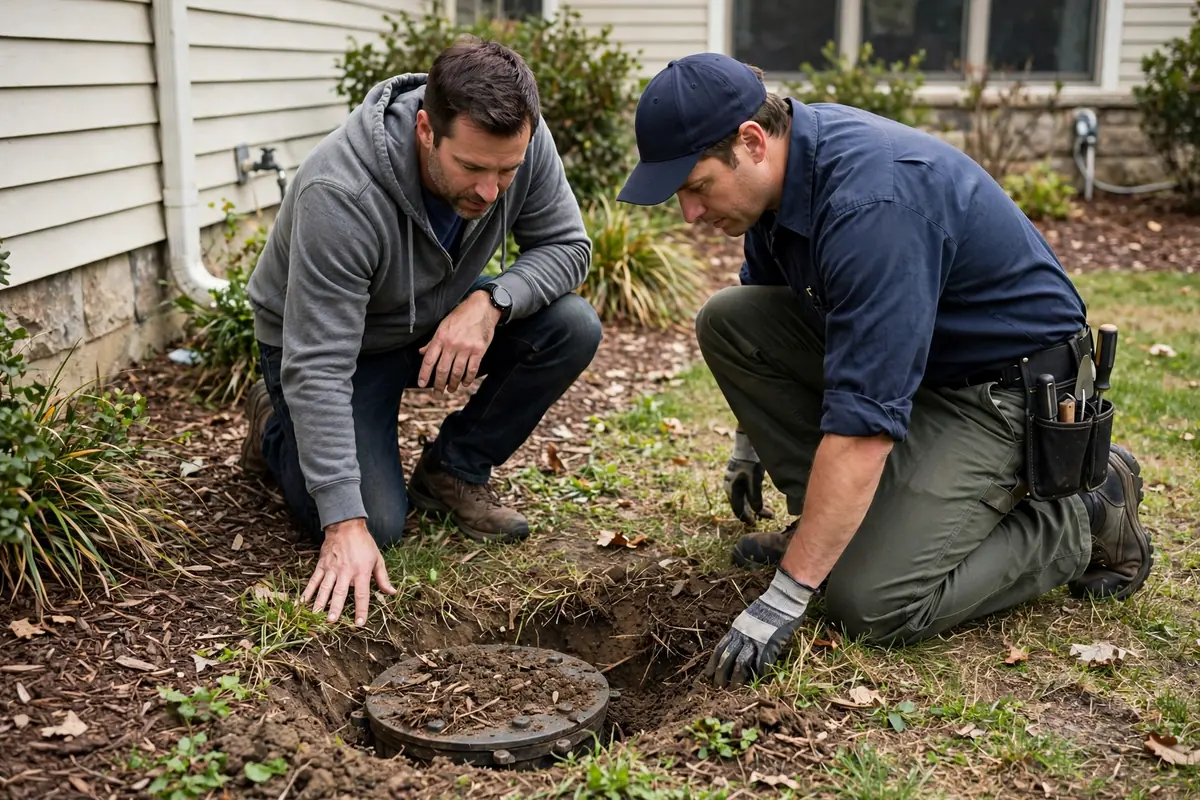
By following the line itself. Most hidden caps sit close to the outside wall where the drain leaves the house, or in the yard along the run toward the street, often under only a few inches of soil or mulch.
The search starts with the building. The crew looks where the drain exits through the foundation, checks the ground just outside that wall, and follows the natural line of the run toward the public sewer main. A cap that was set at ground level decades ago may now sit below grade after years of mulching and replanting, so shallow probing along that path turns up a surprising number of supposedly missing access points. Driveway edges and later additions are checked too, since both have buried many caps over the years.
Where eyes and probing fail, tracing methods help. Smoke testing can reveal where the venting and drainage paths run, and dye testing can confirm which fixtures connect where, both of which narrow the search before any digging is discussed. Homeowners chasing sewer line repair in Albany, NY meet this often in older housing, and the same hunt plays out across sewer line repair across New York: the cap was there all along, just sleeping under the flower bed.
Can A Camera Enter Through The Main Stack Instead?
Yes. The main stack is the large vertical drain inside the home, and a capped opening on it, often in the basement, gives the camera a route down and out into the buried run.
A CCTV sewer camera inspection through the stack follows the same path your wastewater takes: down the vertical, through the bend at its base and out toward the street. Where the stack has no usable cap, the other common doorway is a toilet. The pro removes the toilet, feeds the camera through the floor opening it sits on, and resets the fixture on a fresh seal afterwards. It sounds drastic; in practiced hands it is routine, and it disturbs nothing outside the bathroom.
Once the camera is inside, its head carries a transmitter, and a sonde locator at the surface picks up that signal so the crew can mark the route and depth of the run on the ground above. That tracing matters on a no-access job, because it shows exactly where a future access point would do the most good. The roof vent, by contrast, is rarely a real doorway: it is narrow, bent and interrupted, and cameras and tools are not built to work down it.
What About A House Trap Or Floor Drain As An Entry Point?
A house trap, fitted on some older homes where the drain leaves the building, can sometimes be opened and used. A floor drain almost never leads where the crew needs to go, because it usually serves a smaller branch rather than the main run.
The trap earns a cautious maybe. Its caps can provide an opening, but the tight U-bend built into it stops many camera heads and nearly all clearing tools, so a crew may see a little and clear less. Whether it is worth trying depends on the layout the camera finds in the first few feet, and an honest pro will say so rather than bill you for an attempt that was never going to pass the bend.
That basement drain earns a firmer no. It is a finishing point for a small side line, handy for a mop bucket spill, not a doorway into the buried run to the street. Feeding equipment into it inspects the branch and nothing more. Knowing which openings are real doors and which are dead ends is most of the skill on a job like this, and it is why the assessment starts with the layout of your own plumbing, not with a tool.
What Can Still Be Found And Cleared Through An Alternate Opening?
Almost everything a normal camera run would show, and most common blockages can be cleared through the same doorway the camera used. The findings do not shrink just because the entry point moved indoors.
The camera still reports the usual suspects by distance: tree root intrusion entering at a joint, grease buildup narrowing the bore, and a cracked or collapsed pipe where the run has failed outright. Keep the sewer inspection report and footage from that run, because it is the same evidence, gathered the same way, that any later quote or claim will rest on. Crews working through a stack or a toilet opening across Akron, OH, for sewer line help hand over identical paperwork to crews who had a yard cap to use.
Clearing follows the camera in. Mechanical root cutting can chew roots back to the pipe wall, and hydro jetting can scour grease and sludge from the run, both fed through the alternate entry once it is open. The honest limits are about tool size: a tight entry can restrict the largest cutting heads, so a severe root mass might still argue for a small dig and a proper access point. That trade-off comes up across sewer line repair across Ohio whenever an older home meets its first serious blockage.
Should A Proper Access Point Be Added While The Crew Is There?
Usually yes, if any digging or repair is already happening. Adding a cleanout right at that moment turns every future camera run and clearing visit into a faster, cheaper job that starts in the yard instead of the bathroom.
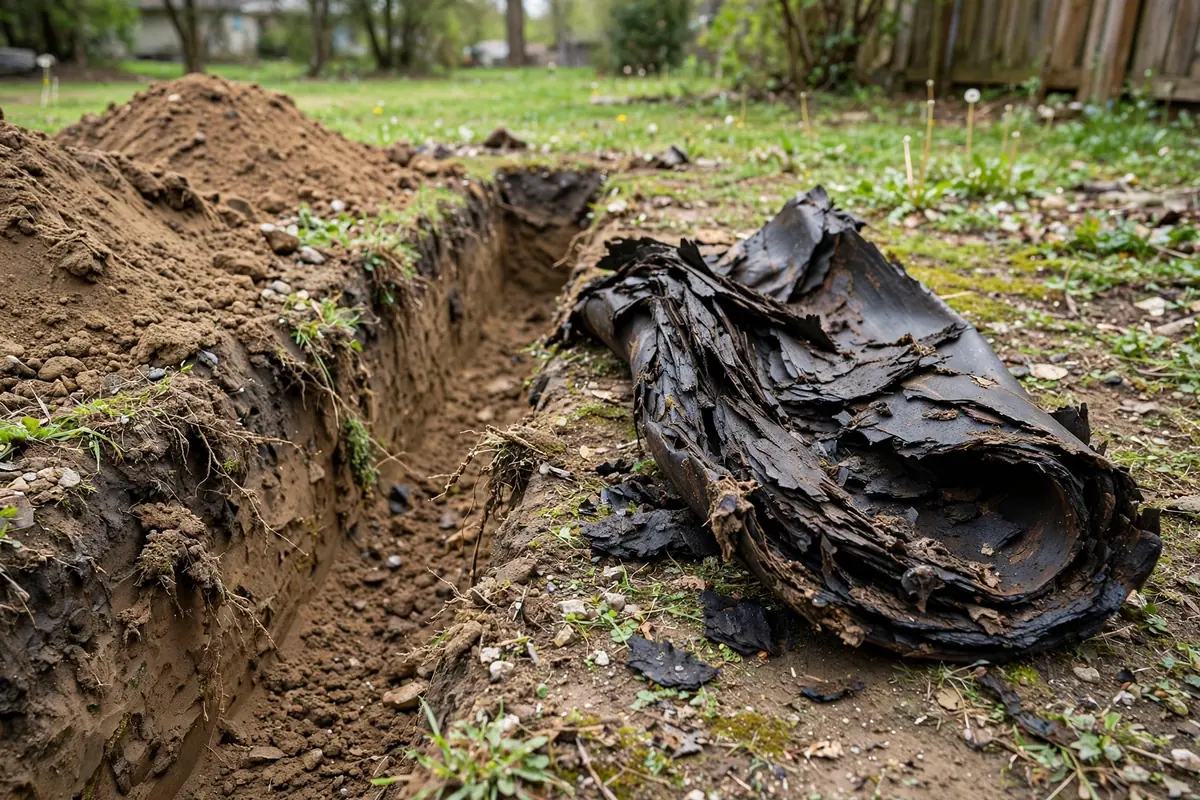
The work is modest beside a repair that is already open. A spot excavation repair sized dig exposes the run, a riser of PVC pipe is set into the sewer lateral, and its cap is brought up to ground level where it can be found and opened in seconds. Placed near the house, it covers the whole run toward the street; some layouts add a second point further out. Before any digging, the crew will Call 811 so other buried utilities are marked and avoided.
Position is the decision that matters. A cap hidden behind shrubs or set where a future path will cover it repeats the original mistake, so it goes where the line leaves the foundation or at a clear point along the run, recorded on the job paperwork. Owners arranging sewer line repair in Allentown, PA often add the access point during a pipe job and choose its grade using the same thinking as our SDR 35 vs Schedule 40 sewer pipe guide.
What Does Working Without Direct Access Change About The Bill?
It changes the setup lines, not the repair itself. Locating work, an indoor entry, or a small access dig adds time around the edges of a job whose core cost is still set by the pipe, the ground and the method.
Expect the quote to reflect the hunt and the doorway: time spent tracing the run and searching for a buried cap, removing and resetting a toilet if that is the entry chosen, or a short dig to open the ground where a camera must go in. Once inside, the familiar factors take over again: how deep the line sits, how far the damage runs, whether the fix is a clearing, a section repair or a replacement, and what surfaces need restoring afterwards.
Keep every record the visit produces. The sewer inspection report and footage proves condition for your own decisions, and it is the same paperwork an insurer asks for, as our guide to sewer line insurance coverage explains. If your drains are slow or backing up today and there is no cap in sight, one free call connects you with an independent local pro who can find a way in and show you the line before quoting. A pro can typically arrive in 30–60 minutes, and calls are answered 24/7.
Frequently Asked Questions
Short answers to the questions people ask most about this page. If your question is not here, call free and ask — lines are answered 24/7.
Still Have Questions? Call Free
One free call connects you with a local pro.
(800) 555-0100Free Call · Answered 24/7 · No Obligation
Reviewed By Hamza
Master Plumber & Trenchless Sewer Rehabilitation Specialist
Hamza is a licensed master plumber and underground infrastructure specialist with extensive field experience resolving sewer lateral collapses, root intrusions, and structural line offsets across Pennsylvania, Ohio, and New York. He specializes in high-definition CCTV pipe diagnostics, cured-in-place pipe (CIPP) lining, pipe bursting, and non-invasive trenchless rehabilitation to restore residential and commercial sewer systems without property destruction.
Updated October 31, 2026
Need Sewer Line Repair Near Me?
One free call connects you with an independent local pro — answered 24/7, no obligation.
Call (800) 555-0100Free Call · Answered 24/7 · Local Pros Near You