PVC Sewer Pipe Today: SDR-35 vs Schedule 40 for a Replacement Lateral
Free Call · Answered 24/7 · Local Pros Near You
The Short Answer
Both are PVC pipe, and both are used for buried house sewer runs today. The real difference is wall thickness: SDR-35 has the thinner wall and is made for buried gravity runs, while Schedule 40 has the thicker, heavier wall and is picked where the line needs extra stiffness or protection. Which one belongs in your yard turns on depth, soil, surface loads and local requirements, so a pro confirms the choice before the trench is filled.
Call (800) 555-0100Sdr 35 Vs Schedule 40 Sewer Pipe, Explained In Plain Words
What Pipe Material Is Used To Replace An Old Sewer Line Today?
Most replacement runs going in today are plastic, and the two names homeowners hear most are SDR-35 and Schedule 40. Both belong to the same PVC family, so the choice is about wall build, not about a whole different material.
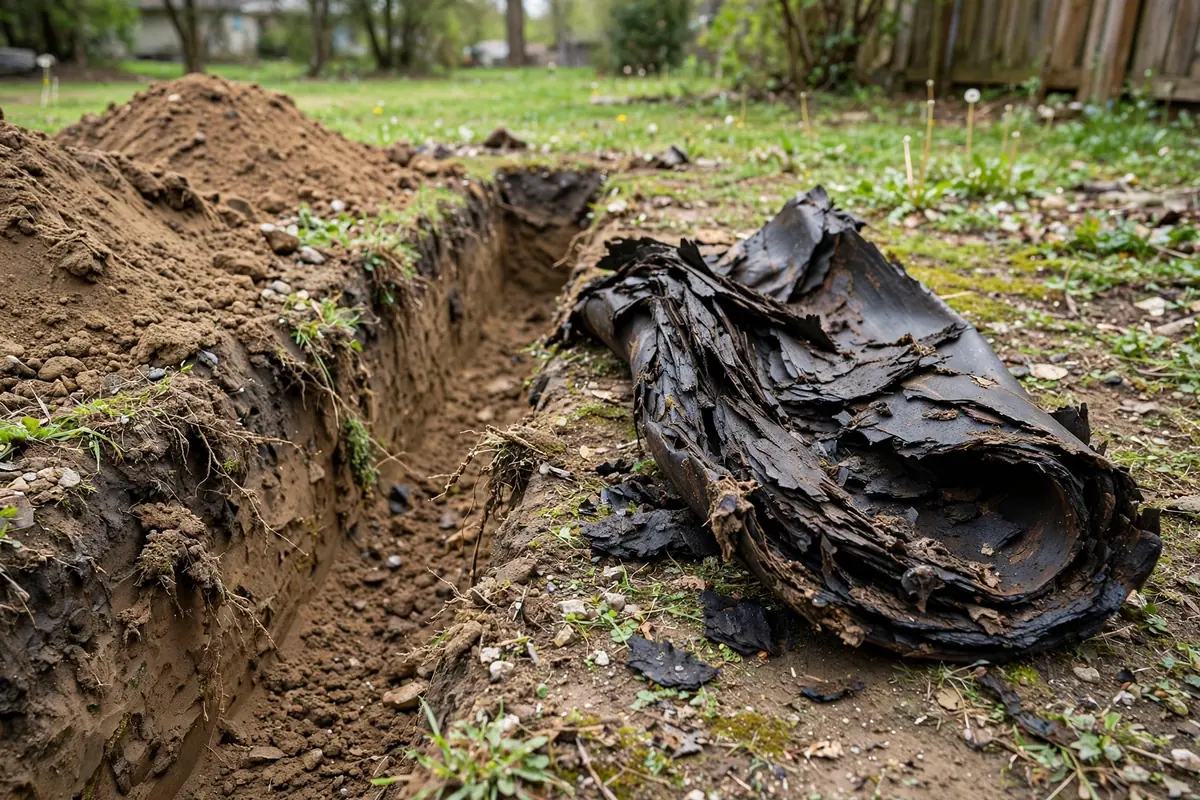
The lines coming out explain why plastic took over. A vitrified clay pipe arrives in short sections with a joint every few feet, and every joint is a place roots and soil can work on. A cast iron pipe corrodes from the inside until the bottom grooves thin. An Orangeburg pipe, pressed from fibre and tar, softens and loses its round shape under the soil. A modern plastic run has long sections, sealed joints and a smooth inside wall, which removes most of those failure points in one move.
No sensible choice starts before the old line is looked at. A CCTV sewer camera inspection travels the run from the sewer cleanout and shows what is actually down there, and the sewer inspection report and footage records the material, the damage and the distances. That record decides whether a section or the whole run is being replaced at all, a starting point that holds for sewer line repair in Albany, NY as much as anywhere else.
How Do The Two Grades Differ Once They Are Side By Side?
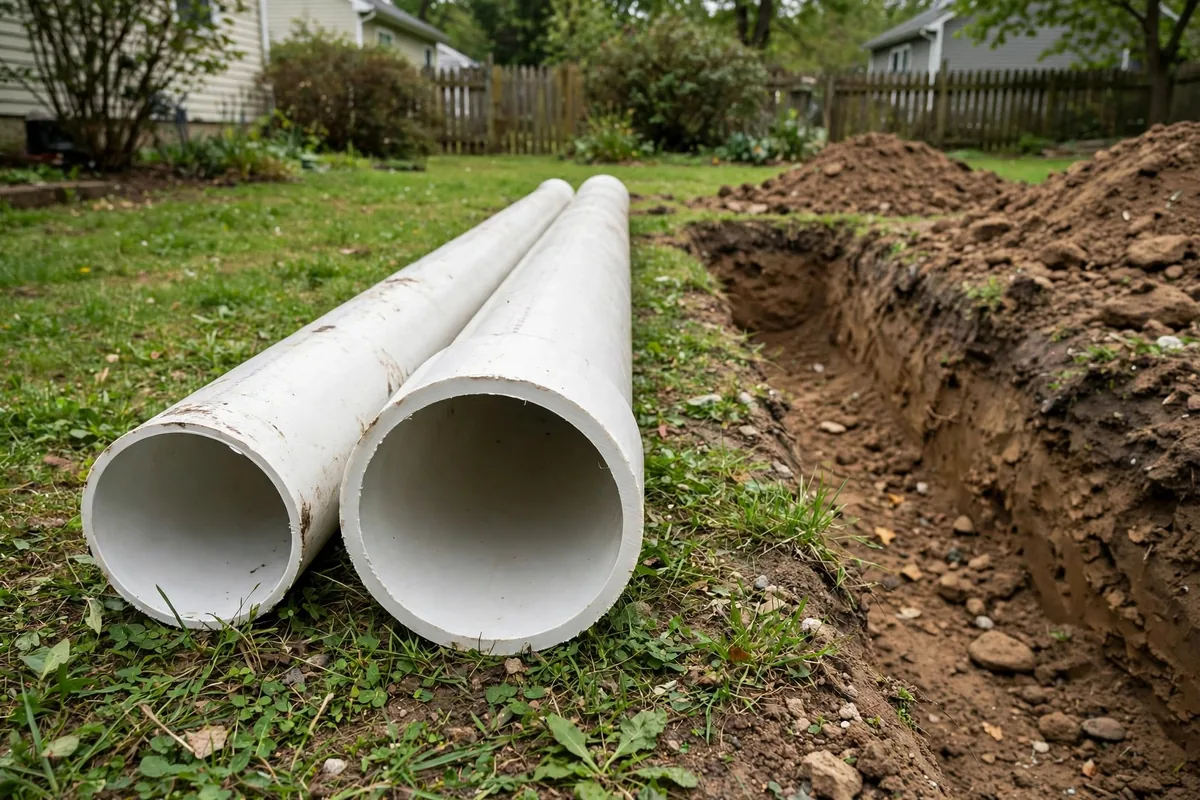
Pick each one up and the difference is obvious. SDR-35 is the thinner-walled, lighter length. Schedule 40 is thicker through the wall, heavier in the hand and stiffer when you try to flex it.
That wall build is the whole story between them. The thinner grade is produced for buried drainage work, where the pipe and the soil packed firmly around it share the load together. The thicker grade carries more of its strength in the pipe itself, so it resists knocks, point loads and rough handling better, and it is the same family of pipe used for above-ground drainage work inside the home, which is why the two sometimes meet at the wall of the house.
Inside, the two behave much alike. Both give waste a smooth surface to move along, both join in sealed sections, and both shrug off the rot and household chemicals that eat older materials. So the argument between them is never really about flow or cleanliness. It is about how the run will be buried, what will sit or drive above it, and how much protection the wall itself needs to bring to that setting.
Where Does SDR-35 Usually Belong Underground?
On the classic run of a sewer lateral: a gravity line buried at a steady depth, bedded in material that is packed back around it with care. That is the job the thinner grade was shaped for.
Picture the ordinary replacement in a place like Alliance, OH, for sewer line work: a trench opened across a yard, the old failed sections lifted out, and the new run laid on a shaped bed so no length is left bridging over a hollow. Once the sides are packed in firmly, the ground itself becomes part of the structure, holding the pipe round and sharing the weight from above. In that setting the thinner wall is not a shortcut; it is a pipe working the way it was designed to work.
Ground conditions still get a vote. In expansive / clay-heavy soil that swells and shrinks with the seasons, careful bedding matters even more, because uneven support is what bends any buried line out of shape over time. The run also has to reach the public sewer main at the right fall, so depth at the house end and depth at the street end frame the whole layout before a single length is cut.
When Does The Thicker Grade Earn Its Place?
Where the pipe has to look after itself more: shallow cover, crossings under hard surfaces, and stretches near the house where a knock or a heavy load is more likely. Extra wall is cheap protection in those spots.
Shallow runs are the clearest case. A line with little soil over it, passing under a driveway or a path, feels vehicle weight and frost movement far more than a deep line does, and the stiffer wall handles that punishment better. The same thinking applies where the run passes close to the foundation or comes up to meet the drainage leaving the building, places where the pipe is handled, joined and worked around other trades.
Local requirements can settle the question before preference does. Some areas expect the heavier grade for particular stretches, such as the section nearest the building or any part under a structure, and those expectations differ from place to place. Homeowners weighing options for sewer line repair in Allentown, PA hear this often: the pro is not upselling a thicker pipe, the pro is matching the grade to the depth, the surface above and the rules that apply on that street.
Does A Thicker Wall Drain Better Or Outlast The Thinner One?
Not on its own. Drainage is set by fall, diameter and a clean, smooth bore, and service life is set by how the line was bedded and joined. Wall thickness alone decides neither.
A line drains because it keeps a proper slope from house to street. Give either grade a low spot and waste slows there: a belly in the line collects water and solids whichever wall surrounds it, and tree root intrusion happens at open joints, not through sound walls of either thickness. An offset joint, where two sections have shifted out of line, slows flow and catches paper in exactly the same way in both grades.
Where thickness does help is against damage from outside the pipe: a spade strike during later digging, a heavy load on shallow cover, a stone pressed against the wall by settling soil. Against ageing from inside, the two are equals, because the material itself is the same. That is why experienced advice across sewer line repair across Ohio focuses less on the grade name and more on bedding, joints and fall, the things that actually decide how a run behaves in ten years.
Can Both Grades Be Used On The Same Run?
Yes, and mixed runs are common. A heavier section near the house can hand over to the lighter grade for the long yard stretch, as long as each joint between them is made with the right fitting.
The joint needs respect because the two grades do not share the same outside measurement, even when the nominal size matches. A Fernco flexible coupling, sized for the two different outside walls, bridges that step and seals it, and purpose-made adaptors do the same job in rigid form. What a mixed run cannot survive is a forced joint: sections pushed together with the wrong fitting leave a lip inside the pipe, and that lip is where waste catches and roots start.
Mixing also happens at the ends of a part-replacement, where new plastic meets a sound older section that is staying. There the same coupling logic applies, whatever the older material is. Owners planning staged work in Akron, OH, for sewer line repair often replace the failed yard section now and the house section later, and a well-made transition joint is what lets that staging work without leaks between the phases. Our companion guide on no sewer cleanout, what to do, covers the access side of jobs like these.
What Finally Decides The Grade, And What Shapes The Quote?
Depth, cover, surface loads, soil and local requirements decide the grade, in roughly that order. The quote is then shaped by length, digging, the method the ground allows and what surfaces have to be restored.
Method widens or narrows the material conversation. Open-trench replacement lets the crew lay either grade section by section and is the usual route when a cracked or collapsed pipe has lost its shape. Cured-in-place pipe lining (CIPP) renews a run from inside instead of replacing it, and pipe bursting pulls a new flexible line through the old route, so on trenchless jobs the pipe discussion changes shape entirely. Our broader sewer pipe materials comparison sets plastic alongside clay, iron and the other older materials for the full picture.
Cost follows the job, never the grade name alone. The difference in pipe price between the two grades is usually a small part of a quote set by trench length, burial depth, bedding material, couplings at each transition, and putting back lawn, path or driveway. If you are choosing between the two today, one free call connects you with an independent local pro who can look at your run, confirm which grade your depth and local rules call for, and price the work plainly. A pro can typically arrive in 30–60 minutes, and calls are answered 24/7, across sewer line repair across Pennsylvania and the wider service area alike.
Frequently Asked Questions
Short answers to the questions people ask most about this page. If your question is not here, call free and ask — lines are answered 24/7.
Still Have Questions? Call Free
One free call connects you with a local pro.
(800) 555-0100Free Call · Answered 24/7 · No Obligation
Reviewed By Hamza
Master Plumber & Trenchless Sewer Rehabilitation Specialist
Hamza is a licensed master plumber and underground infrastructure specialist with extensive field experience resolving sewer lateral collapses, root intrusions, and structural line offsets across Pennsylvania, Ohio, and New York. He specializes in high-definition CCTV pipe diagnostics, cured-in-place pipe (CIPP) lining, pipe bursting, and non-invasive trenchless rehabilitation to restore residential and commercial sewer systems without property destruction.
Updated October 31, 2026
Need Sewer Line Repair Near Me?
One free call connects you with an independent local pro — answered 24/7, no obligation.
Call (800) 555-0100Free Call · Answered 24/7 · Local Pros Near You