Your Sewer Cleanout: Where It Is, Why It Matters and Keeping It Accessible
Free Call · Answered 24/7 · Local Pros Near You
The Short Answer
You will most likely find it just outside the wall nearest your bathrooms: a round cap, roughly four inches across, on a short upright pipe, sometimes inside a shallow box set into the lawn. No luck there? Check the basement wall where the main pipe leaves the house, then follow the line of the yard toward the street. Once found, keep the cap on, visible, and clear of mulch and planting.
Call (800) 555-0100Sewer Cleanout Location, Explained In Plain Words
What Exactly Are You Looking For In The Yard?
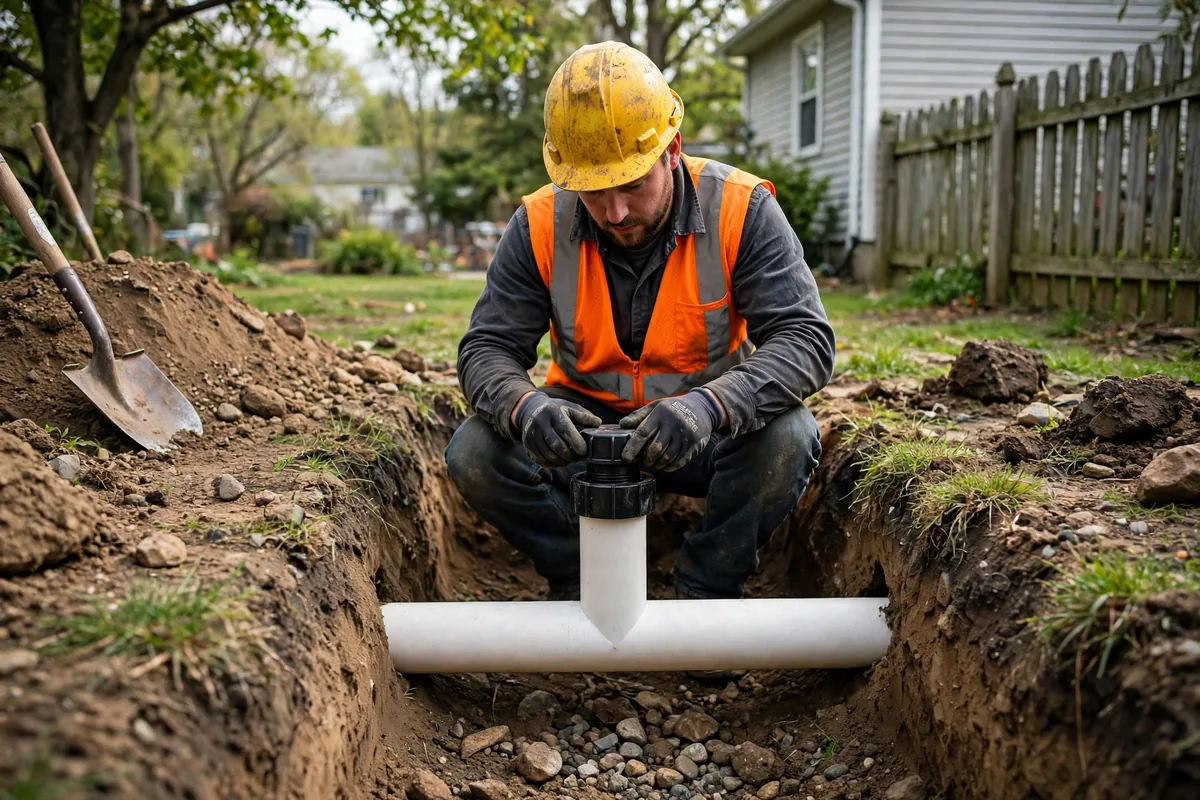
Picture a short, capped pipe, usually white or black plastic, standing a few inches above the ground. That small fitting is the door a pro uses to reach your buried line without digging.
Start by knowing the shape. An outdoor access point is typically a round cap, about the width of a coffee mug, threaded onto a short upright pipe, sometimes sitting inside a shallow green or black box set flush with the lawn. Newer caps are often PVC pipe (SDR-35 and Schedule 40) in white, while older ones can be dark plastic or metal. It looks minor, and that is the point: people mow past it for years without knowing what it does.
That cap is the visible top of the yard cleanout, the access point built into the line between your house and the street. Through it, a pro can run a camera, clear roots, or check fall and condition. Everything else in this guide follows from one idea: this little fitting saves digging, but only if you can find it on the day something goes wrong.
Where Should You Start Searching First?
Work outward from the house in the direction the waste pipe leaves. Most outdoor access points sit close to the home, along that same line, before the run crosses the yard toward the street.
Stand where your bathrooms are and think downward. Waste leaves through the main stack / soil stack, drops to the lowest level, and exits through the foundation in one main run. Walk that same direction outside. The first capped upright you find near the wall, often within a few feet of it and sometimes just past a garden bed, is very likely the one you want. In Athens, OH, homes needing sewer line work often hide it behind shrubs planted long after the house was built.
If nothing shows near the wall, widen the search along the same straight path toward the street, checking flower beds, mulch edges, and the strip beside the driveway. Some properties have a second access point near the front boundary, close to where the private run meets the public sewer main. Older homes may also have a house trap near that exit run, which changes where the access sits, so a missing cap near the wall does not mean there is none at all.
Could The Access Point Be Inside The House Instead?
Yes. Many homes also have an indoor access opening, most often in the basement or crawl space, close to the point where the main pipe leaves the building.
Check the lowest level before you give up on the yard. Look along the main pipe where it runs across a basement wall or under the floor, near the floor drain that usually sits close to the furnace or water heater. An indoor cap may be a round plug set into the pipe itself or a short upright rising from the floor, sometimes hidden behind stored boxes or under a loose floor panel.
An indoor opening works fine for camera checks and clearing work, though a pro may prefer an outdoor one for larger equipment. Homes in Amsterdam, NY, dealing with sewer line repair often have the indoor kind because of colder ground and deeper lines. What matters is not which version you have, but that you know its exact spot before a backup turns the search into an emergency.
Why Do Some Homes Have Two Access Points?
Usually because they were given two jobs. One opening near the house and one near the street let a pro reach the same line from both ends and work a long run in either direction.
A single opening only helps in one direction. With two, a camera or clearing tool can enter near the house and travel toward the street, or enter near the boundary and work back toward the building, which makes long runs and stubborn blockages far easier to deal with. One of the pair may sit inside a right-of-way / easement strip near the front of the lot, where the utility also needs room to work.
Finding only one is normal, and finding two does not mean one is spare. Mark both on a simple sketch of your yard, note what each one is made of, and keep both clear. If a cap on either one cracks or goes missing, a Fernco / flexible coupling style fitting or a matching replacement cap is a small part - but knowing which size and thread you need is far easier while the old cap is still there to compare.
Why Must That Cap Stay On And Sealed?
A cap keeps surface water, soil, roots, and debris out of the pipe, and it keeps sewer gas in. An open or broken fitting quietly turns a sound line into a problem line.
This is the part homeowners underestimate. Rain that pours into an open access pipe adds flow the line was never sized for, and soil or stones that fall in can start a blockage where none existed. Tree root intrusion also gets an easy entry point at any unsealed joint near the cap, and roots that begin at an opening can work their way into grease buildup / fatberg deposits further down the run, where clearing becomes a bigger job.
The cap works the other way too. It holds back odours and stops anything inside the pipe escaping into the yard. If you find a cap loose, cracked, or sitting beside the pipe rather than on it, treat that as a small repair to do promptly, not a detail to note for later. Keeping this one fitting sound is the cheapest protection the whole buried line has.
What Goes Wrong When The Access Point Gets Buried?
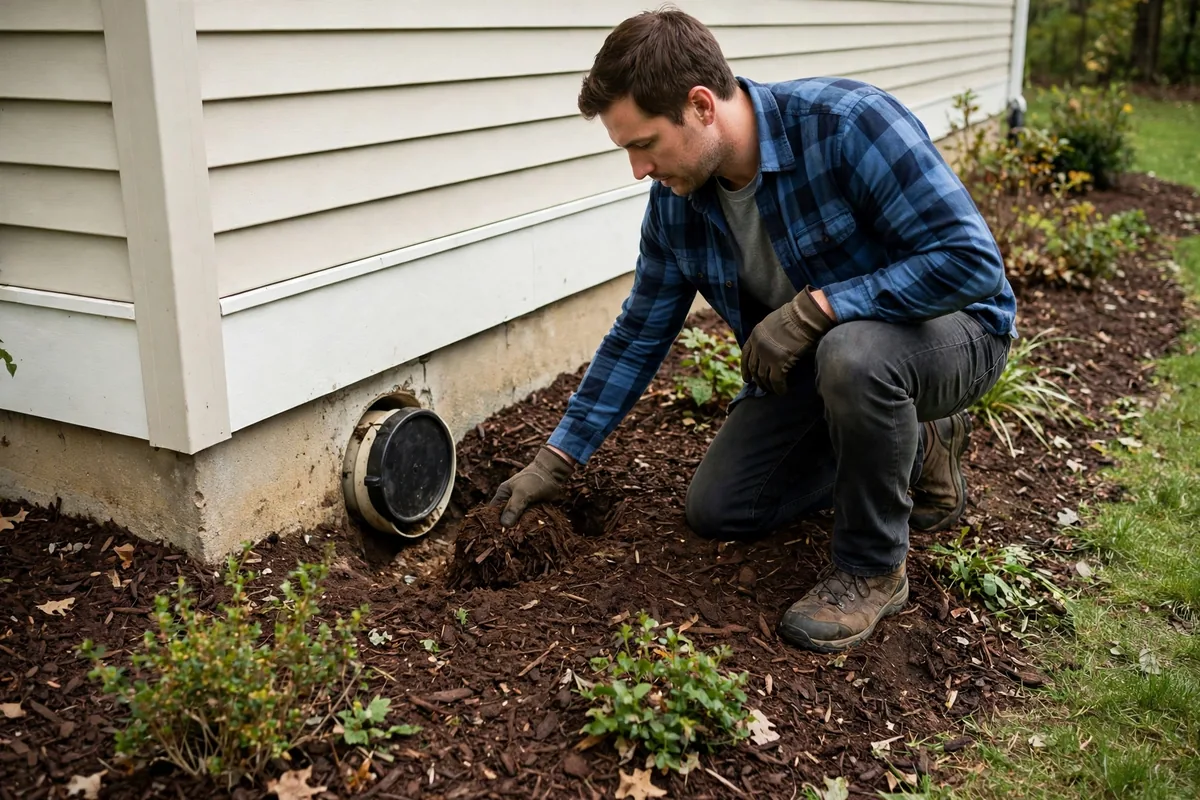
Buried under mulch, soil, or paving, an access point might as well not exist. A crew arriving for a backup loses its no-dig route in and may have to dig just to reach the line.
Time buries these fittings quietly. Mulch is topped up each spring, soil creeps after heavy rain, a new path or patio edge goes down over the top, and within a few seasons nobody remembers the cap is there. The cost shows up later: a CCTV sewer camera inspection that should have started in minutes instead waits while someone probes the yard, and a sonde locator may be needed just to trace the line and find the buried fitting from above ground.
That delay matters most under pressure. During a serious backup, the work described in our guide to sewer bypass pumping depends on fast, clear access to the line. Homeowners in Abington, PA, arranging sewer line repair who keep the cap visible and the area around it clear give the arriving pro a head start that no tool can replace. A simple edging ring or marker keeps landscaping honest without spoiling the yard.
How Does A Pro Actually Use It On The Day?
With the cap open, the buried line stops being a mystery. A camera travels the full run, and clearing tools reach roots, grease, and scale in a fraction of the time digging would take.
First comes the camera. It enters through the opening and shows what is really happening underground: a belly / sag in the line holding water, an offset joint catching paper, or a cracked or collapsed pipe that no amount of clearing will fix. That picture decides the method. Mechanical root cutting can clear roots back to the pipe wall, and hydro jetting can wash grease and loose scale away, but neither repairs broken pipe, and a good pro will say so plainly.
Access also protects the fall of the line. Work done through the opening avoids disturbing ground around the pipe, so the proper slope / grade of a sewer line is left exactly as it was. Contrast that with digging, which needs care to bed the pipe back at the same fall. Owners weighing repair choices across sewer line repair in Ohio hear the same point: the easier the line is to reach, the more options stay open, including the trenchless ones.
What Simple Habits Keep It Ready Year After Year?
Most are simple habits: know the spot, keep it visible, keep the cap sound, and record where it is so anyone in the house can find it under pressure.
Add the access point to the jobs you already do. When you clear beds in spring, confirm the cap still sits above soil level. When a tree or large shrub goes in nearby, remember that a root barrier can steer roots away from the line and its fittings. Photograph the spot, drop a pin in your phone's map, and tell whoever else lives in the house where it is. That record also helps a future buyer, the same way documents help with sewer line insurance coverage questions later.
Two cautions finish the picture. Before any digging near the front boundary, use your state's service - New York 811 in New York, Ohio 811 (Ohio Utilities Protection Service) in Ohio, or Pennsylvania One Call (PA One Call) in Pennsylvania - so buried lines get marked first. And if drains are already backing up and you cannot find the opening at all, stop hunting and call: one free call connects you with an independent local pro who can typically arrive in 30-60 minutes, with lines answered 24/7. Homes in Albany, NY, needing sewer line repair and houses on Pennsylvania sewer line repair pages get that same advice: access first, then answers.
Frequently Asked Questions
Short answers to common questions about finding, capping, and looking after this small but vital fitting. If yours is not here, call free and ask - lines are answered 24/7.
Still Have Questions? Call Free
One free call connects you with a local pro.
(800) 555-0100Free Call · Answered 24/7 · No Obligation
Reviewed By Hamza
Master Plumber & Trenchless Sewer Rehabilitation Specialist
Hamza is a licensed master plumber and underground infrastructure specialist with extensive field experience resolving sewer lateral collapses, root intrusions, and structural line offsets across Pennsylvania, Ohio, and New York. He specializes in high-definition CCTV pipe diagnostics, cured-in-place pipe (CIPP) lining, pipe bursting, and non-invasive trenchless rehabilitation to restore residential and commercial sewer systems without property destruction.
Updated October 31, 2026
Need Sewer Line Repair Near Me?
One free call connects you with an independent local pro — answered 24/7, no obligation.
Call (800) 555-0100Free Call · Answered 24/7 · Local Pros Near You