Bypass Pumping and Emergency Timing: What Happens While Your Line Is Open
Free Call · Answered 24/7 · Local Pros Near You
The Short Answer
While your underground line is open for repair, the wastewater from your home still needs a route past the work area. A temporary pump and hoses can carry that flow around the open section and back into the line beyond it, so toilets and drains are not simply left to back up. Whether your job needs that setup depends on how long the line will be open, how much water the house uses, and whether a short shutdown is workable instead.
Call (800) 555-0100Sewer Bypass Pumping, Explained In Plain Words
What Is Temporary Pumping And When Is It Needed During A Sewer Job?
Temporary pumping is a short-term setup that moves wastewater around a section of pipe that has been opened or taken out of service. It is needed when a repair will take hours rather than minutes and the home cannot simply stop producing flow for that whole period.
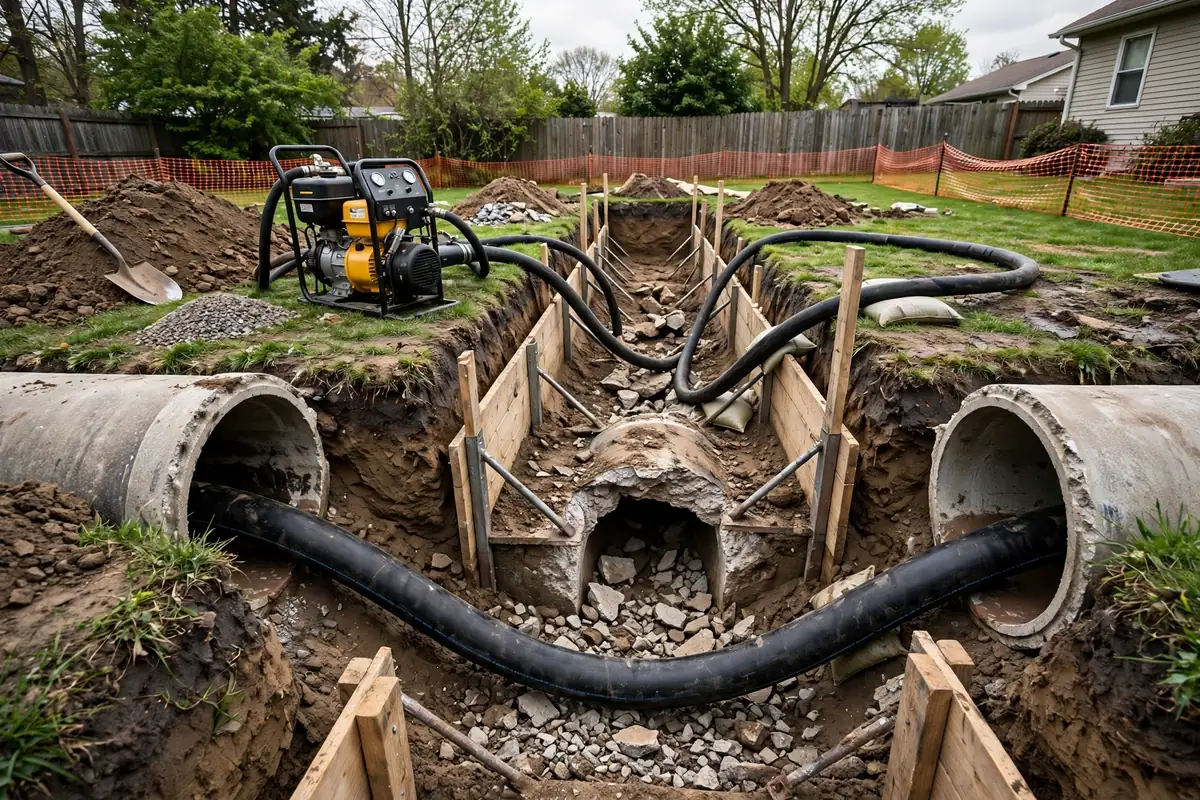
The arrangement is plain once you see it described. A pump sits at an access point upstream of the work, hoses carry the flow past the open trench, and the water rejoins the line downstream. The crew can then cut out, line, or replace the damaged section without sewage pooling in the trench or pushing back toward the house.
Short jobs often do not need it. A quick spot fix finished in an hour may only need the household to pause water use. The picture changes on a full-day dig, which is why homeowners arranging help with a sewer problem in Athens, OH are often told about flow handling before the start date, not after the trench is already open.
Homes with several bathrooms, a large family, or someone who cannot manage without working facilities lean toward the temporary setup sooner. A single occupant who can be out for the day may manage with a planned shutdown instead. The pro should explain which route fits your job before work begins.
Which Repairs Usually Need Flow Handled While The Line Is Open?
Long, open excavations are the usual case: a full replacement, a deep spot dig, or a repair where the damaged section must stay exposed while new material is fitted and checked. Short cleaning or inspection visits rarely need a pump rig at all.
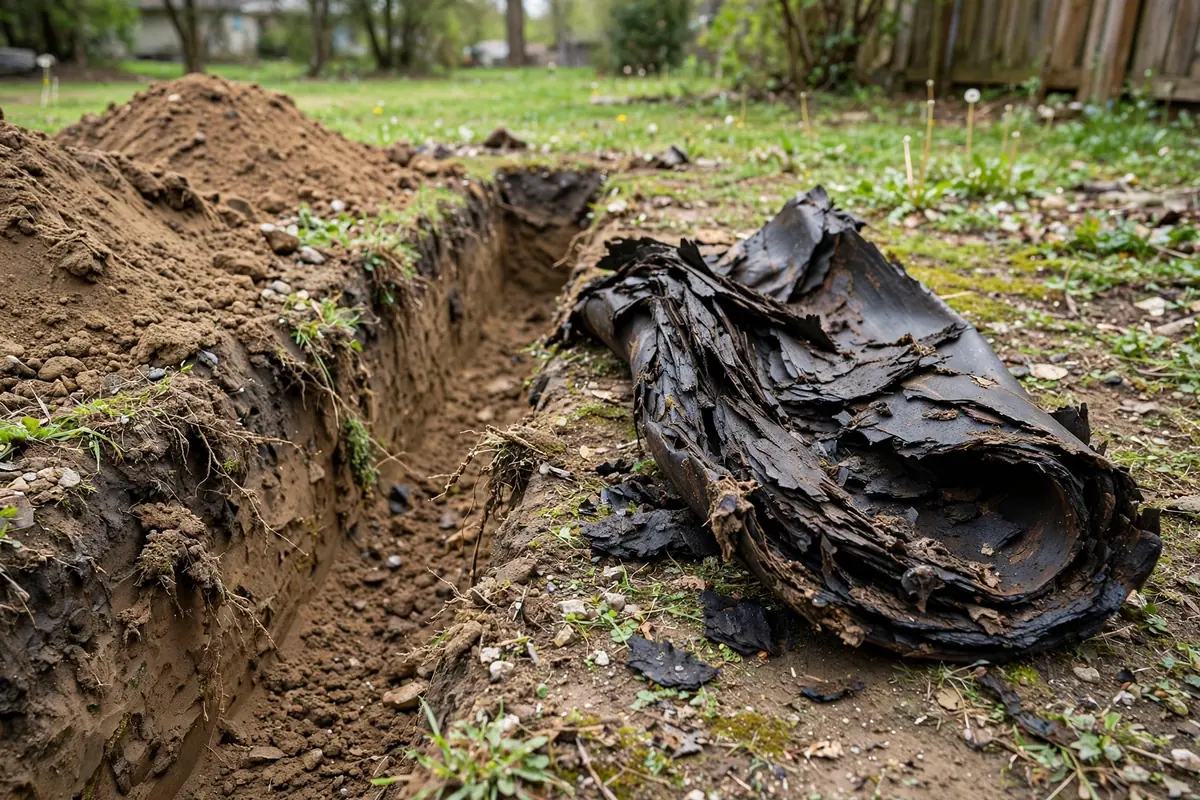
Open-trench replacement is the clearest example, because the old run comes out in sections and the new run goes in piece by piece. A cracked or collapsed pipe that cannot hold its shape also tends to mean open work, and open work tends to mean the line is out of service for much of the day.
Trenchless work sits in the middle. Cured-in-place pipe lining (CIPP) needs the line emptied and clean while the liner is placed and cured, so some flow control is common even though no long trench is dug. Pipe bursting similarly needs access pits and a clear run while the new pipe is pulled through.
A CCTV sewer camera inspection, by contrast, takes the line out of use only briefly, and a spot excavation repair on a short section may be done within a planned pause in water use. If you are unsure which group your job falls into, ask the pro to name the method and the expected hours with the line open, in writing, before the day.
How Does The Crew Set Up And Watch The Temporary Route?
The crew opens an upstream access point, sets the pump and hoses, tests the route before the main work starts, and then keeps an eye on levels for as long as the line stays open. The setup is tested first, not improvised after digging begins.
Access usually comes through a sewer cleanout in the yard or basement, or through a manhole where the job sits near the street connection. Knowing where your access point sits helps, and our guide to finding the access point on your property explains the common positions. A sonde and camera check can confirm the route before hoses are laid.
On deeper digs, trench shoring goes in to keep the excavation walls safe while people work below ground level. Hoses are run so they do not cross driveways where cars would crush them, and the discharge end is secured so it cannot work loose under pressure.
Watching the setup matters as much as fitting it. Someone checks the upstream level, listens for a pump struggling, and confirms the downstream end is flowing freely. Homeowners in Albany, NY, planning sewer work should hear this monitoring explained as part of the plan, because an unwatched pump is the weak point of the whole arrangement.
Can You Use Water At Home While The Temporary Pump Is Running?
Usually yes, within limits the crew sets. Normal toilet flushing and hand washing are often fine, while long showers, laundry loads, and dishwasher runs back to back may be paused so the pump is never asked to handle a sudden surge.
Think in terms of steady, modest flow. The pump and hoses are sized for ordinary household use, not for every appliance running at once. The crew will normally give a short list for the day: flush as needed, keep showers brief, and hold off on the washing machine until the line is back in service.
That guidance matters more during wet weather. Groundwater leaking into joints, described as infiltration, adds flow the household never created, and a combined sewer surcharge on a storm day can raise levels in the street system at the same time. On a rainy day the crew may tighten the limits or pause the job rather than fight rising water.
If the pump stops or an alarm sounds, stop using water and call the crew contact straight away, even if drains still seem to empty. Flow with nowhere to go finds the lowest opening in the house, often a floor drain, and that is the backup everyone is trying to avoid.
What Shapes The Timing Of An Emergency Job?
Emergency timing turns on diagnosis first, then access, ground conditions, and how flow will be handled. A pro can typically arrive in 30–60 minutes to assess the problem, but the repair clock only really starts once the crew knows what failed and where.
The first visit is about facts: a CCTV sewer camera inspection shows the break, the distance from the access point, and whether the rest of the run is sound. The sewer inspection report and footage from that visit drive every later choice, from method to whether temporary pumping belongs in the plan at all.
Outside steps add time that has nothing to do with digging. Safe digging rules mean calling Call 811 before excavation so buried utilities are marked, and work near the street may need the crew to coordinate around the public sewer main and traffic. Across sewer work in Ohio, those checks are a normal part of scheduling, not delays invented on the day.
Weather and ground finish the picture. Frozen ground slows digging, saturated soil needs more care in the trench, and a line buried deep or running under a driveway takes longer to reach than one under open lawn in Abington, PA, for example. A straight answer on timing gives a range and names what could stretch it.
What Affects The Cost Of Handling Flow During A Job?
Cost follows the setup, not a single figure: how long the pump must run, how far the hoses must reach, how much flow the home produces, and whether someone must stay on site outside normal hours to watch the equipment.
Duration is the first factor. A pump running for four hours on a planned repair is a different job from one running overnight or across two days while a long run is replaced. Distance is next: a short hose run across a lawn is simpler than a long run to a distant downstream access point, and larger homes with higher flow may need a bigger pump.
The pipe itself plays a part. A new section in PVC pipe joins quickly, while a badly damaged old run can extend the open period and therefore the pumping period with it. Keeping the proper slope on the new section also takes care and time, because a rushed bedding job can leave a low spot that causes repeat blockages.
Emergency timing changes the labour picture too. Work that runs into the evening, or a watch kept overnight, involves more crew hours than a planned weekday job. Ask for the flow-handling part of the quote to be listed separately, so you can see what you are paying for. Our guide to what cover may or may not pay for helps if you plan to ask an insurer about any part of the bill.
What Can Go Wrong If Flow Is Not Handled Properly?
The failures are practical, not dramatic: sewage backing into the lowest drains of the house, a trench filling with wastewater that makes work unsafe and slow, and contaminated ground around the dig that then needs cleaning up as well as repairing.
A backup during open work usually starts quietly, with a gurgling drain or a rising level at the lowest opening, then becomes a cleanup problem inside the home on top of the repair outside it. That double problem is why prevention is discussed before digging, and why our separate guide to a one-way valve that can stop reverse flow is worth reading if your home has backed up before.
In the trench, wastewater hides the very damage the crew came to fix, softens the bedding under new pipe, and can wash fine soil away from around the line. Tree root intrusion found at a joint, for example, is far harder to assess properly when the joint sits under dirty water.
Households in Alliance, OH, arranging urgent sewer help can use one simple test of any plan: ask what happens to the flow, hour by hour, while the line is open. A crew with a real answer, including a backup plan if a pump fails, is showing its working. Across New York sewer jobs the same question applies. If the answer is vague, get it clarified before you agree to start.
Frequently Asked Questions
Short answers about flow, timing, and daily life while a line is open. If your situation is urgent, one free call connects you with an independent local pro, answered 24/7.
Still Have Questions? Call Free
One free call connects you with a local pro.
(800) 555-0100Free Call · Answered 24/7 · No Obligation
Reviewed By Hamza
Master Plumber & Trenchless Sewer Rehabilitation Specialist
Hamza is a licensed master plumber and underground infrastructure specialist with extensive field experience resolving sewer lateral collapses, root intrusions, and structural line offsets across Pennsylvania, Ohio, and New York. He specializes in high-definition CCTV pipe diagnostics, cured-in-place pipe (CIPP) lining, pipe bursting, and non-invasive trenchless rehabilitation to restore residential and commercial sewer systems without property destruction.
Updated October 31, 2026
Need Sewer Line Repair Near Me?
One free call connects you with an independent local pro — answered 24/7, no obligation.
Call (800) 555-0100Free Call · Answered 24/7 · Local Pros Near You