Sewer Smoke Testing: Finding Cracks, Odor Sources and Wrong Connections
Free Call · Answered 24/7 · Local Pros Near You
The Short Answer
A sewer smoke test finds leaks and wrong connections by pushing harmless smoke through the drains and watching where it escapes. Smoke rising from a yard, a roof vent or a cracked joint marks a problem that drains alone cannot show. Pros use it to track down sewer smell, rainwater entering the line and hidden breaks. One free call connects you with an independent local pro who can say whether a smoke test fits your problem. Help is answered 24/7.
Call (800) 555-0100Sewer Smoke Testing, Explained In Plain Words
What Is A Sewer Smoke Test And What Does It Find?
A pro seals the line, pushes non-toxic smoke through it with a blower, and watches for smoke escaping where it should not. Escaping smoke points to cracks, broken joints and openings that let sewer gas out and rain or groundwater in.
Think of it as a leak hunt for air rather than water. The smoke travels the same path sewer gas takes, so any opening in the pipe run becomes visible from above ground. That makes the test useful when drains still flow but the yard smells, a patch of grass stays soggy, or odours keep appearing indoors with no clear cause.
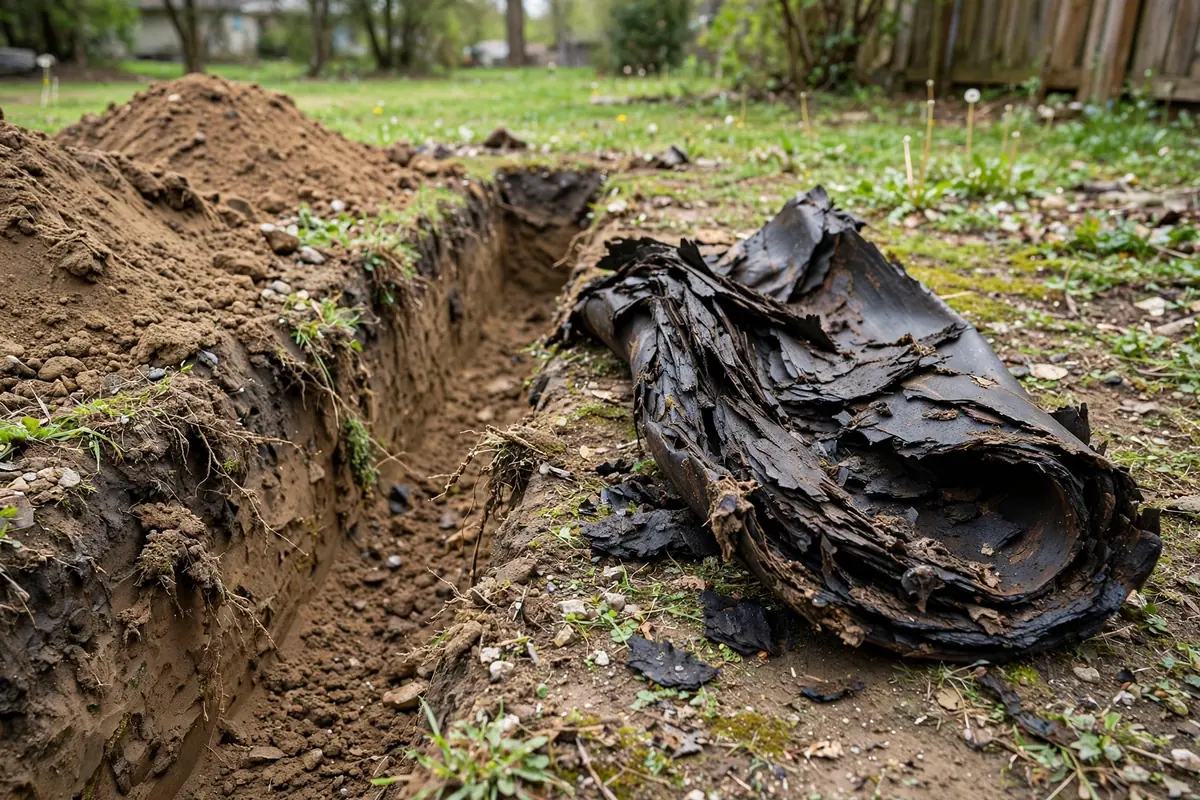
The faults it exposes most often are a cracked or collapsed pipe section, an offset joint where two lengths no longer line up, and tree root intrusion that has pried a joint open. Older vitrified clay pipe, with a joint every few feet, gives smoke many places to escape, and a cast iron pipe that has rusted thin can leak smoke along its whole run.
Homeowners reading about sewer line repair across Ohio meet this test often, because many Ohio streets still drain through clay lines laid generations ago. A smoke test does not grade the whole pipe, but it answers one question very well: where is this line open to the world when it should be sealed?
How Does A Pro Run A Smoke Test Step By Step?
The crew isolates a section of line, fits a blower at an access point, fills the pipes with smoke, then walks the property and street marking every place smoke appears. The whole visit is methodical, and nothing is dug up during the test itself.
Work starts at street level when a town runs the test, or at your home's access points when a pro tests a single property. For a municipal run, the crew may work from a manhole inside the right-of-way, testing one street section at a time so results can be tied to individual homes.
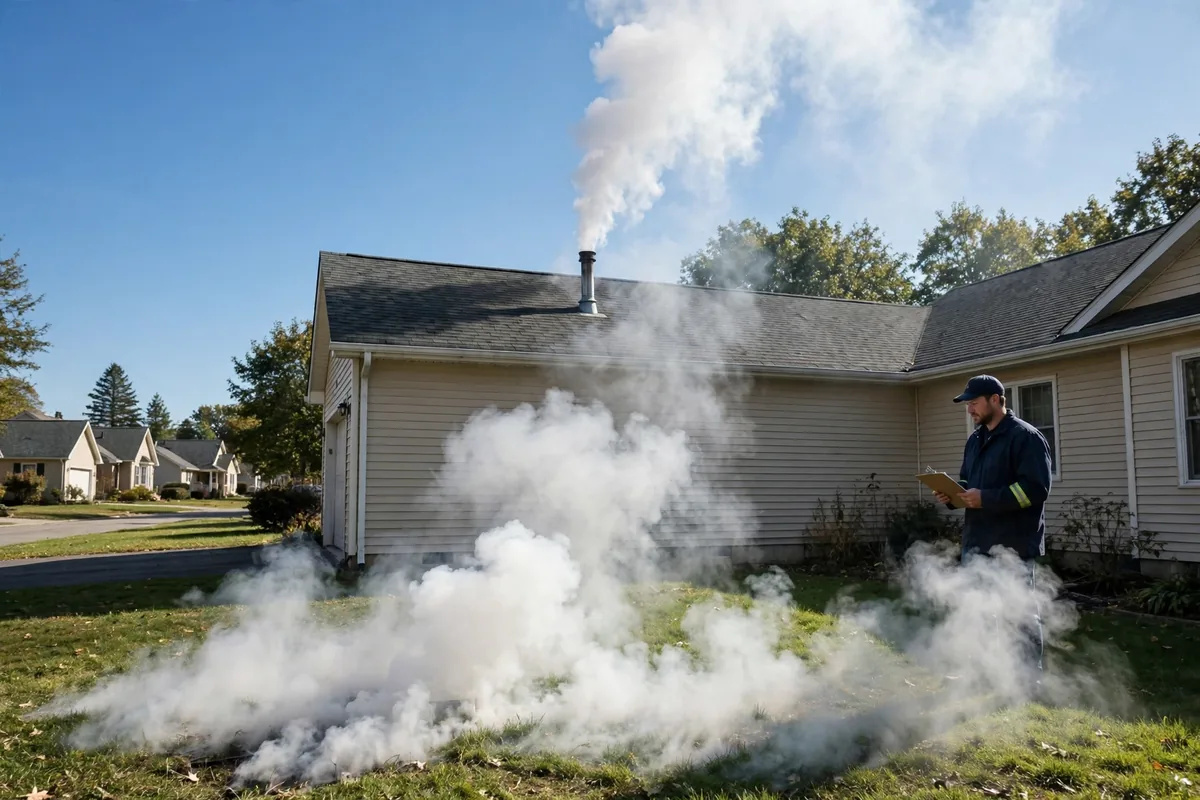
The blower pushes smoke into the line while other openings are managed so pressure builds gently through the run. Smoke should travel up the main stack and out through the roof vent, which is the healthy sign. Anywhere else it surfaces — at the ground, at a gutter, at a basement window well — gets flagged with a marker and photographed.
In a town like Akron, OH, sewer line repair crews often pair a smoke run with notes on each address before anyone talks about digging. You may be asked to pour water into little-used drains beforehand, because a trap holding water blocks smoke, while a dry trap lets it through and is itself one of the findings.
Where Does Escaped Smoke Show Up, And What Does Each Spot Mean?
Smoke at the roof vent is normal and expected. Smoke in the yard, along the foundation, at a driveway edge or from a gutter points to a break, an open joint or a connection that should not be there.
Yard smoke usually rises in a thin column rather than a cloud, and its position matters more than its size. A plume halfway between house and street often sits over soil erosion and voids around the pipe, where leaking water has washed the bedding away and left the line unsupported.
Smoke at a joint in a cast iron pipe run can look like several faint wisps in a row, because corrosion opens the line at more than one weak point. A single strong plume more often means one clear opening, such as a broken cap, a cracked fitting or a joint that has shifted apart under soil movement.
Homes near Amsterdam, NY, sewer line repair areas show another pattern: smoke drifting from a cellar window or a low vent can mean the opening is indoors rather than in the yard. The crew notes the wind, the exact spot and the strength of each plume, because that record decides where a camera goes next.
How Does The Smoke Test Track Down Sewer Smell Indoors?
Indoor odour usually means sewer gas is entering through a dry trap, a failed wax seal or an opening in the vent system. Smoke makes that entry point visible, so the fix targets the real opening instead of masking the smell.
The classic case is a floor drain that has not seen water in months. Its trap dries out, the water seal vanishes, and gas drifts up into the basement. During a test, smoke curling from that drain confirms the route in seconds, and refilling the trap often ends the smell on the spot.
A house trap that is cracked, missing its caps or holding debris can also pass gas and smoke into the home, especially in older houses where the trap sits just inside the cellar wall. Smoke around the trap cover tells the pro the seal has failed, not that the whole line needs replacing.
Where the smell comes and goes, timing is a clue. Odour that worsens when the washing machine empties or a tub drains points to pressure pushing gas through a weak seal. Homeowners comparing notes with neighbours in Altoona, PA, for sewer line repair often describe the same pattern, because whole streets share the same era of plumbing.
Which Wrong Connections And Rain Sources Does A Smoke Test Expose?
Smoke reveals connections that send rain into the sanitary system: roof drains tied into the line, yard drains, footing drains and pumps discharging where they should not. Each one adds storm flow the system was never sized to carry.
A gutter pipe that disappears into the ground is the first suspect. If smoke pours from that gutter pipe during a test, it is tied into the sanitary line, and every heavy rain sends roof water straight into a pipe meant for wastewater alone.
A sump pump plumbed into the sanitary line causes the same overload in miniature, cycling basement water into the system with every storm. The test also separates two problems owners often merge: infiltration, groundwater seeping in through cracks and joints, and the direct rain entry that comes from those wrong connections.
The stakes rise in older districts with a combined sewer surcharge risk, where one pipe carries both sewage and storm flow and heavy rain can push the system past capacity. Towns use test results to order corrections, and the Pennsylvania sewer line repair picture is typical: the U.S. Environmental Protection Agency (EPA) has long pushed cities to cut this extra rain flow, called inflow, because it drives overflows and backups.
How Does The Smoke Test Compare With Camera And Dye Checks, And What Can It Not Show?
Each test answers a different question. Smoke finds openings to the air, a camera grades the inside of the pipe, and dye confirms where water from a fixture or drain actually travels. Used together, they build a complete picture.
A CCTV sewer camera inspection shows roots, cracks, scale and the condition of the pipe wall, and it can confirm a low spot where water stands. It cannot easily show a vent fault inside a wall or a rain connection outside the run. Smoke covers exactly that ground, which is why the two are paired so often.
Dye testing works at fixture level: coloured water flushed at a sink or yard drain is watched for in the line or the street to prove a connection. Smoke is faster across a whole property, while dye is slower and more certain for one fixture at a time.
Know the limits before you book. Smoke cannot grade pipe walls, measure a slope fault, or see through a line that is full of water or blocked with grease. Homes on a septic system can still be tested, but the setup differs and the pro needs to know beforehand. Our guide to sewer line slope problems covers the faults smoke cannot judge.
What Happens Once A Smoke Test Marks A Fault?
Marked spots become a written record, then a camera confirms the serious ones before any repair is agreed. You end up with locations, photos and a short list of faults ranked by urgency, not a sales pitch for a full replacement.
The crew's flags and photos feed into the sewer inspection report and footage set you keep with your house papers. Where a plume suggests a break near the foundation, a follow-up CCTV sewer camera inspection from the nearest access point shows whether the opening is a single cracked section or part of a longer failure.
Repairs then scale to the fault. One broken section may need only a short dig and a new length of pipe, while several openings along a worn run can make renewal the calmer choice. If cover is a question, our page on sewer line insurance coverage explains which add-ons speak to the buried pipe itself.
Start with one free call: it connects you with an independent local pro who can typically arrive in 30–60 minutes, and lines are answered 24/7. Owners in Athens, OH, for sewer line repair use the same route — describe the smell, the slow drain or the soggy patch, and ask whether smoke, camera or both fit your line where it meets the public sewer main.
Frequently Asked Questions
Straight answers about smoke tests, what the smoke is, what the results mean and what happens next. If your drains smell or rain sends water where it should not go, one free call connects you with a local pro — lines are answered 24/7.
Still Have Questions? Call Free
One free call connects you with a local pro.
(800) 555-0100Free Call · Answered 24/7 · No Obligation
Reviewed By Hamza
Master Plumber & Trenchless Sewer Rehabilitation Specialist
Hamza is a licensed master plumber and underground infrastructure specialist with extensive field experience resolving sewer lateral collapses, root intrusions, and structural line offsets across Pennsylvania, Ohio, and New York. He specializes in high-definition CCTV pipe diagnostics, cured-in-place pipe (CIPP) lining, pipe bursting, and non-invasive trenchless rehabilitation to restore residential and commercial sewer systems without property destruction.
Updated October 31, 2026
Need Sewer Line Repair Near Me?
One free call connects you with an independent local pro — answered 24/7, no obligation.
Call (800) 555-0100Free Call · Answered 24/7 · Local Pros Near You