Spot Lining a Sewer Pipe: Sectional CIPP Repair Explained
Free Call · Answered 24/7 · Local Pros Near You
The Short Answer
Yes — one short damaged stretch of sewer pipe can be lined on its own, without renewing the whole run and usually without digging. The method places a resin-soaked sleeve over just the cracked, leaking, or root-damaged section and cures it into a hard new inner surface. It suits local damage in a pipe that still holds its shape. A collapsed, sagging, or widely damaged line needs a different repair, which is why camera inspection comes first.
Call (800) 555-0100Sectional Sewer Pipe Lining, Explained In Plain Words
Can Just One Short Section Of Sewer Pipe Be Lined?
Yes. A short liner can be installed over just the damaged stretch — a cracked joint, a root entry point, or a few feet of worn pipe — while sound pipe either side is left exactly as it is.
Full-length lining treats the whole run as if the whole run had failed. Often it has not. A CCTV sewer camera inspection may show fifty feet of sound pipe and one bad joint where roots keep entering, and sectional work aims the repair at those few feet instead of charging you to renew everything.
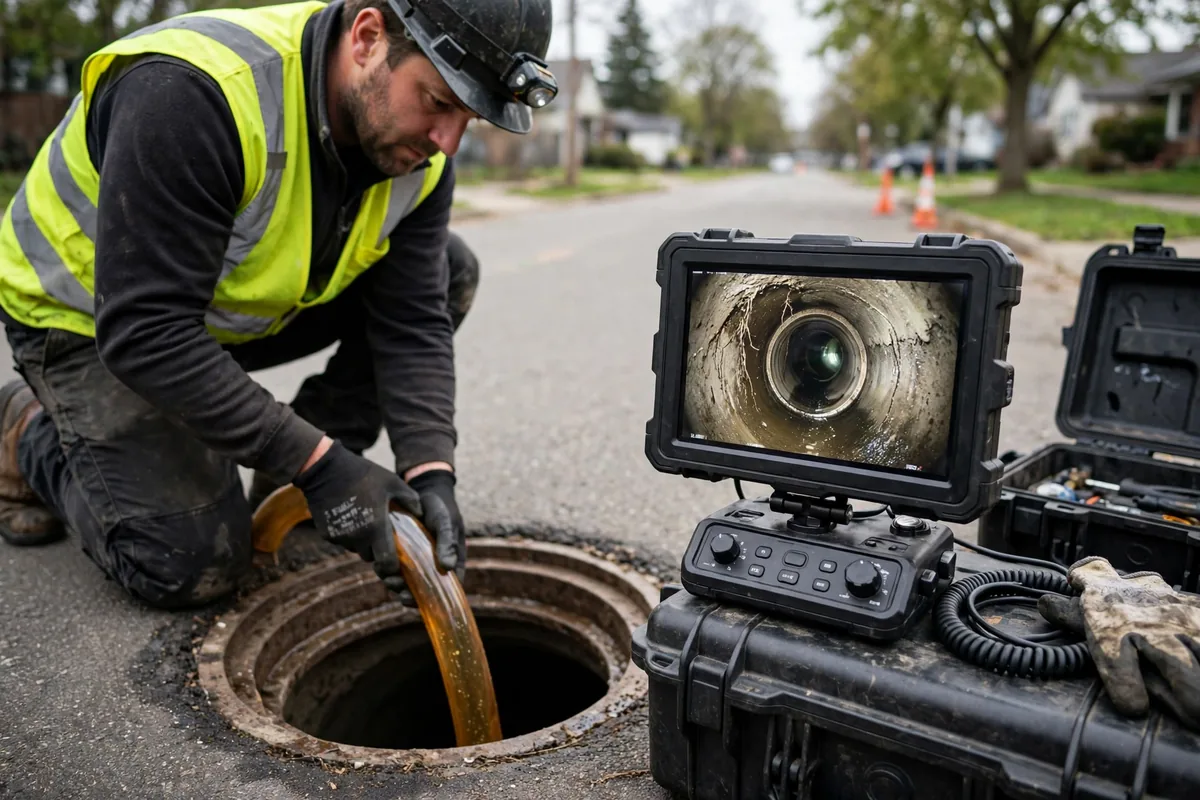
Placement is measured, not guessed. The camera gives a distance reading to the damage, a sonde locator lets the crew find that same point from the surface, and the sewer inspection report and footage records what was found and where. That paperwork is what turns 'somewhere under the yard' into a repair with a start point and an end point.
The pipe from your house — the sewer lateral — is where this option is used most, because that run is the homeowner's to maintain and its faults are often local. A homeowner reading about sewer line repair in Athens, OH with one root-filled joint is the typical case: one problem spot, plenty of healthy pipe around it.
How Does A Sectional Liner Actually Get Installed?
The crew cleans the line, measures the damaged stretch, prepares a short resin-soaked tube, pulls or pushes it into position over the damage, inflates it against the pipe wall, and lets it cure into a hard new inner section.
Preparation decides whether the liner bonds and seals properly. The line is first cleared where the fault sits: mechanical root cutting removes root masses, chain descaling knocks hard scale off old metal walls, and hydro jetting washes the loose material away so the camera can confirm the surface is ready.
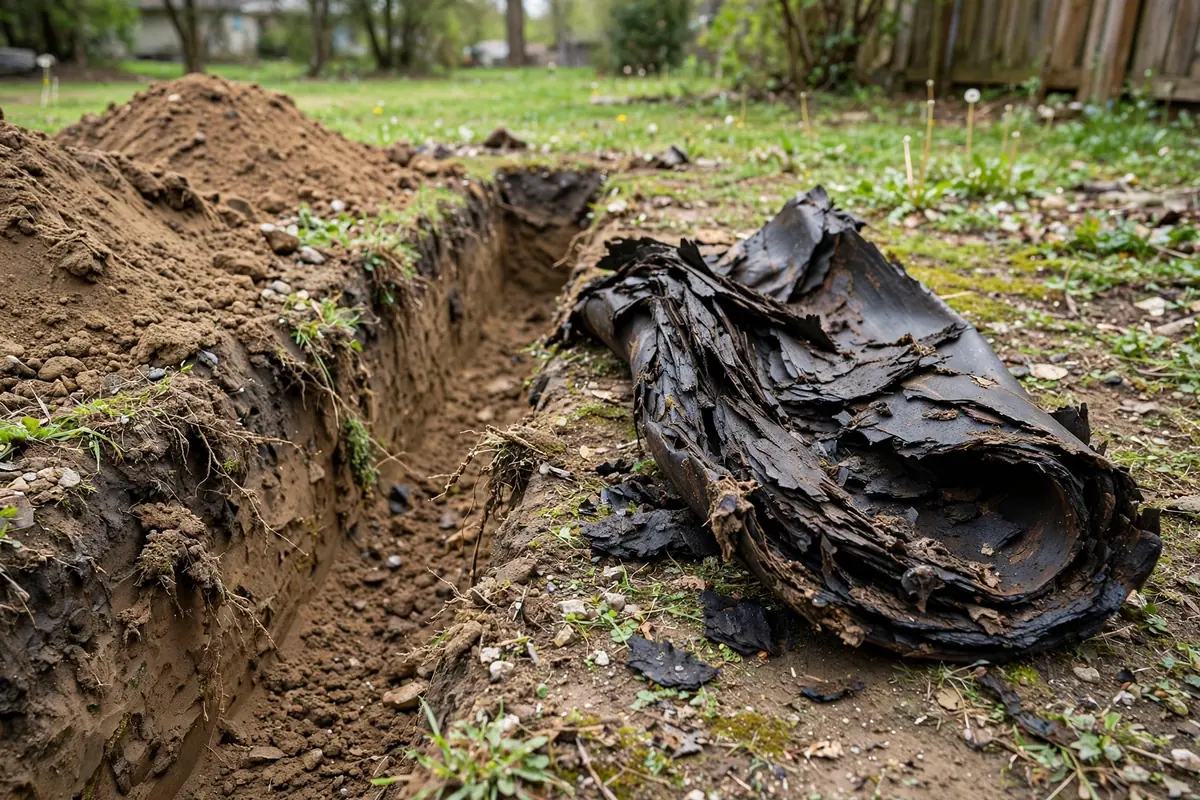
The repair piece itself is a CIPP liner — a felt tube soaked in resin, cut to cover the damaged stretch with a margin at both ends. It is carried into place on an inflatable packer, positioned using the camera's distance readings, and then inflated so it presses tightly against the inside of the host pipe, bridging cracks and joint gaps.
Heat, steam, or time then cures the resin, depending on the system used. Once it has hardened, the packer is deflated and withdrawn, and the crew runs the camera again to check the finished section: smooth, centred, and open. Most sectional jobs are done through an existing sewer cleanout, so the yard usually stays untouched.
Which Problems Does Spot Lining Fix Well?
It works well where damage is local and the host pipe still holds its round shape: a leaking joint, a contained crack, root entry at one point, or early corrosion in one stretch of an otherwise sound line.
Joints are the classic target. A vitrified clay pipe is made of short sections, and each joint is a possible entry point; sealing one shifted offset joint with a liner stops both the leak out and the roots coming in. A cast iron pipe with local wear in one stretch can be treated the same way, provided the rest of its wall is still solid.
Tree root intrusion at a single joint is the other textbook case, especially when the rest of the line scopes clean. For readers who want the prevention side, our guide on how to prevent tree roots in a sewer line covers barriers, planting choices, and inspection timing alongside repair.
Surface wear also fits, up to a point. Pipe corrosion and scaling that has roughened one length, or channeling worn into the bottom of a metal pipe by years of flow, can be covered and smoothed by a liner. The key word in every case is local: one fault, sound pipe around it, and a round profile for the liner to press against.
When Is A Short Liner The Wrong Choice?
A short liner is the wrong choice when the pipe has collapsed, gone oval, sagged so waste pools, or is damaged in many places at once. Lining seals a pipe; it does not rebuild one.
Shape is the hard limit. A cracked or collapsed pipe has lost the round tunnel the liner needs, and a liner installed inside a squashed section simply cures into the same wrong shape. Orangeburg and badly deformed pipe fail this test most often, because the host material itself is giving way rather than merely leaking.
A belly is a different problem again. Where a low spot holds standing water, the fault is the proper slope of the line, and no inner sleeve can lift a sunken section back to grade. That stretch needs to be dug up, re-bedded, and relaid at the right fall, or the pooling — and the blockages it causes — will continue.
Spread-out damage changes the maths too. If the camera finds cracks and root entry at five or six points along the run, treating each one separately stops making sense, and full-length cured-in-place pipe lining or replacement becomes the honest recommendation. Homeowners weighing sewer line repair in Abington, PA hear the same rule: match the size of the repair to the size of the problem.
How Is Sectional Lining Different From Full-Length Lining And Digging?
Sectional lining renews a few feet from inside, full-length lining renews the whole run from inside, and digging replaces pipe outright. The right choice follows the camera findings, not a preference for one method.
Think of the three as widening circles. Sectional work covers the damaged stretch plus a margin. Full-length lining runs house to street and suits lines with faults scattered along them. Pipe bursting, another trenchless option, pulls a new pipe through the old one and suits a line that is worn throughout but still holds a usable path.
Digging-based options replace rather than renew. A spot excavation repair opens the ground over one fault and swaps in new PVC pipe with proper bedding — more disruption than a liner, but it can fix shape and slope problems a liner cannot. Open-trench replacement renews the whole run that way and remains the fallback for collapsed lines.
Disruption is the visible difference. Lining methods usually leave driveways, paths, and planting alone, while digging puts them back at extra cost and time. That is why owners comparing sewer line repair across Ohio are advised to ask first what the camera found, and only then which method fits — the order matters.
What Does A Sectional Lining Job Depend On For Cost?
There is no flat figure, because the quote turns on how much pipe is damaged, how deep it sits, how the crew reaches it, and how much cleaning and preparation the line needs first.
Length and position come first. A short liner over one joint near the house is a smaller job than a longer section far down the run, and depth matters for any work that might need surface access. Access itself is a factor: a clear outside access point makes setup simpler, while a line that can only be reached through a fixture adds time.
Preparation is the second driver. A line choked with roots or heavy scale needs cutting, descaling, and washing before any liner goes in, and that cleaning is real work with its own equipment. If the first scope finds more damage than expected, the plan itself may change — which is why a written scope based on camera footage should come before any number.
Restoration is where sectional work often saves money compared with digging: no trench usually means no driveway, path, or landscaping to rebuild. Owners reading our guide to sewer line insurance coverage should note that whether any cover responds depends on the failure and the policy wording, so keep the inspection report and invoices either way.
What Should Happen After The Liner Cures?
The finished section should be camera-checked, the footage kept, and the line returned to normal use only once curing is complete. A short aftercare list protects the repair and your records.
The final camera pass is not a courtesy — it is the proof. It shows the liner seated smoothly, the joins at each end sealed, and flow running freely through the repaired stretch. Ask for that footage and file it with the invoice; together they document exactly what was done, which helps with future work and with a sale of the home.
Water use resumes once the crew confirms curing is complete, and heavy use should be eased back in over the first day rather than tested with every appliance at once. Note the date and the lined section's distance from the access point in your house records, so a future inspection starts from facts instead of memory.
Finally, treat the cause as well as the patch. If roots prompted the repair, the tree and the line still share the same ground, and a follow-up scope in a year or two is cheap insurance against a new entry point nearby. Owners arranging sewer line repair in Alliance, OH or reading about sewer line repair across Pennsylvania get the same closing advice: keep the footage, note the date, and check again before small faults grow.
Frequently Asked Questions
Plain answers about short, sectional liners — how long they are, what they can and cannot do, and how a job runs. For advice on your own line, one free call connects you with an independent local pro; lines are answered 24/7.
Still Have Questions? Call Free
One free call connects you with a local pro.
(800) 555-0100Free Call · Answered 24/7 · No Obligation
Reviewed By Hamza
Master Plumber & Trenchless Sewer Rehabilitation Specialist
Hamza is a licensed master plumber and underground infrastructure specialist with extensive field experience resolving sewer lateral collapses, root intrusions, and structural line offsets across Pennsylvania, Ohio, and New York. He specializes in high-definition CCTV pipe diagnostics, cured-in-place pipe (CIPP) lining, pipe bursting, and non-invasive trenchless rehabilitation to restore residential and commercial sewer systems without property destruction.
Updated October 31, 2026
Need Sewer Line Repair Near Me?
One free call connects you with an independent local pro — answered 24/7, no obligation.
Call (800) 555-0100Free Call · Answered 24/7 · Local Pros Near You