Sewage Backup in Your Home: Health Risks and Safe Cleanup Steps
Free Call · Answered 24/7 · Local Pros Near You
The Short Answer
Yes, sewage inside a home is a health hazard, and it should be treated that way from the first minute. Keep children and pets out of the affected rooms, stop using water, turn off power to wet areas if you can do so safely, and wear gloves and eye protection before touching anything. Small, contained spills on hard floors may be manageable with care. Deep, widespread, or still-rising sewage is a job for a pro, not a mop.
Call (800) 555-0100Sewage Backup Cleanup Safety, Explained In Plain Words
Is Sewage In My Home A Health Risk?
Yes. Water that has come back through drains can carry bacteria, viruses, and parasites from human waste, and the risk rises the longer it sits and the more rooms it reaches.
The lowest drain in the house is usually where trouble shows first. Sewage may rise through a floor drain in a basement or laundry room, pool around fixtures, and soak into anything porous nearby. Even a shallow layer matters, because the contamination is in the water itself, not only in the visible solids, and it spreads easily on shoes and mop heads.
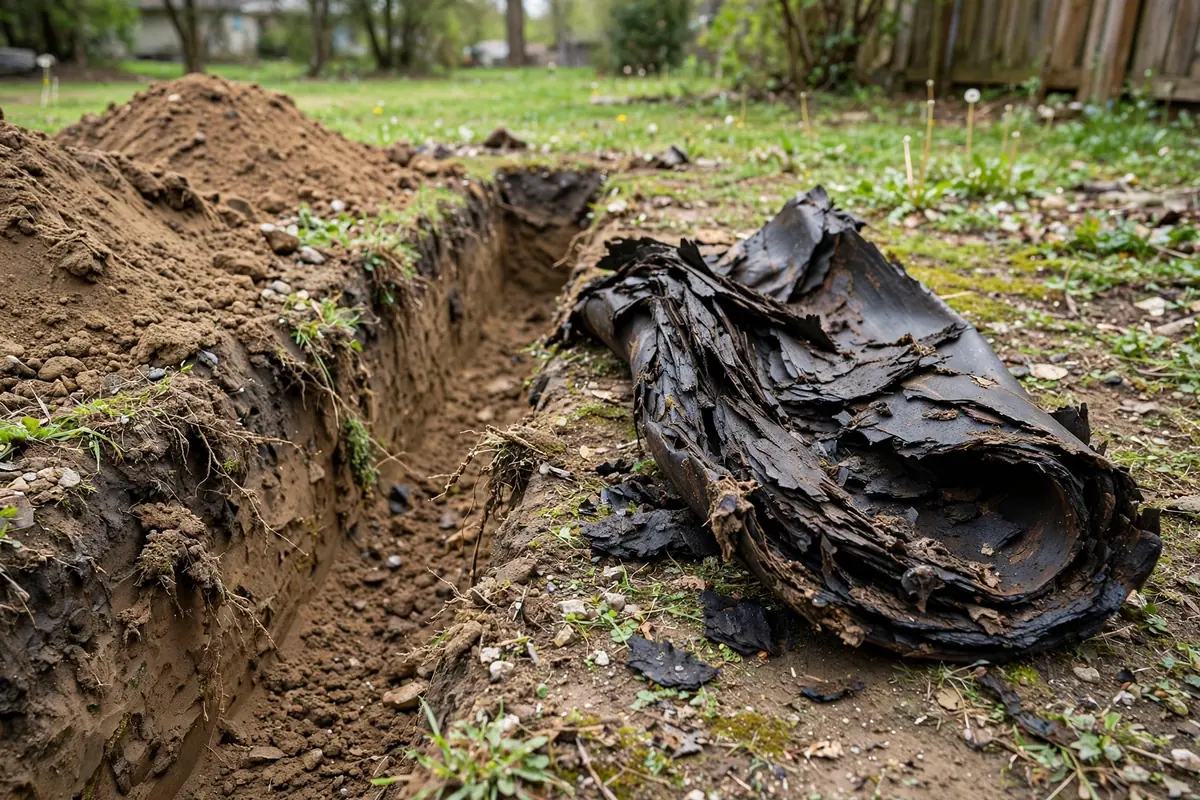
Backups happen for ordinary underground reasons. A combined sewer surcharge during heavy rain can push city flow back toward houses, a public sewer main can block, and roots, heavy grease buildup, or a cracked or collapsed pipe on your own run can stop waste leaving at all. Tree root intrusion is a slow, common cause in older streets.
Groundwater and rain make the picture worse. Infiltration through cracked joints adds steady extra water underground, and inflow from yard drains adds more during storms. Guidance from the Centers for Disease Control and Prevention (CDC) treats flood and sewage water as contaminated by default, which is the right starting point here: assume it can make people sick, keep contact brief, and wash thoroughly after any handling.
What Should I Do In The First Hour After A Backup?
Stop adding water, keep people and pets out, and make the area electrically safe before you clean anything. Those three moves limit both the mess and the danger while you decide what happens next.
Stop running taps, showers, washing machines, and dishwashers, and do not flush toilets. Every gallon you send down adds to what is already coming back. Waste from upper floors travels down the main stack, so a flush upstairs can quickly worsen a basement spill downstairs.
If water is near outlets, appliances, or a panel, switch off power to that area from a dry spot if you can reach the breaker safely. Never step into sewage to reach a switch. Check whether a house trap in an older home is accessible and dry, and note where the water entered, how deep it got, and what it touched — that record helps any pro and any claim later.
Homes on a septic system need one extra pause: stop water use completely and do not pump or open anything yourself, because a full or failing tank changes what is safe to do. If a sump pump is running in clean water nearby, leave it alone; if its pit is part of the sewage spill, treat it as contaminated too.
What Protective Gear Do I Need Before Touching Anything?
At minimum: waterproof gloves, eye protection, boots you can wash or throw away, and clothing you do not mind discarding. If you cannot gear up that far, the spill is not a do-it-yourself job.
Skin contact is the main route for germs, so cover cuts with waterproof dressings before you start and keep your hands away from your face the whole time. Rubber boots matter because sewage soaks through ordinary shoes and then travels around the house on the soles. A simple mask also helps in a closed basement where the smell is strong and the air is stale.
The U.S. Environmental Protection Agency (EPA) advises caution with contaminated water indoors, and that advice fits here: work in short stretches, open windows or run a fan blowing outward if you can do so safely, and stop if you feel dizzy, nauseous, or short of breath. Smell alone is not a safety test, but feeling unwell is a clear signal to leave the room.
When the work is done, gear comes off in the dirty area, not the kitchen. Gloves and disposable items go straight into a heavy bag. Washable boots and tools stay outside the living space until they have been washed and disinfected, and you should shower and change before handling food, bedding, or children's items.
What Can Be Cleaned And What Should Be Thrown Away?
Hard, non-porous surfaces can usually be washed and disinfected. Porous items that soaked up sewage — carpet padding, mattresses, soft toys, and swollen particleboard — should normally be thrown away.
Use this simple test: can the item be scrubbed clean right through, or did the water soak into it? Tile, sealed concrete, metal, glass, and hard plastic can be cleaned. Carpet, upholstery foam, cardboard boxes, paper, and insulation hold contamination inside where no surface wipe can reach, and they keep smelling long after they look dry.
Food needs the strictest rule. Anything unwrapped, anything in jars with screw tops that went under, and anything stored in boxes or soft packaging near the spill should go out. Sealed cans can be washed and disinfected before opening. When in doubt, throw it out — replacing food costs far less than a stomach illness that puts someone in urgent care.
Take photos before you discard anything valuable, and keep a simple list of what went out and when. That record matters if you later ask about cover for indoor damage, a topic covered in our guide to sewer line insurance coverage. Documentation is not cleanup, but it protects you after the cleanup is over.
How Do I Clean Hard Surfaces Safely, Step By Step?
Remove solids and standing water first, wash with detergent, then disinfect, then dry the room fully. Skipping the washing step makes disinfectant work poorly, because it cannot act through dirt.
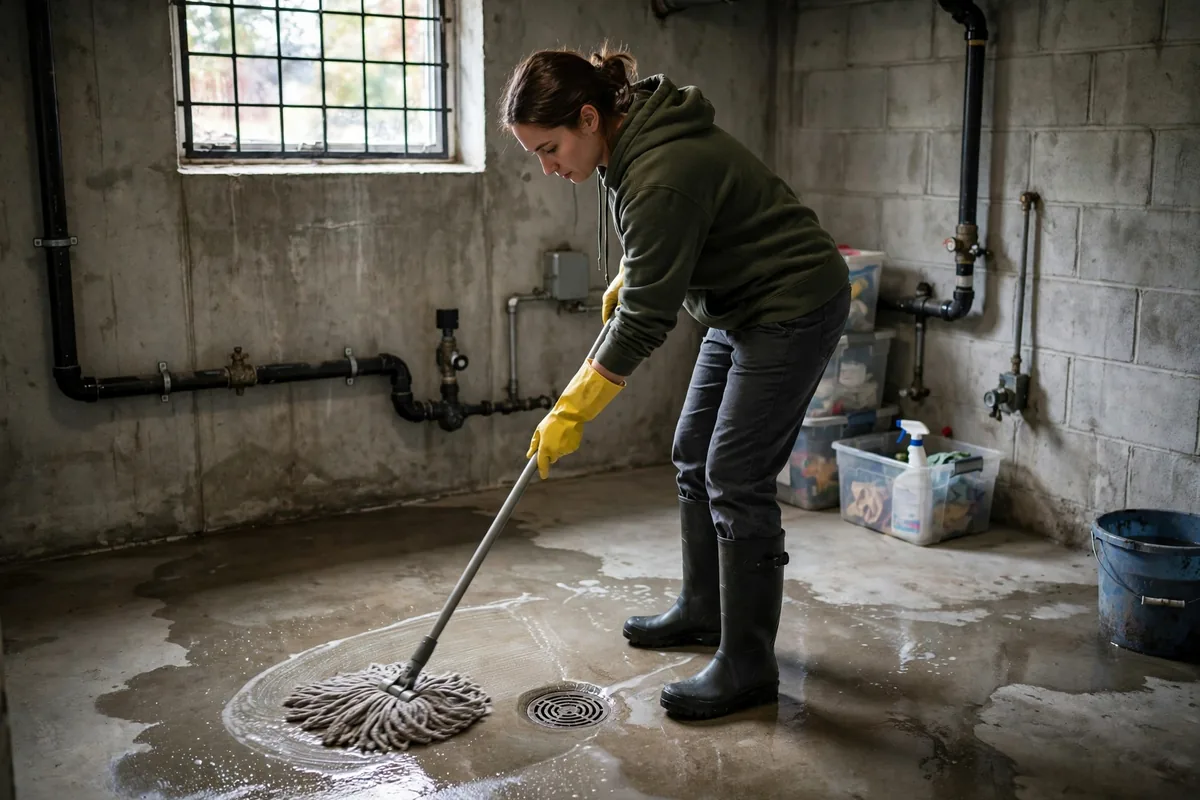
Start by scooping solids into a heavy bag with a disposable shovel or doubled bags over your hands, then mop or wet-vacuum the liquid. Bag waste as you go, seal each bag, and take it straight outside. Work from the least affected edge toward the drain area so you are not dragging contamination across cleaner floor as you move. Homeowners who have read about sewer line repair in Albany, NY after a basement backup will recognise this order: remove, wash, disinfect, dry.
Wash the floor and the lower part of walls that were splashed with hot water and household detergent, rinse, and then apply a disinfectant following the label directions exactly, including how long the surface must stay wet. Never mix bleach with ammonia or acidic cleaners — that combination can release dangerous gas. Keep the room ventilated while solutions are down.
Drying is part of cleaning, not an afterthought. Run fans and, if you have one, a dehumidifier for at least a day or two after a basement spill, because damp left behind a foundation wall or under flooring invites mould. Check hidden spots — under appliances, inside a low cupboard, behind stored items — before you call the room finished.
When Is A Backup Too Big Or Too Risky To Clean Myself?
Call a pro when sewage is deep, still rising, spread across several rooms, soaked into carpet or drywall, or when anyone in the home is pregnant, very young, elderly, or has a weak immune system.
Depth and spread change the job completely. A thin spill on a washable basement floor is one thing; sewage that has wicked up drywall, pooled under flooring, or reached a furnace or water heater is another. So is a backup that returns every time it rains, because that pattern points to a pipe problem that cleaning alone will never fix.
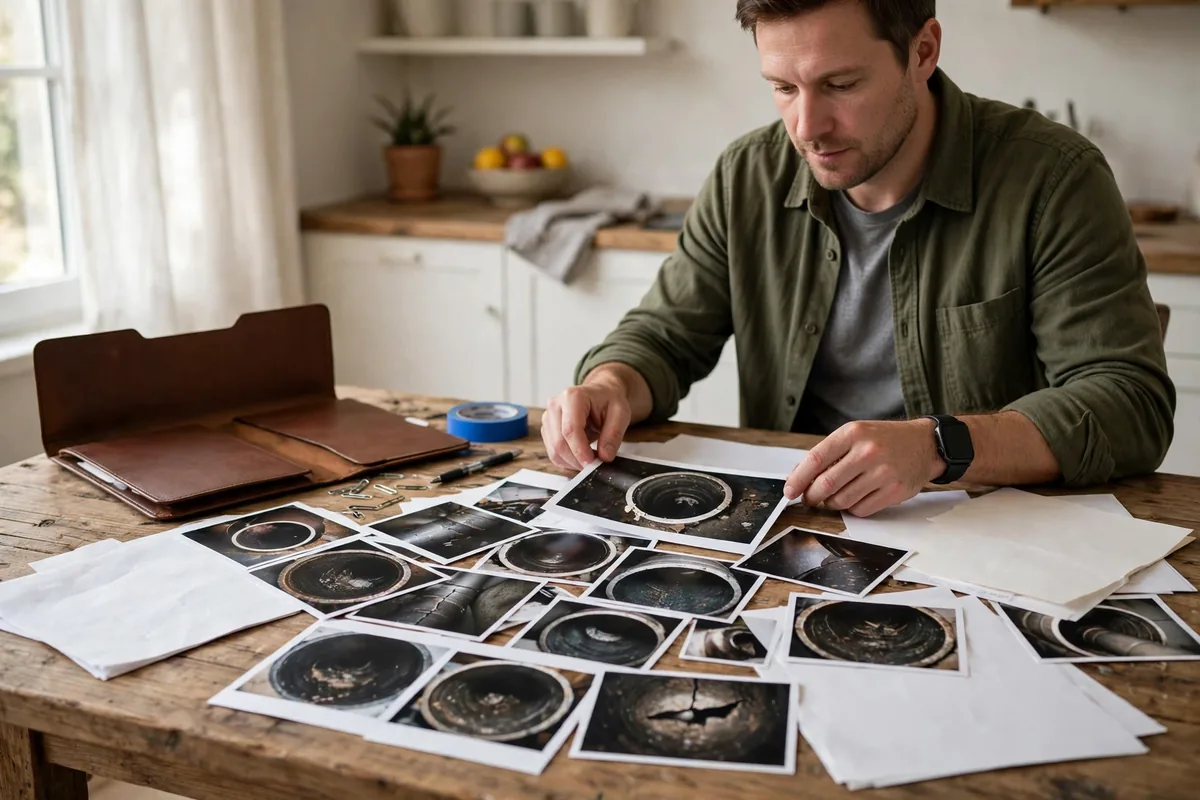
The pipe cause has to be found either way. A CCTV sewer camera inspection shows whether roots, a sag, or damage in the sewer lateral is sending waste back, and whether hydro jetting to clear a blockage or a repair is the right next step. Homeowners arranging sewer line repair in Amsterdam, NY after a storm backup often learn the cleanup was only half the job.
There is no bravado in this decision. Handling a large spill without the right equipment exposes you for hours, and a missed pocket of contamination keeps affecting the household. One free call connects you with an independent local pro who can typically arrive in 30–60 minutes, and lines are answered 24/7.
How Do I Stop It Happening Again?
Fix the pipe cause, control what goes down drains, and consider a one-way valve if backups come from the street side. Prevention works when it matches the reason your home backed up in the first place.
Start with access. A clear sewer cleanout outside or in the basement lets a pro scope and clear the line quickly next time, instead of working through a fixture; our guide to installing a sewer cleanout during repair explains when adding one makes sense. Regular camera checks suit older homes and streets with big trees, where trouble builds quietly between backups.
A backwater valve is a one-way fitting that closes when street flow reverses, and it can reduce how often sewage enters from outside. It needs occasional checking to stay free of debris, and it does not fix a damaged pipe on your own land. Where a single damaged stretch is the cause, a localised repair such as sectional sewer pipe lining may be discussed instead of digging the whole run.
Habits and local help finish the picture. Keep grease out of sinks, keep wipes out of toilets even when the packet says flushable, and point a downspout away from the house so roof water is not adding pressure around the line. Owners looking into sewer line repair in Abington, PA or reading about sewer line repair across New York face the same short list: find the cause, fix that cause, and keep records of what was done.
Frequently Asked Questions
Short, safety-first answers about living with and cleaning up after a sewage backup. If sewage is still rising in your home, call first and read later — lines are answered 24/7.
Still Have Questions? Call Free
One free call connects you with a local pro.
(800) 555-0100Free Call · Answered 24/7 · No Obligation
Reviewed By Hamza
Master Plumber & Trenchless Sewer Rehabilitation Specialist
Hamza is a licensed master plumber and underground infrastructure specialist with extensive field experience resolving sewer lateral collapses, root intrusions, and structural line offsets across Pennsylvania, Ohio, and New York. He specializes in high-definition CCTV pipe diagnostics, cured-in-place pipe (CIPP) lining, pipe bursting, and non-invasive trenchless rehabilitation to restore residential and commercial sewer systems without property destruction.
Updated October 31, 2026
Need Sewer Line Repair Near Me?
One free call connects you with an independent local pro — answered 24/7, no obligation.
Call (800) 555-0100Free Call · Answered 24/7 · Local Pros Near You